Kao i obično Senses of Cinema ima najvažniju godišnju listu najboljih filmova. (Ove je godine na jednoj listi i naš Dalibor Barić - Amnesiac on the Beach!)
sensesofcinema.com/
FRANCISCO ALGARIN NAVARRO
EDITOR, LUMIÈRE MAGAZINE.
— ——– (Short Line Long Line) (Thom Andersen, Malcolm Brodwick, 1967)British Sounds (1969), Pravda (1969), Vladimir et Rosa (1970), Groupe Dziga Vertov
De Bomberpilot (1970), Willow Springs (1972), Der schwarze Engel (1973), Palermo oder Wolfsburg (1980), Werner Schroeter
Die Bergkatze (Ernst Lubitsch, 1921)
Echoes of Silence (Peter Emanuel Goldman, 1967)
Educação Sentimental (Sentimental Education, Júlio Bressane, 2013)
Footnotes to a House of Love (2007), My Tears Are Dry (2009), Llora cuando te pase (2010), The Room Called Heaven(2012), Laida Lertxundi
Frame Line (1984), Light Years (1987), Natural Features (1990), Gunvor Nelson
Hours for Jerome (1982), Song (2013), Spring (2013), Nathaniel Dorsky
House by the River (1950), Der Tiger von Eschnapur (1959), Das Indische Grabmal (1959), Fritz Lang
Il lago (soggettivo-oggettivo) (1965), Doppio autoritratto (1974), Marinella Pirelli
La Fille de l’eau (Jean Renoir, 1925)
La Jalousie (Jealousy, Philippe Garrel, 2013)
Les Soviets plus l’électricité (Nicolas Rey, 2002)
Les Trois Désastres (Jean-Luc Godard, 2013)
Man’s Favorite Sport? (Howard Hawks, 1964)
Mes Entretiens filmés (Boris Lehman, 2013)
Minnie and Moskowitz (John Cassavetes, 1971)
Norte, hangganan ng kasaysayan (Lav Diaz, 2013)
Nugu-ui ttal-do anin Haewon, Uri Sunhi (Hong Sang-soo, 2013)
Ödenwaldstetten (1964), Ein Arbeiterclub in Sheffield (1965), Von Griechenland (1965), Rheinstrom (1965), Die Donau rauf (1970), Peter Nestler
Outtakes from the Life of a Happy Man (Jonas Mekas, 2012)
Passion (Brian de Palma, 2012)
Porch Glider (James Herbert, 1970)
The Immigrant (James Gray, 2013)
The Last Days of Disco (Whit Stillman, 1998)
The Revolt of Mamie Stover (Raoul Walsh, 1956)
The Ring (Alfred Hitchcock, 1927)
Three Landscapes (Peter Hutton, 2013)
Feng ai (‘Til Madness Do Us Part, Wang Bing, 2013)
to be here (Ute Aurand, 2013)
Umbracle (Pere Portabella, 1970)
Un Conte de Michel de Montaigne (Jean-Marie Straub, 2013)
Winged Dialogue (1967/2000), Plan of Brussels (1968/2000), Listening to the Space in my Room (2013), Robert Beavers
VICTOR ALICEA
PROGRAMMER FOR WUD FILM AT THE UNIVERSITY OF WISCONSIN-MADISON.
Gravity (Alfonso Cuarón, 2013)Spring Breakers (Harmony Korine, 2012)
Tian zhu ding (A Touch of Sin, Jia Zhang-ke, 2013)
Inside Llewyn Davis (Joel Coen & Ethan Coen, 2013)
12 Years a Slave (Steve McQueen, 2013)
The World’s End (Edgar Wright, 2013)
The Act of Killing (Joshua Oppenheimer, Christine Cynn & Anonymous, 2012)
Upstream Color (Shane Carruth, 2013)
La vie d’Adèle: chapitres 1 et 2 (Blue is the Warmest Colour, Abdellatif Kechiche, 2013)
Stoker (Park Chan-wook, 2013)
Du zhan (Drug War, Johnnie To, 2012)
Frances Ha (Noah Baumbach, 2012)
To the Wonder (Terrence Malick, 2012)
Blue Jasmine (Woody Allen, 2013)
The Counselor (Ridley Scott, 2013)
Only God Forgives (Nicolas Winding Refn, 2013)

Gravity
MICHAEL J. ANDERSON
PROPRIETOR OF TATIVILLE AND TEN BEST FILMS, PHD IN ART HISTORY AND FILM STUDIES, YALE UNIVERSITY.
Jiao you (Stray Dogs, Tsai Ming-liang, 2013)Yi dai zong shi (The Grandmaster, Wong Kar-wai, 2013)
Tian zhu ding (A Touch of Sin, Jia Zhang-ke, 2013)
Leviathan (Lucien Castaing-Taylor & Véréna Paravel, 2012)
La grande bellezza (The Great Beauty, Paolo Sorrentino, 2013)
Before Midnight (Richard Linklater, 2013)
O Som ao redor (Neighboring Sounds, Kleber Mendonça Filho, 2012)
Vous n’avez encore rien vu (You Ain’t Seen Nothin’ Yet, Alain Resnais, 2012)
După dealuri (Beyond the Hills, Cristian Mungiu, 2012)
To the Wonder (Terrence Malick, 2012)
Frances Ha (Noah Baumbach, 2012)
Spring Breakers (Harmony Korine, 2012)
GEOFF ANDREW
HEAD OF FILM PROGRAMME AT LONDON’S BFI SOUTHBANK AND THE AUTHOR OF A NUMBER OF BOOKS ON THE CINEMA. REGULAR CONTRIBUTOR TO SIGHT AND SOUND AND CONTRIBUTING EDITOR TO TIME OUT LONDON.
My year’s ten best of 2013:- Inside Llewyn Davis (Joel and Ethan Coen, 2013)
- Vidros partidos (Broken Windows, Víctor Erice, 2012) episode from compilation film Centro Histórico)
- L’Inconnu du lac (Stranger by the Lake, Alain Guiraudie, 2013)
- La Maison de la radio (Nicolas Philibert, 2013)
- Poziția copilului (Child’s Pose, Călin Peter Netzer, 2013)
- Hayatboyu (Lifelong, Asli Özge, 2013)
- L’Image manquante (The Missing Picture, Rithy Pahn, 2013)
- Soshite chichi ni naru (Like Father, Like Son, Hirokazu Kore-eda, 2013)
- Gravity (Alfonso Cuarón, 2013)
- Behind the Candelabra (Steven Soderbergh, 2013)
All Is Lost (J.C. Chandor, 2013)
Camille Claudel 1915 (Bruno Dumont, 2013)
Un Château en Italie (A Castle in Italy, Valeria Bruni-Tedeschi, 2013)
Le Dernier des injustes (The Last of the Unjust, Claude Lanzmann, 2013)
Epizoda u zivotu beracaca zeljeza (An Episode in the Life of an Iron Picker, Danis Tanovic, 2013)
Gloria (Sebastián Lelio, 2013)
La grande belleza (The Great Beauty, Paolo Sorrentino, 2013)
Muhammad Ali’s Greatest Fight (Stephen Frears, 2013)
Nebraska (Alexander Payne, 2013)
Nugu-ui ttal-do anin Haewon (Nobody’s Daughter Haewon, Hong Sang-soo, 2013)
Omar (Hany Abu-Assad, 2013)
Only Lovers Left Alive (Jim Jarmusch, 2013)
Philomena (Stephen Frears, 2013)
The Selfish Giant (Clio Barnard, 2013)
Side Effects (Steven Soderbergh, 2013)
Tian zhu ding (A Touch of Sin, Jia Zhang-ke, 2013)
Uroki Garmonii (Emir Baigazin, Harmony Lessons, 2013)
La Vénus à la fourrure (Venus in Fur, Roman Polanski, 2013)
La Vie d’Adèle, chapitres 1 et 2 (Blue Is the Warmest Colour, Abdellatif Kechiche, 2013)
The Wolf of Wall Street (Martin Scorsese, 2013)
Newly restored films I’ve most enjoyed this year:
The Lusty Men (Nicholas Ray, 1952)
Nothing But a Man (Michael Roemer, 1964)
JULIAN ANTOS
CO-PROGRAMMER AT THE NORTHWEST CHICAGO FILM SOCIETY.
New movies – my favourite new releases seen in a theatrical setting in 2013. Mostly playing catch up from 2012 and waiting to see things on 35mm.- The Master (Paul Thomas Anderson, 2012) (70mm, The Music Box Theater)
- Computer Chess (Andrew Bujalski, 2013) (HDCam, The Music Box Theater)
- Spring Breakers (Harmony Korine, 2012) (35mm, The Music Box Theater)
- The Paperboy (Lee Daniels, 2012) (35mm, Gene Siskel Film Center)
- Consuming Spirits (Chris Sullivan, 2012) (Blu-Ray, Film Studies Center at the University of Chicago)
- Cosmopolis (David Cronenberg, 2012) (35mm, Doc Films)
- Aint Them Bodies Saints (David Lowey, 2013) (DCP, The Music Box Theater)
L’Invitation au Voyage (Louis Vuitton) (Romain Gavras, 2013)
Best trailer
To the Wonder (Terrence Malick, 2012)
Revivals – top 10 screenings me and my NWCFS colleagues didn’t program and then eleven that we did
- Wild Girl (Raoul Walsh, 1932) (35mm from the Museum of Modern Art, Block Cinema at Northwestern)
- Beau Travail (Claire Denis, 1999) (35mm, Gene Siskel Film Center)
- Chocolat (Claire Denis, 1988) (35mm, Gene Siskel Film Center)
- Get Crazy (Allan Arkush, 1983) (35mm, The Music Box Theater)
- Nostalghia (Andre Tarkovsky, 1983) (35mm from Kino, Gene Siskel Film Center)
- Thirty Day Princess (Marion Gering, 1934) (35mm from UCLA, Gene Siskel Film Center). “To eat sundaes with a straw is the essence of insanity.”
- 8 Flags for 99 Cents (Mike Gray Associates, Chuck Olin and Joel Katz, 1970) (16mm restoration from the Chicago Film Archives)
- Kiki’s Delivery Service (Hayao Miyazaki, 1989) (35mm, Gene Siskel Film Center)
- The Long Goodbye (Robert Altman, 1973) (35mm, Gene Siskel Film Center)
- Wake Up and Live (Sidney Lanfield, 1937) (16mm, Cinefest, Syracuse, New York)
Breaking Away (Peter Yates, 1979) (35mm)
Colossus: The Forbin Project (Joseph Sargent, 1970)
Convoy (Sam Peckinpah, 1978) (35mm)
The Crimson Kimono (Samuel Fuller, 1959) (35mm)
Desire (Frank Borzage, 1936) (35mm)
Diamond Jim (A. Edward Sutherland, 1935) (35mm)
Flaming Star (Don Siegel, 1960) (35mm)
The Flying Ace (Richard E. Norman, 1926)
Gunman’s Walk (Phil Karlson, 1958) (35mm)
The Intruder (Roger Corman, 1962) (35mm)
The Vikings (Richard Fleischer, 1958) (35mm)

The Master
MIGUEL ARMAS
WRITER AND TRANSLATOR, LUMIÈRE
Some old and new films seen for the first time in 2013.Allan Dwan’s early one-reel Westerns: The Ranch Girl (1911) / Blackened Hills (1912) / Maiden and Men (1912) / Man’s Calling (1912) / The Thief’s Wife (1912) / The Mormon (1912)
Von Griechenland (Peter Nestler, 1965) / Die Donau rauf (Peter Nestler, 1970)
East Side, West Side (Allan Dwan, 1927)
Gentleman Jim (Raoul Walsh, 1942)
Les Trois Désastres (Jean-Luc Godard, 2013)
Léonce cinématographiste (Léonce Perret, 1913)
Ruins of Infinity (aka The Rise and Fall of the Bourgeoisie aka Socratic Monologues 2011-2013) (David Phelps, 2013)
Seeking the Monkey King (Ken Jacobs, 2011)
The Host and the Cloud (Pierre Huygue, 2010)
Les Salauds (Bastards, Claire Denis, 2013)
Menaces (Edgar T. Gréville, 1940)
The Extravagant Shadows (David Gatten, 2012)
Traveling Light (Gina Telaroli, 2011), Starting Sketches #1-#12 (Gina Telaroli, 2013)
Winged Dialogue (Robert Beavers, 1967/2000) / Listening to the Space in my Room (Robert Beavers, 2013)
Willow Springs (Werner Schroeter, 1973) / Der schwarze Engel (Werner Schroeter, 1975)
La Fille de l’eau (Jean Renoir, 1924)
Porch Glider (James Herbert, 1970)
Echoes of Silence (Peter Emanuel Goldman, 1965)
Kochiyama Soshun (Sadao Yamanaka, 1935)
Mudar de vida (Paulo Rocha, 1966)
Forest of Bliss (Robert Gardner, 1986)
Three Landscapes (Peter Hutton, 2013)
Baby riazanskie (Women of Ryazan, Ol’ga Preobraženskaja and Ivan Pravov, 1927)
Outtakes from the Life of a Happy Man (Jonas Mekas, 2012)
La Jalousie (Jealousy, Philippe Garrel, 2013)
Hours for Jerome (Nathaniel Dorsky, 1966-70/1982) / Song (Nathaniel Dorsky, 2013)
Mes Entretiens filmés (Boris Lehman, 2013)
CHARLOTTE AUMONT
L’Inconnu du lac (Stranger by the Lake, Alain Guiraudie, 2013)Spring Breakers (Harmony Korine, 2012)
La Fille du 14 juillet (The Rendez-Vous of Déjà-Vu, Antonin Peretjatko, 2013)
La Vénus à la fourrure (Venus in Fur, Roman Polanski, 2013)
Frances Ha (Noah Baumbach, 2012)
No (Pablo Larraín, 2012)
Le Temps de l’aventure (Just a Sigh, Jérôme Bonnell, 2013)
Tian zhu ding (A Touch of Sin, Jia Zhang-ke, 2013)
Zero Dark Thirty (Kathryn Bigelow, 2012)
Shokuzai (Penance, Television mini-series, Kyoshi Kurosawa, 2012)
SEAN AXMAKER
CONTRIBUTOR FOR CINEPHILED AND MSN AND THE FOUNDING CONTRIBUTOR OF PARALLAX VIEW.
New in theatres or at festivals in 2013:Her (Spike Jonze, 2013)
La Vie d’Adèle: chapitres 1 et 2 (Blue is the Warmest Colour, Abdellatif Kechiche, 2013)
Après mai (Something in the Air, Olivier Assayas, 2012)
La noche de enfrente (Night Across the Street, Raul Ruiz, 2012)
Ain’t Them Bodies Saints (David Lowery, 2013)
E Agora? Lembra-me (What Now? Remind Me, Joaquim Pinto, 2013)
Upstream Color (Shane Carruth, 2013)
Before Midnight (Richard Linklater, 2013)
Nebraska (Alexander Payne, 2013)
Vous n’avez encore rien vu (You Ain’t Seen Nothin’ Yet, Alain Resnais, 2012)
Movies that remind me why I love movies so much. These may not be Top Ten material, but they all embrace a joy of and delight in filmmaking, storytelling, and cinematic expression (in alphabetical order):
Byzantium (Neil Jordan, 2012)
Du zhan (Drug War, Johnnie To, 2012)
Yi dai zong shi (The Grandmaster, Wong Kar-wai, 2013)
Kaze tachinu (The Wind Rises, Hayao Miyazaki, 2013)
Les Salauds (Bastards, Claire Denis, 2013
Stoker (Park Chan-wook, 2013)
Stories We Tell (Sarah Polley, 2012)
The Wolf of Wall Street (Martin Scorsese, 2013)
Eight standout discoveries of 2013 (in alphabetical order):
The First Born (Miles Mander, 1928) 35mm print with live accompaniment at San Francisco Silent Film Festival
Feu Mathias Pascal (The Late Mathias Pascal, Marcel L’Herbier, 1926) Flicker Alley Blu-ray
Marketa Lazarová (František Vláčil, 1967) Criterion Blu-ray
Les Maudits (The Damned, René Clément, 1947) Cohen Film Collection Blu-ray
Les Nouveaux Messieurs (The New Gentlemen, Jacques Feyder, 1929) Flicker Alley DVD (on the set “French Masterworks: Russian Émigrés in Paris 1923-1928”)
The Pleasure Garden (Alfred Hitchcock, 1925) DCP print at Hitchcock Silents retrospective at SIFF Cinema Uptown (Seattle)
Le Pont Du Nord (Jacques Rivette, 1981) repertory screening of restored 35mm print at Northwest Film Forum (Seattle)
Yoyo (Pierre Étaix, 1965) and the films of Pierre Étaix – retrospective at Northwest Film Forum (Seattle) and on Criterion Blu-ray
Bastards
MARTYN BAMBER
CONTRIBUTOR TO CLOSE-UP FILM, CRITIC’S NOTEBOOK AND SENSES OF CINEMA.
Favourite new releases from 2013 seen in the UK (in alphabetical order):Arbitrage (Nicholas Jarecki, 2012)
Before Midnight (Richard Linklater, 2013)
Cloud Atlas (Tom Tykwer, Andy Wachowski & Lana Wachowski, 2012)
Django Unchained (Quentin Tarantino, 2012)
A Field in England (Ben Wheatley, 2013)
Io e te (Me and You, Bernardo Bertolucci, 2012)
Nebraska (Alexander Payne, 2013)
Spring Breakers (Harmony Korine, 2013)
To the Wonder (Terrence Malick, 2012)
The World’s End (Edgar Wright, 2013)
MIKE BARTLETT
WRITER FOR MOVIEMAIL AND ZOMBIEHAMSTER.
Ten best new(ish) films I saw for the first time this year:The Act of Killing (Joshua Oppenheimer, Christine Cynn & Anonymous, 2012)
Aurora (Cristi Puiu, 2010)
Before Midnight (Richard Linklater, 2013)
Exhibition (Joanna Hogg, 2013)
Història de la meva mort (Story of My Death, Albert Serra, 2013)
Holy Motors (Leos Carax, 2012)
Norte, hangganan ng kasaysayan (Norte, the End of History, Lav Diaz, 2013)
Nugu-ui ttal-do anin Haewon (Nobody’s Daughter Haewon, Hong Sang-soo, 2013) / Uri Sunhi (Our Sunhi, Hong Sang-soo, 2013)
Soshite chichu ni naru (Like Father Like Son, Hirokazu Kore-eda, 2013)
To the Wonder (Terrence Malick, 2012)
I’m still processing Leviathan (Lucien Castaing-Taylor and Véréna Paravel, 2012) and can’t decide whether it’s a tidal wave of genius or a wet weekend in Margate.
Strong runners-up include:
Après mai (Something in the Air, Olivier Assayas, 2012)
Faust (Aleksandr Sokurov, 2011)
A Field In England (Ben Wheatley, 2013)
Most overrated film of the year:
Upstream Color (Shane Carruth, 2013)
Most cruelly disappointing:
Tian zhu ding (A Touch of Sin, Jia Zhang-ke, 2013)
(or Leviathan depending on how things work out)
RAPHAËL BASSAN
FRENCH FILM CRITIC, HISTORIAN OF CINEMA, SPECIALIST IN EXPERIMENTAL CINEMA, WRITES FOR EUROPE, REVUE LITTERAIRE, BREF: LE MAGAZINE DU COURT METRAGE AND ENCYCLOPAEDIA UNIVERSALIS.
¡Vivan las Antipodas! (Victor Kossakovsky, 2011)Alps (Yorgos Lanthimos, 2011)
Tey (Today, Alain Gomis, 2012)
Ida (Pawel Pawlikowski, 2013)
A batalha de Tabatô (The Battle of Tabatô, João Viana, 2013)
La Vie d’Adèle: chapitres 1 et 2 (Blue Is the Warmest Colour, Abdellatif Kechiche, 2013)
Le Dernier des injustes (The Last of the Unjust, Claude Lanzmann, 2013)
Outtakes from the Life of a Happy Man (Jonas Mekas, 2012). Seen at the Mekas retrospective at the Centre Pompidou, 7 January 2013
Ren shan ren hai (People Mountain, People Sea, Can Shangjun, 2011)
Soshite chichi ni naru (Like Father, Like Son, Hirokazu Kore-eda, 2013)
Experimental films:
Pourvoir (Patrice Énard, 1981)
The Freemartin Calf (Jayne Amara Ross, 2010)
Free Women (Viviane Vagh, 2008-09)
Amnesiac on the Beach (Dalibor Baric, 2013)
Ici rien (Daphné Hérétakis, 2011)
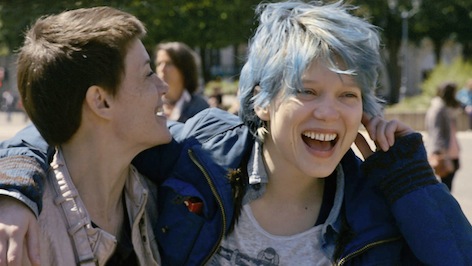
Blue is the Warmest Color
GUSTAVO BECK
NEW YORK-BASED BRAZILIAN FILMMAKER, CURATOR AND CRITIC.
- Feng ai (‘Til Madness Do Us Part, Wang Bing, 2013)
- Norte, hangganan ng kasaysaya (Norte, The End Of History, Lav Diaz, 2013)
- Redemption (Miguel Gomes, 2013)
- L’Inconnu du lac (Stranger by the Lake, Alain Guiraudie, 2013)
- E Agora? Lembra-me (What Now? Remind Me, Joaquim Pinto, 2013)
- La Jalousie (Jealousy, Philippe Garrel, 2013)
- Nugu-ui ttal-do anin Haewon (Nobody’s Daughter Haewon, Hong Sang-soo, 2013)
- Loubia Hamra (Bloody Beans, Narimane Mari, 2013)
- Lacrau (João Vladimiro, 2013)
- Mille soleils (A Thousand Suns, Mati Diop, 2013)
SEAN BELL
BLOGGER, SEX AND THE ETERNAL CITY.
Cinema Releases (Italy 2013):La grande bellezza (The Great Beauty, Paolo Sorrentino, 2013)
Despicable Me 2 (Pierre Coffin & Chris Renaud, 2013)
Les Misérables (Tom Hooper, 2012)
Before Midnight (Richard Linklater, 2013)
La Vie d’Adele: chapitres 1 et 2 (Blue Is the Warmest Colour, Abdellatif Kechiche, 2013)
Gravity (Alfonso Cuarión, 2013)
Lincoln (Steven Spielberg, 2012)
The Impossible (J.A. Bayona, 2012)
DVDs (or coulda been contenders in 2012):
Beasts of the Southern Wild (Ben Zeitlin, 2012)
După dealuri (Beyond the Hills, Cristian Mungiu, 2012)
En kongelig affœre, (A Royal Affair, Nikolaj Arcel, 2012)
Berberian Sound Studio, (Peter Strickland, 2012)
Searching For Sugar Man, (Malik Bendjelloul, 2012)
Worst:
Los amantes pasajeros, (I’m So Excited!, Perdro Almodóvar, 2013)
Even the exclamation mark annoys me. A comedy bereft of laughs with some limp social commentary tacked on at the end. The tired old gay stereotypes that populated the film would have got a heterosexual director into deep mierda. Perhaps Almodóvar should start directing commercials for “pro-family” Barilla off-shoot, Mulino Bianco, after all they already have Antonio Banderas.
PAMELA BIÉNZOBAS
PARIS-BASED FILM CRITIC AND JOURNALIST FROM CHILE, CO-FOUNDER OF REVISTA DE CINE MABUSE.
Unclassifiable:Stemple Pass (James Benning, 2012)
Two wonderful female characters, in two wonderful films:
Frances Ha (Noah Baumbach, 2012)
Gloria (Sebastián Lelio, 2013)
One film about psychoanalysis and embracing the other; one filmed psychoanalysis, about embracing oneself:
Les Garçons et Guillaume, à table! (Me, Myself and Mum, Guillaume Gallienne, 2013)
Jimmy P. (Arnaud Desplechin, 2013)
From Eros to Thanatos (made in France):
L’Inconnu du lac (Stranger by the Lake, Alain Guiraudie, 2013)
Mes Séances de lutte (Love Battles, Jacques Doillon, 2013)
La Vie d’Adèle: chapitres 1 et 2 (Blue Is the Warmest Colour, Abdellatif Kechiche, 2013)
Despairing violence:
La jaula de oro (The Golden Dream, Diego Quemada-Diez, 2013)
Norte, hangganan ng kasaysayan (Norte, the End of History, Lav Diaz, 2013)
Pelo malo (Bad Hair, Mariana Rondón, 2013)
Tian zhu ding (A Touch of Sin, Jia Zhang-ke, 2013)
Two overwhelming attempts to film the invisible, and to deal with barbarity in different ways and under different circumstances:
L’Image manquante (The Missing Picture, Rithy Pahn, 2013)
The Act of Killing (Joshua Oppenheimer, Christine Cynn & Anonymous, 2012)
Amidst the violence, one huge, welcome laugh, and an unexpected talent for comedy:
Quai d’Orsay (Bertrand Tavernier, 2013)

Frances Ha
VASSILY BOURIKAS
FILM PROGRAMMER AND CINEASTE, ATHENS, GREECE.
This below is a short list of some experiences in cinemas that I really enjoyed this year, in order of appearance (to my eyes). I will remember 2013 particularly as the year of Shaina Anand and Ashok Sukumaran. Their From Gulf to Gulf to Gulf was one of the most complex, multifaceted and glaringly different films I have seen in a long time. Gym Lumbera’s Anak Araw and Aran Hughes and Christina Koutsospyrou’s Sto Lyko, are the other two films that I will remember for a while, for tampering audaciously with their form while maintaining a solid sense of purpose and humanity.All Magic Sands, Chappaqua (Andrew Lampert, 2013)
Dad’s Stick (John Smith, 2012)
O quinto evanxeo de Gaspar Hauser (The Fifth Gospel of Kaspar Hauser, Alberto Gracia, 2013)
Letter (Sergei Loznitsa, 2013)
GHL (Lotte Schreiber, 2012)
Suchy Pion (Dry Standpipe, Wojciech Bąkowski, 2012)
From Gulf To Gulf To Gulf (Shaina Anand and Ashok Sukumaran, 2013)
Anak Araw (Albino, Gym Lumbera, 2013)
Élevage de poussière (Dust Rubbing, Sara Vanagt, 2013)
Sto lyko (To the Wolf, Aran Hughes & Christina Koutsospyrou, 2013)
Letter to a Refusing Pilot (Akram Zaatari, 2013)
L’Image manquante (The Missing Picture, Rithy Panh, 2013)
Jiao you (Stray Dogs, Tsai Ming-liang, 2013)
El ojo del tiburón (The Shark’s Eye, Alejo Hoijman, 2012)
Alberi (Michelangelo Franmartino, 2013) as installed in Cinema Manzoni, Milan
Buffalo Death Mask (Mike Hoolboom, 2013)
SAMUEL BRÉAN
PARIS-BASED TRANSLATOR AND RESEARCHER. CO-EDITOR OF THE ONLINE JOURNAL L’ ÉCRAN TRADUIT.
Best films (alphabetical order)Die andere Heimat – Chronik einer Sehnsucht (Home from Home: Chronicle of a Vision, Edgar Reitz, 2013)
Borgman (Alex van Warmerdam, 2013)
Computer Chess (Andrew Bujalski, 2013)
Le Dispositif, episodes 1-52 (Thomas Bertay, Pacôme Thiellement, 1999-2013)
Du zhan (Drug War, Johnnie To, 2012)
L’Inconnu du lac (Stranger by the Lake, Alain Guiraudie, 2013)
La Jalousie (Jealousy, Philippe Garrel, 2013)
Saibi (The Fake, Yeon Sang-ho, 2013)
See You Next Tuesday (Drew Tobia, 2013)
Le Tableau (Laurent Achard, 2013)
Tirez la langue, mademoiselle (Miss and the Doctors, Axelle Ropert, 2013)
Les Trois Désastres (Jean-Luc Godard, 2013)
Most overrated film
La Vie d’Adèle – chapitres 1 et 2 (Blue is the Warmest Colour, Abdellatif Kechiche, 2013)
Two remarkable retrospectives
Jean-Claude Biette (Cinémathèque Française, Paris)
A long-overdue homage to a great film critic and maverick filmmaker, accompanied by a lovingly written book and a documentary, both by Pierre Léon.
Planète Marker (Centre Pompidou, Paris)
An impressive, extensive season of all the films that Marker made or had a hand in, along with ones that he loved.
Best film books
Santos Zunzunegui, Lo viejo y el nuevo (Cátedra, Madrid, 2013)
Michael Witt, Jean-Luc Godard, Cinema Historian (Indiana University Press, Bloomington/Indianapolis, 2013)
Guillaume Basquin, Fondu au noir (Paris Expérimental, Paris, 2013)
William Friedkin, The Friedkin Connection (HarperCollins, New York, 2013)
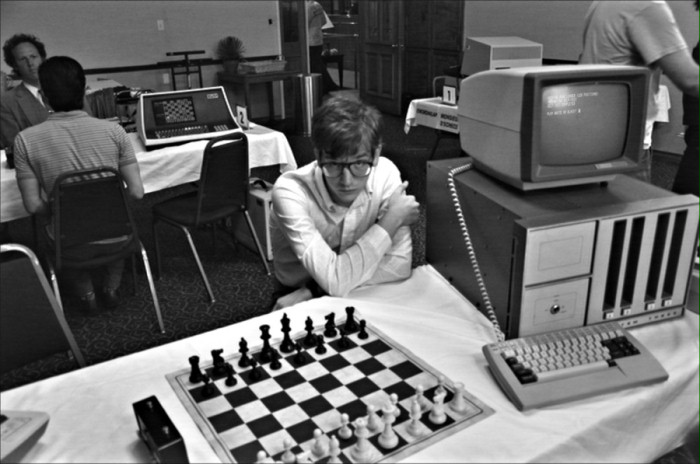
Computer Chess
LISA K. BROAD
PHD CANDIDATE IN CINEMA STUDIES, NEW YORK UNIVERSITY.
- Yi dai zong shi (The Grandmaster, Wong Kar-wai, 2013)
- La grande bellezza (The Great Beauty, Paolo Sorrentino, 2013)
- Frances Ha (Noah Baumbach, 2012)
- Leviathan (Lucian Castaing-Taylor and Véréna Paravel, 2012)
- Post Tenebras Lux (Carlos Reygadas, 2012)
- Tian zhu ding (A Touch of Sin, Jia Zhang-ke, 2013)
- Before Midnight (Richard Linklater, 2013)
- Gravity (Alfonso Cuarón, 2013)
- Spring Breakers (Harmony Korine, 2012)
- Museum Hours (Jem Cohen, 2012)
MIMI BRODY
CURATOR OF FILM, BLOCK MUSEUM OF ART. NORTHWESTERN UNIVERSITY.
My top films of 2013:Museum Hours (Jem Cohen, 2012)
Lemale et ha’halal (Fill the Void, Rama Burshtein, 2012)
Gloria (Sebastián Lelio, 2013)
Paradies: Hoffnung (Paradise: Hope, Ulrich Seidl, 2013)
At Berkeley (Frederick Wiseman, 2013)
Honourable Mentions:
Enough Said (Nicole Holofcener, 2013)
Vi är bäst! (We Are the Best!, Lukas Moodysson, 2013)
Leviathan (Lucien Castaing-Taylor & Véréna Paravel, 2012)
Behind the Candelabra (Steven Soderbergh, 2013)
Inside Llewyn Davis (Ethan & Joel Coen, 2013)
Before Midnight (Richard Linklater, 30130
Du zhan (Drug War, Johnnie To, 2012)
12 Years a Slave (Steve McQueen, 2013)
A Spell to Ward Off the Darkness (Ben Rivers & Ben Russell, 2013)
Under the Skin (Jonathan Glazer, 2013)
L’Inconnu du lac (Stranger by the Lake, Alain Guiraudie, 2013)
Ida (Pawel Pawlikowski, 2013)
THOMAS CALDWELL
WRITES FILM CRITICISM BLOG CINEMA AUTOPSY, REVIEWS FOR 3RRR 102.7FM.
Favourite ten films with a theatrical release in Melbourne, Australia in 2013Amour (Michael Haneke, 2012)
Gravity (Alfonso Cuarón, 2013)
Frances Ha (Noah Baumbach, 2012)
Mystery Road (Ivan Sen, 2013)
The Rocket (Kim Mordaunt, 2013)
Broken (Rufus Norris, 2012)
No (Pablo Larraín, 2012)
Blue Jasmine (Woody Allen, 2013)
Stoker (Park Chan-wook, 2013)
The Paperboy (Lee Daniels, 2012)
Honourable mentions
ParaNorman (Chris Butler & Sam Fell, 2012)
The Act of Killing (Joshua Oppenheimer, Christine Cynn & Anonymous, 2012)
Life of Pi (Ang Lee, 2012)
Jagten (The Hunt, Thomas Vinterberg, 2012)
Behind the Candelabra (Steven Soderbergh, 2013)
Stories We Tell (Sarah Polley, 2012)
L’Inconnu du lac (Stranger by the Lake, Alain Guiraudie, 2013)
Oh Boy (Jan Ole Gerster, 2012)
Django Unchained (Quentin Tarantino, 2012)
Spring Breakers (Harmony Korine, 2012)
Favourite ten films that had a public screening in Melbourne in 2013, but not a full theatrical release (and no known release for 2014)
Les Salauds (Bastards, Claire Denis, 2013)
Leviathan (Lucien Castaing-Taylor & Véréna Paravel, 2012)
L’intervallo (The Interval, Leonardo di Costanzo, 2012)
Tore tanzt (Nothing Bad Can Happen, Katrin Gebbe, 2013)
Blue Ruin (Jeremy Saulnier, 2013)
Cheap Thrills (E.L. Katz, 2013)
Le Jour des corneilles (The Day of the Crows, Jean Christophe Dessaint, 2012)
The Weight of Elephants (Daniel Borgman, 2013)
Starlet (Sean Baker, 2012)
What Richard Did (Lenny Abrahamson, 2012)
Special mention
Top of the Lake (Television miniseries, Jane Campion & Garth Davis, 2013)
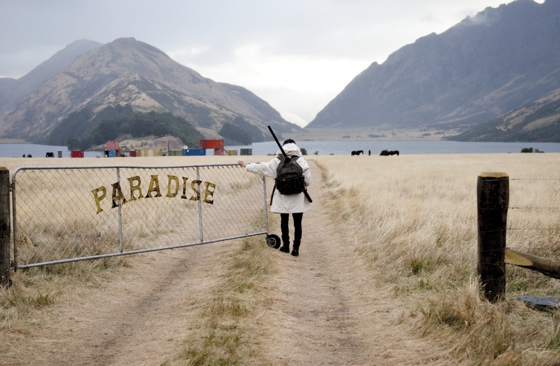
Top of the Lake
MICHAEL CAMPI
LONG CAPTIVATED BY THE MOVIES WITH INVOLVEMENT IN NON-COMMERCIAL FILM EXHIBITION IN VARIOUS CAPACITIES OVER THE PAST FORTY YEARS.
While the commercial film scene in Australia seems to have dipped in quality to an all time low, I was almost surprised and delighted that so many stimulating, challenging and otherwise exciting new works have been seen in a variety of locations for the first time in 2013. A few of the very best would normally been in my 2012 list if circumstances had permitted.At the very peak of these achievements are these:
Armour (Michael Haneke, 2012)
Bella addormentata (Dormant Beauty, Marco Bellocchio, 2012)
După dealuri (Beyond the Hills, Cristian Mungiu, 2012)
O Gebo e a sombra (Gebo and the Shadow, Manoel de Oliveira, 2012)
L’Inconnu du lac (Stranger by the Lake, Alain Guiraudie, 2013)
Jin (Reha Erdem, 2013)
Like Someone in Love (Abbas Kiarostami, 2012)
Museum Hours (Jem Cohen, 2012)
Pardé (Closed Curtain, Jafar Panahi & Kambuzia Partovi, 2013)
Le Passé (The Past, Asghar Farhadi, 2013)
Soshite chichi ni naru (Like Father, Like Son, Hirokazu Kore-eda, 2013)
Uroki garmonii (Harmony Lessons, Emir Baigazin, 2013)
A última vez que vi Macau (The Last Time I Saw Macao, João Pedro Rodrigues & João Rui Guerra da Mata, 2012)
In addition my movie watching has been enhanced and enriched by these:
Atambua 39° Celsius (Riri Riza, 2012)
Ai de ti shen (All Apologies, Emily Tang, 2012)
The Act of Killing (Joshua Oppenheimer, Christine Cynn & Anonymous, 2012)
Après mai (Something in the Air, Olivier Assayas, 2012)
Bad Film (Sion Sono, 1995-2012)
Fallout (Lawrence Johnston, 2013)
Fen shi ren (The Cremator, Peng Tao, 2012)
Fune wo amu (The Great Passage, Yûya Ishii, 2013)
L’Image manquante (The Missing Picture, Rithy Panh, 2013)
Inori (Pedro González-Rubio, 2012)
Linhas de Wellington (Lines of Wellington, Valeria Sarmiento, 2012)
Mud (Jeff Nichols, 2012)
Nugu-ui ttal-do anin Haewon (Nobody’s Daughter Haewon, Hong Sang-Soo, 2013)
One Night and Two Days (Leesong Hee-il, 2012)
Rebelle (War Witch, Kim Nguyen, 2012)
Sinapupunan (Thy Womb, Brillante Mendoza, 2012)
Tang huang you difu (Emperor Visits the Hell, Li Luo, 2012)
Tian mi mi (Together, Hsu Chao-Jen, 2012)
Tôkyô Kazoku (Tokyo Family, Yôji Yamada, 2013)
Traviata et nous (Philippe Béziat, 2012)
Workers (José Luis Valle, 2013
In Melbourne we can never be grateful enough for the presences of the Melbourne International Film Festival, the Melbourne Cinémathèque and the programming of the Australian Centre for the Moving Image.
It can never be stated enough that the Bologna Cinema Ritrovato, commencing late in June each year, is an astonishing banquet of cinema riches of the distant and not so faraway past. This marvellous festival provided me with a supreme highlight of 2013, a first viewing of an astonishing film from long ago. Amongst the very memorable collection of Japanese films from the early sound period was Sotoji Kimura’s Ani imôto (Older Brother, Younger Sister, 1935). There could be no more startling reminder that we can never be complacent about our knowledge of the history of the cinema. From the rich history of Japanese cinema, 2013 has seen a celebration of the career of Keisuke Kinoshita, especially his earlier films and particularly the ineffably moving Konyaku yubiwa (An Engagement Ring, 1950), Hakai (Apostasy, 1948), Rikugun (The Army, 1944), Yabure-daiko (A Broken Drum, 1949) and Shito no densetsu (Legend of a Duel to the Death/A Legend or Was It?, 1963). A bountiful collection of work to celebrate Kinoshita’s centenary.
CELLULOID LIBERATION FRONT
A MULTI-USE(R) NAME, AN “OPEN REPUTATION” INFORMALLY ADOPTED AND SHARED BY A DESIRING MULTITUDE OF INSURGENT SPECTATORS.
Assault on Wall Street (Uwe Boll, 2013)Pour la beauté du geste. Film of the year.
Drinking Buddies (Joe Swanberg, 2013)
A sensitive, profound and delicately observed film about insufferable hipsters and their irritating lives.
Silver Lode (Allan Dwan, 1954)
Along with High Noon possibly the most accurate depiction of western values.
Az Prijde Kocour (The Cassandra Cat, Vojtéch Jasny, 1963)
A colourful hymn to the visionary immaturity of childhood.
The Canyons (Paul Schrader, 2013)
A film about the perpetual rebirth of cinema and its omnipresent, meaningless and pervasive presence in our daily fiction.
Spring Breakers (Harmony Korine, 2013)
An atemporal, sensorial trance staring in awe at the horror vacui of a lost, immor(t)al dream.
Gravity (Alfonso Cuarón, 2013)
For showing us with utmost sincerity the coming world order.
Snowden Interview for The Guardian Newspaper (2013) by Laura Poitras
The kind of film that had it come from a non-aligned country would have been a huge hit on a par with Pussy Rioters and Ai Weiweis.
E Agora? Lembra-me (What Now? Remind Me, Joaquim Pinto, 2013)
A drop of selfless beauty in an ocean of self-obsessed mediocrity.
Captain Philips (Paul Greengrass, 2013)
On the disproportionate power that three desperate fishermen can exert against the world’s most powerful army.

Captain Phillips
LESLEY CHOW
FILM CRITIC AND ASSOCIATE EDITOR AT BRIGHT LIGHTS, AND ART CRITIC AT ARTINFO.
Stories We Tell (Sarah Polley, 2012) One of the greatest of essay films, which pulls back to show the loving shaping of its own characters.Un Voyageur (Ain’t Misbehavin’, Marcel Ophüls, 2013)
Xi you xiang mo pian (Journey to the West: Conquering the Demons, Stephen Chow & Derek Kwok, 2013)
You’re Next (Adam Wingard, 2011) – Clearly, what every earnest indie drama needs is a serial killer. This horror flick easily surpasses Rachel Getting Married (Jonathan Demme, 2008) and Your Sister’s Sister (Lynn Shelton, 2011) in terms of character development, but the addition of genre sticks into the film like an abstract wedge. There is something electrifying about placing a family romance side-by-side with an anti-human view of the world, as characters are heartlessly picked off. The juxtaposition of intricate relationships with slash violence is worthy of Claude Chabrol.
The Butler (Lee Daniels, 2013) A cathartic, powerful film about the wear and tear of appearing sober and dignified every day. As Viola Davis has pointed out, “dignity” is the word most used by critics to describe any black actor with superb diction.
Best Performances
Leonardo DiCaprio in Django Unchained (Quentin Tarantino, 2012) – DiCaprio is perfectly cast as a charismatic white supremacist.
Forest Whitaker in The Butler – A performance which reveals the cleverness and self-betrayal involved in maintaining two faces: one controlled and benign, the other hidden and unresolved.
Rosario Dawson in Trance (Danny Boyle, 2013) – This is a rare instance of an actress holding a film captive with the power and flexibility of her voice.
Sandrine Kiberlain in Violette (Martin Provost, 2013).
Sharni Vinson in You’re Next.
ADAM COOK
WRITER & PROGRAMMER FOR MUBI, CONTRIBUTOR TO CINEMA SCOPE, CINEASTE, FILM COMMENT.
What follows is simply a list of my ten favourite new films I saw this year. I’m not fond of playing by the rules most polls govern, so there are no 2012 holdovers here nor do I exclude undistributed films I was fortunate enough to see. This space is usually reserved for talking about what “defined” cinema this year, but it’s very difficult to effectively remark about changes happening before your eyes, especially in this time of rapid, perpetual technological evolution. The democratic access to filmmaking enabled by digital cameras may bring forth new possibilities, but it has also diluted style, and while that’s not a new development, I noticed it even more in 2013. I’m tired of the lazy approach to mise en scène and craftsmanship in mainstream and independent cinema. Of course great films still emerge and stand out (Frances Ha and Computer Chess, notably both black and white, as if to announce their division from this trend), but the default level of quality has plummeted. So few filmmakers seem to attend to style with any level of rigour. Most of the American films that impress me come from established auteurs (Scorsese, Gray, Linklater, Raimi) and directors working within popular genres (Verbinski, James Wan, Rob Zombie, Shyamalan). I eagerly await Pompeii in the New Year with more enthusiasm than any “serious” films that come to mind. I think it’s a great time for cinema, and for experimentation, and each year I fall in love with movies all over again (and in new ways!) – but as much as I want to celebrate this medium, 2013 marked for me a time when I noticed dangerous holding patterns at the multiplexes and at festivals alike. It goes without saying that the list of ten films here – five of which are American, though only two of those were distributed – exemplify the opposite. They are united by their difference, by the distinct (and precise) visions that lead to and carried out their creation:- The Immigrant (James Gray, 2013)
- Kaze tachinu (The Wind Rises, Hayao Miyazaki, 2013)
- Stemple Pass (James Benning, 2013)
- Les Trois Désastres (The Three Disasters, Jean-Luc Godard, 2013)
- Before Midnight (Richard Linklater, 2013)
- Norte, hangganan ng kasaysayan (Norte, the End of History, Lav Diaz, 2013)
- L’Inconnu du lac (Stranger by the Lake, Alain Guiraudie, 2013)
- The Wolf of Wall Street (Martin Scorsese, 2013)
- The Lone Ranger (Gore Verbinski, 2013)
- Vic+Flo ont vu un ours (Vic+Flo Saw a Bear, Denis Côté, 2013)
Nugu-ui ttal-do anin Haewon (Nobody’s Daughter Haewon, 2013) & Uri Sunhi (Our Sunhi, 2013) (Hong Sang-soo)
Drug War (2012) & Blind Detective (2013) (Johnnie To)
Song (2013) & Spring (2013) (Nathaniel Dorsky)
E Agora? Lembra-me (What Now? Remind Me, Joaquim Pinto, 2013)
Special mention:
Venice 70 – Future Reloaded (Wang Bing, Abbas Kiarostami, Hong Sang-soo, Jean-Marie Straub, Jia Zhang-ke, 2013)
Perhaps it bears mentioning that 2013 has also been the year where I felt the most out of step with critical consensus. Acclaimed films like Upstream Color, The Act of Killing, Gravity, American Hustle, Her and Inside Llewyn Davis all failed to bewitch me (to put it mildly), but I’d rather not dwell on them and prefer not to formally assemble a “worst-of” list.
Finally, a short list of my favourite performances (in alphabetical order):
James Benning, Stemple PassMarion Cotillard & Joaquin Phoenix, The ImmigrantJulie Delpy & Ethan Hawke, Before MidnightLeonardo DiCaprio, The Wolf of Wall StreetDwayne Johnson, Pain & GainLee Kang-sheng, Stray DogsBrie Larson, Short Term 12Andy Lau & Sammi Cheng, Blind DetectiveSheri Moon Zombie, The Lords of Salem
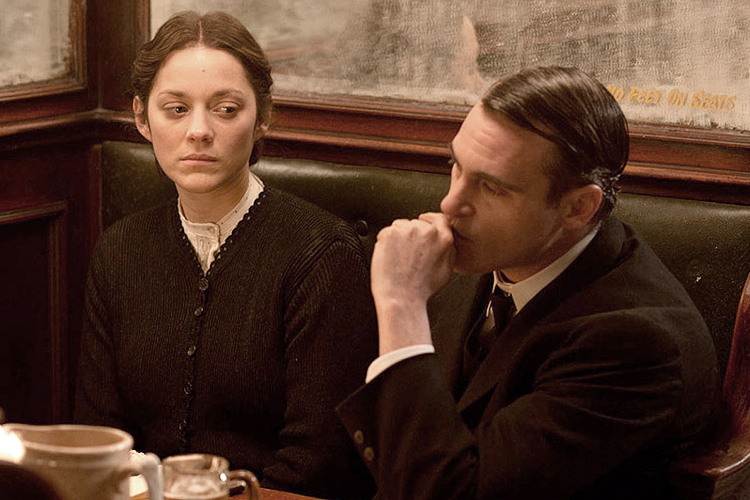
The Immigrant
AL COSSAR
FILM PROGRAMMER, CRITIC, MELBOURNE.
Favourites: Some released or seen in Melbourne (some internationally old, but locally new) / a few acquainted elsewhere:Amour (Michael Haneke, 2012)
All is Lost (J.C. Chandor, 2013)
American Hustle (David O. Russell, 2013)
At Berkeley (Frederick Wiseman, 2013)
Blue Ruin (Jeremy Saulnier, 2013)
Dast-Neveshtehaa Nemisoosand (Manuscripts Don’t Burn, Mohammad Rasoulof, 2013)
Frances Ha (Noah Baumbach, 2012)
Gravity (Alfonso Cuarón, 2013)
Nebraska (Alexander Payne, 2013)
Omar (Hany Abu-Assad, 2013)
“Ozymandias” Breaking Bad, Season 5, Episode 14 (Rian Johnson, 2013)
Starlet (Sean Baker, 2012)
The Act of Killing (Joshua Oppenheimer, Christine Cynn & Anonymous, 2012)
These Birds Walk (Omar Mullick & Bassam Tariq, 2013)
The Selfish Giant (Clio Barnard, 2013)
Tian zhu ding (A Touch of Sin, Jia Zhangke, 2013)
Uroki garmonii (Harmony Lessons, Emir Baigazin, 2013)
Vi är bäst! (We Are the Best!, Lukas Moodyson, 2013)
Minor notes (some explaining to do):
Re: American Hustle – from the time Jeremy Renner gives Christian Bale a microwave oven, henceforth referred to as a “science oven”, this was on a steep incline to the year’s best; a freewheeling reckoning of its characters’ manic aspirations which plays out as one of the most purely entertaining of 2013.
Re: “Ozymandias” Breaking Bad, Season 5, Episode 14 – yes, I’m the guy who adds in a TV episode to lists such as these when none is clearly called for. While the series finale was probably the most discussed, this prior episode in the final season was a perfect storm of horrific rolling climaxes, full of dread and an electric tension which was the equal or more of much of what I saw in the cinema this year.
Re: The Act of Killing – the fictions inherent in truth, and the truths possible in fiction.
Re: These Birds Walk – the curse of kids old before their time, a film that could have been worthy but instead was beautiful.
Re: Vi är bäst! – it’s nice to have the “nice” you back, Mr Moodyson.
SEAN CUBITT
GOLDSMITHS, UNIVERSITY OF LONDON.
Film of the year: La grande belezza (The Great Beauty, Paolo Sorrentino, 2013).Modes of beauty and its betrayal in Berlusconi’s Roma. Inspired sound design exceeds even Fellini.
DVD release of the year: Song of the Shirt (Sue Clayton and Jonathan Curling, 1979).
Remaster of political indie classic available from the filmmakers.
Best effects: The Hobbit: The Desolation of Smaug (Peter Jackson, 2013). Walkin’ in a Weta wonderland.
Gallery film of the year: JG (Tacita Dean, Frith Street Gallery, 2013). Better than her Tate Turbine hall installation, landscape reimagined through Ballard and Smithson.
Documentary: The King and The People (Simon Bright, 2013). Banned in Swaziland, a study of kleptocracy that reverberates far beyond the post-colony.
Turkey of the year: the entire Hollywood summer blockbuster season.
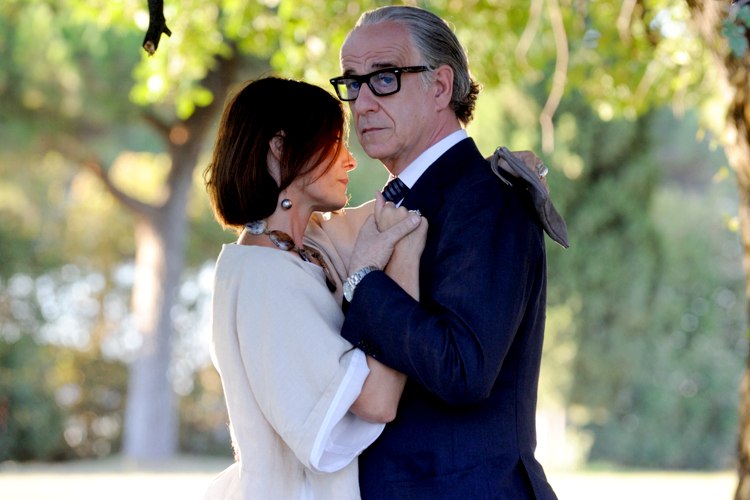
The Great Beauty
AARON CUTLER
PROGRAMMING AIDE FOR THE SAO PAULO INTERNATIONAL FILM FESTIVAL; KEEPER OF FILM CRITICISM SITE, THE MOVIEGOER.
A highlight of 2013My 2013 essentially began with a complete retrospective of films by Kira Muratova, programmed for the International Film Festival Rotterdam by Evgeny Gusyatinskiy. The first such series to happen outside Muratova’s native former Soviet Union revealed an incredible waltzing clown spirit whose approach to filmmaking has transformed continually over the past fifty-plus years. The Ukranian artist began her career co-directing lyrical works of Soviet realism with her first husband, Alexander Muratov. These films are deliberately small and sensitive studies of pastoral life alive with attention to Nature’s details, leaving space for running rabbits and pecking birds to animate the frames to the same extent that any potential human actor could.
From then on in her filmmaking, things grew more diffuse and crazed. From the beginning Muratova’s films matched flows of music, choreography, and camera movement in perpetual perfect elegance, denying the viewer’s eyes the chance to settle. She has since flooded her frames with more information over time, as though daring her audience to keep dancing along with her. The sad, sweet grace with which the rural lovers orbit around each other in Getting to Know the Big Wide World (1979) widens out to encompass the circular encounters in films like Change of Fortune (1987) and The Asthenic Syndrome (1989), with a disparate cross-section of strangers and social outsiders bouncing pinball-like off of each other, sometimes violently, in demented ways reflecting upon the madness of their surrounding culture.
The boundaries of the worlds that Muratova depicts – between rich and poor, men and women, street and theatre, lunacy and sanity, life and cinema, ideas and earth – are always in the process of dissolving. They do so partly thanks to a regular company of beautiful grotesque performers forever on the move to discomfort with pleasure.
Here are 11 great Muratova films:
- Korotkie vstrechi (Brief Encounters, 1967)
- Dolgie provody (Long Farewells, 1971)
- Poznavaya belyy svet (Getting to Know the Big Wide World, 1979)
- Peremena uchaste (Change of Fortune, 1987)
- Astenicheskiy sindrom (The Asthenic Syndrome, 1989)
- Cuvstvitelnyy milicioner (The Sentimental Policeman, 1992)
- Tri istorii (Three Stories, 1997)
- Vtorostepennye lyudi (Second Class Citizens, 2001)
- Chekhovskie motivy (Chekhov’s Motifs, 2002)
- Dva v odnom (Two in One, 2007)
- Vecnoe vozvrascenie (Eternal Homecoming, 2012)
FERGUS DALY
FILM CRITIC, WRITING AT FERGUSDALY.COM.
Best recent films seen in 2013To the Wonder (Terrence Malick, 2012)
Magnificent inflection [culmination?] of the style Malick has been experimenting with since The Thin Red Line.
Jeremy Fink and the Meaning of Life (Tamar Halpern, 2011)
Children’s Manhattan mystery in the great tradition of The World of Henry Orient.
Liv & Ingmar (Dheeraj Akolkar, 2012)
Despite the horrible music score, this is a movingly honest account of the relationship from Ullmann’s viewpoint.
Yeralti (Inside, Zeki Demirkubuz, 2012)
Turkey’s finest filmmaker gives us the best Dostoevsky adaptation in a long time.
Stand Up Guys (Fisher Stevens, 2012)
Who could resist Arkin, Walken and Pacino together?: oddness cubed.
Nancy, Please (Andrew Semans, 2012)
Worth it for the great Eleonore Hendricks alone.
Kid Thing (David Zellner, 2012)
Wonderful, felt like early Malick meeting Haruki Murakami.
Bad Fever (Dustin Guy Defa. 2012)
Not as Dostoevskian as its progenitor Frownland, but almost as funny.
The Last Rites of Joe May (Joe Maggio 2011)
Dennis Farina finally in a decent lead role.
Union Square (Nancy Savoca, 2011)
Mira Sorvino and Tammy Blanchard, two of the finest actresses around, as sisters going at it head-to-head.
Before Midnight (Richard Linklater, 2013)
Best of the trilogy.
This is Martin Bonner (Chad Hartigan, 2013)
Superb performance from Richmond Arquette.
Touchy Feely (Lynn Shelton, 2013)
Josh Pais creates a very interesting Bartleby-esque character in Shelton’s follow-up to Your Sister’s Sister.
La noche de enfrente (Night Across the Street, Raúl Ruiz, 2012)
My favourite of Ruiz’s late works.
Nugu-ui ttal-do anin Haewon (Nobody’s Daughter Haewon, Hong Sang-Soo 2013)
Hong continues to demonstrate why he may be the most cherished filmmaker working today.
Worst films of 2013
On the Road (Walter Salles, 2012)
Ill-conceived to the point of insanity – so bad it makes Michael Polish’s Big Sur look like the masterpiece it certainly isn’t.
Frances Ha (Noah Baumbach, 2012)
Offensive in the way it attempts to steal the body and soul of mumblecore (ie Greta Gerwig) and give it a post-Nouvelle Vague gloss (even including a downright stupid “tribute” to Denis Lavant in Mauvais Sang), but, because it misconceives the innovations of mumblecore, it only succeeds in contributing to its ongoing devaluation.
Ain’t Them Bodies Saints (David Lowery, 2013)
The fake poetic title speaks volumes.
Disappointment of the Year
Nebraska (Alexander Payne, 2013)
Even Bruce Dern can’t ignite what is in essence a pretty empty project.
Film-related event of 2013
Ennio Morricone open air concert, Dublin
Best TV Series
Rectify (Sundance Channel)
Best Film Criticism
Jean-Luc Godard, Cinema Historian by Michael Witt
La Querelle des dispositifs: Cinema, Installations, Expositions by Raymond Bellour
Night Across the Street: Wanna Be Startin’ Somethin’ by Adrian Martin (Online at Fandor/Keyframe)
Holy Motors: Ruinous Representation by Tony McKibbin (Online at tonymckibbin.com)
TONI D’ANGELA
FOUNDER AND EDITOR-IN-CHIEF, LA FURIA UMANA.
To the Wonder (Terrence Malick, 2012)Passion (Brian De Palma, 2012)
Flight (Robert Zemeckis, 2012)
The Immigrant (James Gray, 2013)
The Canyons (Paul Schrader, 2013)
Le Dernier des injustes (The Last of the Unjust, Claude Lanzmann, 2013)
Mille soleils (A Thousand Suns, Mati Diop, 2013)
La Vénus à la fourrure (Venus in Furs, Roman Polanski, 2013)
Norte, hangganan ng kasaysayan (Norte, the End of History, Lav Diaz, 2013)
The Unspeakable Act (Dan Sallitt, 2012)
Short movies
Saudade (Jean-Claude Rousseau, 2012)
Prisons – Notre corps est une arme (Prisons – Our Body is a Weapon, Clarisse Hahn, 2012)
La Madre (Jean-Marie Straub, 2012)
26 (Daphné Hérétakis, 2013)
MICHAEL DA SILVA
GRADUATE STUDENT AT THE UNIVERSITY OF TORONTO.
2013 was an engaging year in cinema. As my list below makes clear, many auteurs released interesting work. The list does not demonstrate the fact that Canadian auteurs in particular made impressive Hollywood breakthroughs. Edgar Wright and James Wan both produced fun genre fare. There were also surprises. For instance, both Enough Said (Nicole Holofcener, 2013) and Short Term 12 (Destin Cretton, 2013) felt like welcome gifts from another era. While the mainstream story of 2013 was the failure of the blockbuster, one blockbuster, Gravity (Alfonso Cuarón, 2013), provided the year’s most fun twenty-minute film segment. All is Lost (J.C. Chandor, 2013) was superior both as a film and as a genre exercise, but it is one of many films that did not include a superior action sequence to Gravity’s crash.Below is my list of the top ten primarily English-language films released in Toronto in 2013. Films that only played the Toronto International Film Festival in 2012 are eligible. As in previous years, I did not see enough foreign-language cinema to rank 2013’s contributions to world cinema. My English-language requirement helps limit the scope of my analysis. That being said, my favourite film at TIFF 2013 was La Vie d’Adèle: chapitres 1 et 2 (Blue Is the Warmest Colour, Abdellatif Kechiche, 2013). This list was produced on 12 December 2013, prior to the Toronto releases of American Hustle (David O. Russell, 2013), Her (Spike Jonze, 2013), Inside Llewyn Davis (Ethan and Joel Coen, 2013), The Hobbit: The Desolation of Smaug (Peter Jackson, 2013) and The Wolf of Wall Street (Martin Scorcese, 2013). World War Z (Marc Forster, 2013) was the worst film I saw in 2013. Oldboy (Spike Lee, 2013) was the most disappointing film and a Canadian-directed film, Dallas Buyers Club (Jean-Marc Vallée, 2013), was sadly the most overrated one.
- Before Midnight (Richard Linklater, 2013)
- 12 Years a Slave (Steve McQueen, 2013)
- Hannah Arendt (Margarethe von Trotta, 2012)
- Room 237 (Rodney Ascher, 2012)
- Blue Jasmine (Woody Allen, 2013)
- To the Wonder (Terrence Malick, 2012)
- Frances Ha (Noah Baumbach, 2012)
- Nebraska (Alexander Payne, 2013)
- Only God Forgives (Nicolas Winding Refn, 2013)
- Spring Breakers (Harmony Korine, 2012) / The Bling Ring (Sofia Coppola, 2013)
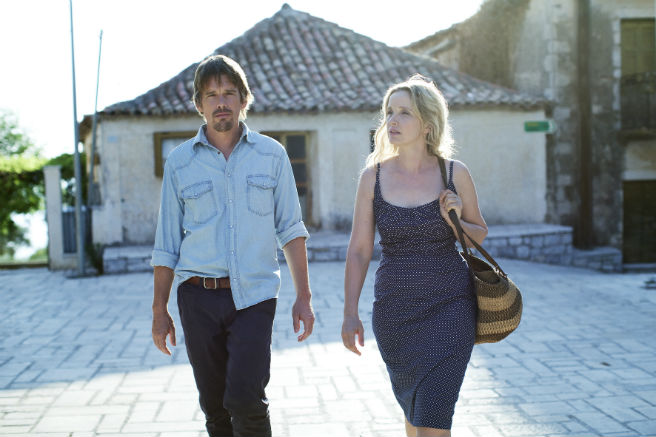
Before Midnight
DUSTIN DASIG
PROFESSOR OF COMMUNICATIONS, WRITER AND SECURITY TRAINING DIRECTOR, PHILLIPPINES.
- Gravity (Alfonso Cuarón, 2013)
- Camille Claudel 1915 (Bruno Dumont, 2013)
- À perdre la raison (Our Children, Joachim Lafosse, 2012)
- Camille redouble (Camille Rewinds, Noémie Lvovsky, 2012)
- Boven is het stil (It’s All So Quiet, Nanouk Leopold, 2013)
- L’Inconnu du lac (Stranger by the Lake, Alain Guiraudie, 2013)
- The Act of Killing (Joshua Oppenheimer, Christine Cynn & Anonymous, 2012)
- Después de Lucía (After Lucia, Michel Franco, 2012)
- Stories We Tell (Sarah Polley, 2012)
- No (Pablo Larrain, 2012) / Tabu (Miguel Gomes, 2012)
Before Midnight (Richard Linklater, 2013)
Blancanieves (Pablo Berger, 2012)
Captain Phillips (Paul Greengrass, 2013)
După dealuri (Beyond the Hills, Cristian Mingiu, 2012)
Lemale et ha’halal (Fill the Void, Rama Burshtein, 2012)
Frances Ha (Noah Baumbach, 2012)
Yi dai zong shi (The Grandmaster, Wong Kar-wai, 2013)
Le Passé (The Past, Asghar Farhadi, 2013)
Wadjda (Haifaa Al-Mansour, 2012)
Zero Dark Thirty (Kathryn Bigelow, 2012)
Best performances
Actor: Jeroen Williams in Boven is het stil (It’s All So Quiet, Nanouk Leopold, 2013)
Runner-up: Barkhad Abdi in Captain Phillips (Paul Greengrass, 2013)
Actress: Juliette Binoche in Camille Claudel 1915 (Bruno Dumont, 2013)
Runner-up: Paulina Garcia in Gloria (Sebastián Lelio, 2013)
Best narrative and technical achievements
Best directing: Alfonso Cuarón, Gravity
Best writing (screenplay): Bruno Dumont, Camille Claudel 1915 (Runner-up: Asghar Farhadi, Le Passé)
Best aural design (sound): The sound effects team of Gravity
Best visual design (cinematography): (tied) Barry Ackroyd, Captain Phillips and Kiko de la Rica, Blancanieves
ALEX JACK DAVIDSON
Best films1. Spring Breakers (Harmony Korine, 2013)
Daring, vivid and different, Harmony Korine’s movie about greed and evil in today’s society is powerful in its strength of vision; a totally uncompromising portrayal of human evil in a way that we haven’t seen since Kubrick’s A Clockwork Orange, only updated for the dubstep generation. Beautiful, mesmerising and seductively malevolent, this is easily the most important film of the year, and it desires a lot more credit than it has received. Brilliant acting from both Selena Gomez and James Franco, and some of the most genuinely scary moments of all time, hidden under the guise of a “good girls go bad”, sex and drugs movie. Wise beyond compare.
2. The Counselor (Ridley Scott, 2013)
More of a Cormac McCarthy film than a Ridley Scott film, The Counselor is intelligent, devious, and, with almost no moral characters, the most moralistic film in a long time, with its complex storytelling, rich dialogue and brooding message about the corruption of evil. This is a movie which challenges the “shades of grey” moral cowardice of films about anti-heroes, and misunderstood villains, by giving us a world in which there is only absolute good or total evil, and these two worlds shall never mix. As Malkina tells us; “…Nothing is crueler than a coward, and the slaughter to come is probably beyond our imagining.” A dismal, mature cautionary tale of the finest order.
3. Byzantium (Neil Jordan, 2013)
Rich in lore and imagery, this horror film came out of nowhere, and told us perhaps the best vampire story since the original Hammer Dracula. Full of longing and an age-old weariness, this film combines beauty and sadness in a deftly romantic blend. Continually thought-provoking, Neil Jordan returns in style with a film which will hopefully dust off the Twilight curse for good. Gemma Arterton deserves to become the most sought after actress in Britain after this. The best British film of the year.
Worst films of 2013
1. Iron Man 3 (Shane Black, 2013)
A tepid entry in a deeply annoying franchise, which asks us how long we can stand watching a hero who not only isn’t heroic, but who makes a habit of being the most arrogant and annoying human being in the world. This tiresome crowd-pleaser fulfilled its quota, by managing to find something in it which everyone hated, be it the tired regulars, the Mandarin twist, the lack of action, the brainless special effects, the nonsensical plot, or all of the above.
2. The Hunt (Thomas Vinterberg, 2012)
Vinterberg’s tale of paranoia is an exercise in tedium, and rotten to the core with its ambiguous treatment of child abuse. Full of inconsistencies and illogical plot twists, this attempts to be realistic, but instead, is simply turgid, although the ever excellent Mads Mikkelsen manages to come out looking respectable. A rotten film about a truly rotten and subversive culture, this is an art film masking a very unpleasant philosophy.

Spring Breakers
MÓNICA DELGADO
PERUVIAN FILM CRITIC AND DIRECTOR OF DESISTFILM.
From one side, the other Spain, the one which tries to escape the crisis, the one which searches for new ways to realise a true independent cinema, sees the light strongly through a series of films about political and historical memory, or a simple cinephile nod or nostalgia for the Nouvelle Vague. From the other side, from South America, Argentina keeps surprising the world with its risky bets, from a body musical such as Los Posibles (Santiago Mitre and Juan Onorfi Barbato, 2013), to a “cumbia opera” about skaters somewhere along the province in P3nd3j05 (Raúl Perrone, 2013).My best films of 2013
Redemption (Miguel Gomes, 2013)
Trois exercices d’interpretation (Three Exercises of Interpretation, Cristi Puiu, 2013)
Passion (Brian De Palma, 2012)
Les Salauds (Bastards, Claire Denis, 2013)
P3nd3jo5 (Raúl Perrone, 2013)
Costa da Morte (Coast of Death, Lois Patiño, 2013)
La grande bellezza (The Great Beauty, Paolo Sorrentino, 2013)
Les Trois désastres (The Three Disasters, Jean-Luc Godard, 2013)
Stories We Tell (Sarah Polley, 2012)
Tian zhu ding (A Touch of Sin, Jia Zhang-ke, 2013)
Los Posibles (Santiago Mitre and Juan Onorfi Barbato, 2013)
Arraianos (Eloy Enciso, 2012)
Viola (Matías Piñeiro, 2012)
Salvo (Fabio Grassadonia and Antonio Piazza, 2013)
Nugu-ui ttal-do anin Haewon (Nobody’s Daughter Haewon, Hong Sang-soo, 2013)
Pays Barbare (Barbaric Land, Yervant Gianikian and Angela Ricci Lucchi, 2013)
El quinto evangelio de Gaspar Hauser (The Fifth Gospel of Kaspar Hauser, Alberto Gracia, 2013)
E Agora? Lembra-me (What Now? Remind Me, Joaquim Pinto, 2013)
El Futuro (Luis López Carrasco, 2013)
Soft in the Head (Nathan Silver, 2013)
Los ilusos (The Wishful Thinkers, Jonás Trueba, 2013)
Before Midnight (Richard Linklater, 2013)
Stemple Pass (James Benning, 2012)
Terra de Vikingos (Vikingland, Xurxo Chirro, 2011)
The Act of Killing (Joshua Oppenheimer, Christine Cynn & Anonymous, 2012)
WHEELER WINSTON DIXON
RYAN PROFESSOR OF FILM STUDIES, COORDINATOR OF THE FILM STUDIES PROGRAM, PROFESSOR OF ENGLISH AT THE UNIVERSITY OF NEBRASKA, LINCOLN, AND EDITOR IN CHIEF, WITH GWENDOLYN AUDREY FOSTER, OF THE BOOK SERIES NEW PERSPECTIVES ON WORLD CINEMA.
Le Weekend (Roger Michell, 2013)Blackfish (Gabriela Cowperthwaite, 2013)
In a World (Lake Bell, 2013)
What Maisie Knew (Scott McGehee & David Siegel, 2012)
The Hunt (Thomas Vinterberg, 2012)
12 Years a Slave (Steve McQueen, 2013)
The Purge (James DeMonaco, 2013)
A Teacher (Hannah Fidell, 2013)
Adore (Anne Fontaine, 2013)
Les Salauds (Bastards, Claire Denis, 2013)

12 Years a Slave
RUSSELL EDWARDS
SYDNEY-BASED FILM CRITIC SPECIALISING IN ASIAN AND AUSTRALIAN FILM.
Han Gong-ju (Lee Su-jin, 2013)I Declare War (Jason Lapeyre and Robert Wilson, 2012)
R100 (Matsumoto Hitoshi, 2013)
Ilo Ilo (Anthony Chen, 2013)
The Conjuring (James Wan, 2013)
Lincoln (Steven Spielberg, 2012)
Captain Phillips (Paul Greengrass, 2013)
Gravity (Alfonso Cuarón, 2013)
Mystery Road (Ivan Sen, 2013)
Flight (Robert Zemeckis, 2012)
WILLIAM EDWARDS
FILM FANATIC, SYDNEY.
My top ten of 2013:- Ida (Pawel Pawlikowski, 2013)
- Nebraska (Alexander Payne, 2013)
- Behind the Candelabra (Steven Soderbergh, 2013)
- Soshite chichi ni naru (Like Father, Like Son, Hirokazu Kore-eda, 2013)
- Paradies: Glaube (Paradise: Faith, Ulrich Seidl, 2012)
- Call Girl (Mikael Marcimain, 2012)
- Gore Vidal: The United States of Amnesia (Nicholas D. Wrathall, 2013)
- Shokuzai (Penance (Kiyoshi Kurosawa, 2012)
- L’Inconnu du lac (Stramger by the Lake, Alain Guiraudie, 2013)
- Sightseers (Ben Wheatley, 2012)
- Carrie (Kimberley Peirce, 2013)
- Thanks for Sharing (Stuart Blumberg, 2013)
- Savages (Oliver Stone, 2012)
- The Paperboy (Lee Daniels, 2012)
- The World’s End (Edgar Wright, 2013)
TED FENDT
TRANSLATOR, OCCASIONAL CRITIC, FILMMAKER.
Films of the year (New releases/New York premieres)Le Pont du Nord (Jacques Rivette, 1981)
Les Salauds (Bastards, Claire Denis, 2013)
Listening to the Space in My Room (Robert Beavers, 2013)
Nugu-ui ttal-do anin Haewon (Nobody’s Daughter Haewon, Hong Sang-Soo, 2013)
Dialogue d’ombres (Jean-Marie Straub and Danièle Huillet, 2013)
La Madre (Jean-Marie Straub, 2012)
The Lords of Salem (Rob Zombie, 2013)
La Jalousie (Jealousy, Philippe Garrel, 2013)
Computer Chess (Andrew Bujalski, 2013)
To the Wonder (Terrence Malick, 2013)
Jackass Presents: Bad Grandpa (Jeff Tremaine, 2013)
What Places of Heaven, What Planets Directed, How Long the Effects, or The General Accidents of the World (David Gatten, 2013)
Bullet to the Head (Walter Hill, 2013)
Fast & Furious 6 (Justin Lin, 2013)
A Primer to Sky Socialism (Ken Jacobs, 2013)
Repertory snapshot
I’ve seen far too many repertory films to organise into a coherent list so the following are just some of my absolute highlights.
Cheyenne Autumn (John Ford, 1964) 70mm print
The Fighting Odds (Allan Dwan, 1917)
Calamity Anne’s Ward (Allan Dwan, 1912)
Enchanted Island (Allan Dwan, 1958)
The Last Wagon (Delmar Daves, 1956)
Jeanne la Pucelle I: Les Batailles (Jacques Rivette, 1994)
Jeanne la Pucelle II: Les Prisons (Jacques Rivette, 1994)
Nouvelle Vague (Jean-Luc Godard, 1990)
Fish (Unknown, 1916) One of Bert Williams’ two film appearances, in MoMA’s Cruel and Unusual Comedy series
Only Angels Have Wings (Howard Hawks, 1927)
Still A Brother: Inside the Negro Middle Class (William Greaves, 1968)
He (Tom Palazzolo, 1966)
Paris 1900 (Nicole Védrès, 1947)
This Day and Age (Cecil B. DeMille, 1933)
Life is a Dream (Raúl Ruiz, 1986)
Klassenverhältnisse (Class Relations, Jean-Marie Straub and Danièle Huillet, 1983)
Wild Boys of the Road (William A. Wellman, 1933)
Northern Lights (John Hanson and Rob Nilsson, 1978)
The Apparition (Lawrence Jordon, 1976)

To the Wonder
ADALBERTO FONKÉN
LIMA-BASED SOCIAL COMMUNICATOR AND FILM WRITER FOR THE SÉPTIMA ILUSIÓN BLOG.
Before Midnight (Richard Linklater, 2013)A long afternoon of memories, reflections and bitter confessions.
Gravity (Alfonso Cuarón, 2013)
The weightlessness, far from the earth, can be astonishing and terrible.
The Conjuring (James Wan, 2013)
Zero Dark Thirty (Kathryn Bigelow, 2012)
The controversial search for the most wanted man in the world.
Beasts of the Southern Wild (Benh Zeitlin, 2012)
Django Unchained (Quentin Tarantino, 2012)
Killing Them Softly (Andrew Dominik, 2012)
El Limpiador (The Cleaner, Adrián Saba, 2012)
Minimalist and post-apocalyptic Peruvian film in a desolate and silent Lima.
La grande bellezza (The Great Beauty, Paolo Sorrentino, 2013)
A bohemian journalist/writer walking through the streets of “Felliniana” Rome.
Tian zhu ding (A Touch of Sin, Jia Zhang-ke, 2013)
L’Inconnu du lac (Stranger by the Lake, Alain Guiraudie, 2013)
Heli (Amat Escalante, 2013)
Gloria (Sebastián Lelio, 2013)
Paradies: Hoffnung (Paradise: Hope, Ulrich Seidl, 2013)
Berberian Sound Studio (Peter Strickland, 2012)
An Italian sound studio with terrifying and typical sounds of Giallo.
O Som ao redor (Neighboring Sounds, Kleber Mendonça Filho, 2012)
Sounds, insecurity and routine in a Brazilian urban neighbourhood.
Cesare deve morire (Caesar Must Die, Paolo and Vittorio Taviani, 2012)
Tabu (Miguel Gomes, 2012)
La noche de enfrente (Night Across the Street, Raúl Ruiz, 2012)
Viola (Matías Piñeiro, 2012)
Educación Física (Physical Education, Pablo Cerda, 2012)
Documentary
Vers Madrid (The Burning Bright!) (Sylvain George, 2012)
Leviathan (Lucian Castaing-Taylor and Véréna Paravel, 2012)
The Act of Killing (Joshua Oppenheimer, Christine Cynn & Anonymous, 2012)
Searching for Sugarman (Malik Bendjelloul, 2012)
As Canções (Songs, Eduardo Coutinho, 2011)
GWENDOLYN AUDREY FOSTER
PROFESSOR OF ENGLISH AT THE UNIVERSITY OF NEBRASKA, LINCOLN, CO-EDITOR OF QUARTERLY REVIEW OF FILM AND VIDEO, AND SERIES EDITOR (WITH WHEELER WINSTON DIXON) OF THE BOOK SERIES NEW PERSPECTIVES ON WORLD CINEMA FOR ANTHEM PRESS.
Post Tenebras Lux (Light After Darkness, Carlos Reygadas, 2012)Hors Satan (Outside Satan, Bruno Dumont, 2011)
După dealuri (Beyond the Hills, Cristian Mungiu, 2012)
Adore (Anne Fontaine, 2013)
Jagten (The Hunt, Thomas Vinterberg, 2012)
Camille Claudel, 1915 (Bruno Dumont, 2013)
À perdre la raison (Our Children, Joachim Lafosse, 2012)
Abus de faiblesse (Abuse of Weakness, Catherine Breillat, 2013)
Concussion (Stacie Passon, 2013)
A Teacher (Hannah Fidell, 2013)

Camille Claudel, 1915
JEAN-MICHEL FRODON
FILM CRITIC AT SLATE.FR AND PROFESSOR AT PARIS SCIENCES PO.
Tian zhu ding (A Touch of Sin, Jia Zhang-ke, 2013)L’Inconnu du lac (Stranger by the Lake, Alain Guiraudie, 2013)
Leviathan (Lucian Castaing-Taylor and Verena Paravel, 2012)
La Jalousie (Jealousy, Philippe Garrel, 2013)
The Lebanese Rocket Society (Joana Hadjithomas and Khalil Joreige, 2012)
L’intervallo (Leonardo Di Costanza, 2012)
Yi dai zong shi (The Grandmaster, Wong Kar-wai, 2013)
Django Unchained (Quentin Tarantino, 2012)
Leones (Jazmin Lopes, 2013)
Inside Llewyn Davis (Ethan and Joel Coen, 2013)
La Vie d’Adèle: chapitres 1 et 2 (Blue Is the Warmest Colour, Abdellatif Kechiche, 2013)
Història de la meva mort (Story of My Death, Albert Serra, 2013)
Jimmy P. (Psychothérapie d’un Indien des Plaines) (Jimmy P., Arnaud Desplechin, 2013)
Only Lovers Left Alive (Jim Jarmusch, 2013)
Camille Claudel 1915 (Bruno Dumont, 2013)
Pink (Jeon Soo-il, 2011)
Les Salauds (Bastards, Claire Denis, 2013)
Zero Dark Thirty (Kathryn Bigelow, 2012)
Vic+Flo ont vu un ours (Vic+Flo Saw a Bear, Denis Côté, 2013)
Snowpiercer (Bong Joon-ho, 2013)
ANDREW GILBERT
CURRENTLY WORKING ON HIS PHD ON WOMEN, GENDER AND SEXUALITY STUDIES AT THE UNIVERSITY OF KANSAS, UNITED STATES. HE HAS ALSO WRITTEN FILM REVIEWS FOR CLÉO AND SCREEN MACHINE.
Stemple Pass (James Benning, 2012)The Unspeakable Act (Dan Sallitt, 2012)
Les Salauds (Bastards, Claire Denis, 2013)
Sun Don’t Shine (Amy Seimetz, 2012)
Nugu-ui ttal-do anin Haewon (Nobody’s Daughter Haewon, Hong Sang Soo, 2013)
Before Midnight (Richard Linklater, 2013)
Du zhan (Drug War, Johnnie To, 2012)
Computer Chess (Andrew Bujalski, 2013)
The Lords of Salem (Rob Zombie, 2012)
The Canyons (Paul Schrader, 2013)
The Great Gatsby (Baz Luhrmann, 2013)
ANTONY I. GINNANE
PRODUCER, DISTRIBUTOR AND COMMENTATOR, MELBOURNE / LOS ANGELES. PRESIDENT OF FG FILM PRODUCTIONS (AUSTRALIA) PTY LTD / IFM WORLD RELEASING INC; CURRENTLY PRODUCING TURKEY SHOOT RELOADED AND BLOWBACK IN AUSTRALIA.
Top 10 (Eligibility: 2013 theatrical, festival or premiere DVD or VOD first release in the USA, Canada, Australia or New Zealand) listed alphabetically by title:The Counselor (Ridley Scott, 2013)
Ridley takes on Tony’s mantle with this visual feast with ice-cold Cormac McCarthy dialogue. A very hot view of a very cold world.
Django Unchained (Quentin Tarantino, 2012)
Tarantino continues with his encyclopaedic and introspective review of genre – here the western. Postmodern irony blended with a Leone like post-classical eye.
După dealuri (Beyond the Hills, Cristian Mungiu, 2012)
Extraordinary stark visuals compliment the madness of the cult like devotion of the protagonists – their doubts and a complex exit path.
Gravity (Alfonso Cuarón, 2013)
Both a technical tour de force and an oddly spiritual tract – the philosophical edges of a sci-fi subset that began with Kubrick’s 2001: A Space Odyssey (1968). Alfonso Cuarón mixes magic and sentiment. Both work.
Yi dai zong shi (The Grandmaster, Wong Kar-wai, 2013)
The same ethereal, almost surrealistic narrative style that bled through In the Mood for Love (2000) is mixed with big screen martial arts sequences that strangely recall Lola Montès (Max Ophüls, 1955). More poetic than epic.
Only God Forgives (Nicolas Winding Refn, 2013)
Peckinpah meets Walter Hill in this revenge-blooded taste of crime and punishment laced with existential black humour.
Passion (Brian De Palma, 2013)
No one moves a camera like De Palma anymore and no one frames mystery or eroticism or cuts suspense like he does. A stimulating potpourri of his obsessions.
Rush (Ron Howard, 2013)
Howard is the able successor to Howard Hawks. Here pitting two professionals against each other, the group and the system with the same sense of fatalism and nonchalance that imbued Only Angels Have Wings (Howard Hawks, 1939) or Red Line 7000 (Howard Hawks, 1965).
Side Effects (Steven Soderberg, 2013)
The conspiracy thriller – a 70s sub-genre that never went away. And Soderberg’s take on Big Pharma like Cronenberg in The Brood (1979) suggests no good can come from messing God-like with man. Not a new notion, but a new view.
Zero Dark Thirty (Kathryn Bigelow, 2012)
The other Hawks apostle, Kathryn Bigelow, does a mission picture that recalls so many of his men-on-a-job pics. Pain promotes endurance equals success.
Other titles that have excited or inspired me during the year include:
Lo imposible (The Impossible, J.A. Bayona, 2012)
Gangster Squad (Ruben Fleischer, 2013)
Parker (Taylor Hackford, 2013)
Dead Man Down (Niels Arden Oplev, 2013)
The Call (Brad Anderson, 2013)
Spring Breakers (Harmony Korine, 2013)
Blancanieves (Pablo Berger, 2012)
Oblivion (Joseph Kosinski, 2013)
The Company You Keep (Robert Redford, 2012)
Iron Man 3 (Shane Black, 2013)
Despicable Me 2 (Pierre Coffin & Chris Renaud, 2013)
All is Lost (J.C. Chandor, 2013)
The Wolverine (James Mangold, 2013)
Elysium (Neill Blomkamp, 2013)
Prisoners (Denis Villeneuve, 2013)
Carrie (Kimberly Peirce, 2013)
12 Years a Slave (Steve McQueen, 2013)
Nebraska (Alexander Payne, 2013)
August: Osage County (John Wells, 2013)
Mama (Andrés Muschietti, 2013)
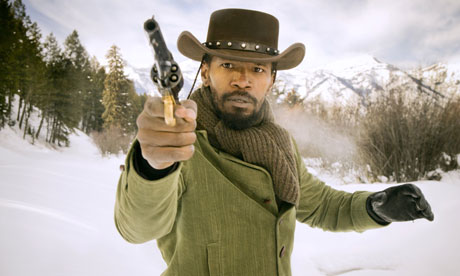
Django Unchained
PAUL DOUGLAS GRANT
TRANSLATOR OF SERGE DANEY’S POSTCARDS FROM THE CINEMA. TEACHES CINEMA STUDIES AT THE UNIVERSITY OF SAN CARLOS, CEBU, PHILIPPINES.
1. Kordero sa Dios (Keith Deligero, 2012)
2. Ang Paglalakbay ng mga Bituin sa Gabing Madilim (A Star’s Journey into the Dark Night, Arnel Mardoquio, 2013)
3. Restored Maynila: sa mga kuko ng liwanag (Manila in the Claws of Light, Lino Brocka, 1975)
4. Behind The Flickering Light (Hafiz Rancajale, 2013)
5. The Act of Killing (Joshua Oppenheimer, Christine Cynn & Anonymous, 2012)
6. Aliyana Ang Enkantada (Eugene Labella, 1974; found 2013)
7. Gema Dari Menara (Mohasbi Ahmad, 1968; found by Mervin Espina 2013)
8. Pimean Akas (Celestial Space, Ukrit Sa-Nguanhai, 2013)
9. Restored Oro Plata Mata (Peque Gallaga, 1982)
10. Jungle Love (Sherad Anthony Sanchez, 2012)
2. Ang Paglalakbay ng mga Bituin sa Gabing Madilim (A Star’s Journey into the Dark Night, Arnel Mardoquio, 2013)
3. Restored Maynila: sa mga kuko ng liwanag (Manila in the Claws of Light, Lino Brocka, 1975)
4. Behind The Flickering Light (Hafiz Rancajale, 2013)
5. The Act of Killing (Joshua Oppenheimer, Christine Cynn & Anonymous, 2012)
6. Aliyana Ang Enkantada (Eugene Labella, 1974; found 2013)
7. Gema Dari Menara (Mohasbi Ahmad, 1968; found by Mervin Espina 2013)
8. Pimean Akas (Celestial Space, Ukrit Sa-Nguanhai, 2013)
9. Restored Oro Plata Mata (Peque Gallaga, 1982)
10. Jungle Love (Sherad Anthony Sanchez, 2012)
JAIME GRIJALBA
STUDIED FILMMAKING, WRITES SCREENPLAYS, REVIEWS MOVIES, AND IS INVOLVED IN TWITCHFILM, WRITING EXCLUSIVELY ON THE SUBJECT OF CHILEAN CINEMA.
20. We’re the Millers (Rawson Marshall Thurber, 2013)
19. Gravity (Alfonso Cuarón, 2013)
18. Naomi Campbell (Nicolás Videla and Camila José Donoso, 2013)
17. Moebius (Kim Ki-duk, 2013)
16. Narco Cultura (Shaul Schwarz, 2013)
15. Il futuro (The Future, Alicia Scherson, 2013)
14. Nebraska (Alexander Payne, 2013)
13. Koto no ha no niwa (The Garden of Words, Makoto Shinkai, 2013)
12. Barroco (Barroque, Estanislao Buisel Quintana, 2013)
11. Before Midnight (Richard Linklater, 2013)
10. Nugu-ui ttal-do anin Haewon (Nobody’s Daughter Haewon, Hong Sang-soo, 2013)
9. Trance (Danny Boyle, 2013)
8. Inside Llewyn Davis (Joel Coen and Ethan Coen, 2013)
7. Only Lovers Left Alive (Jim Jarmusch, 2013)
6. The Dirties (Matt Johnson, 2013)
5. Top of the Lake (Jane Campion and Garth Davis, 2013)
4. Stoker (Park Chan-wook, 2013)
3. The World’s End (Edgar Wright, 2013)
2. Computer Chess (Andrew Bujalski, 2013)
1. Yi dai zong shi (The Grandmaster, Wong Kar-Wai, 2013)
19. Gravity (Alfonso Cuarón, 2013)
18. Naomi Campbell (Nicolás Videla and Camila José Donoso, 2013)
17. Moebius (Kim Ki-duk, 2013)
16. Narco Cultura (Shaul Schwarz, 2013)
15. Il futuro (The Future, Alicia Scherson, 2013)
14. Nebraska (Alexander Payne, 2013)
13. Koto no ha no niwa (The Garden of Words, Makoto Shinkai, 2013)
12. Barroco (Barroque, Estanislao Buisel Quintana, 2013)
11. Before Midnight (Richard Linklater, 2013)
10. Nugu-ui ttal-do anin Haewon (Nobody’s Daughter Haewon, Hong Sang-soo, 2013)
9. Trance (Danny Boyle, 2013)
8. Inside Llewyn Davis (Joel Coen and Ethan Coen, 2013)
7. Only Lovers Left Alive (Jim Jarmusch, 2013)
6. The Dirties (Matt Johnson, 2013)
5. Top of the Lake (Jane Campion and Garth Davis, 2013)
4. Stoker (Park Chan-wook, 2013)
3. The World’s End (Edgar Wright, 2013)
2. Computer Chess (Andrew Bujalski, 2013)
1. Yi dai zong shi (The Grandmaster, Wong Kar-Wai, 2013)

Inside Llewyn Davis
BARTHÉLÉMY GUILLEMET
L’Inconnu du lac (Stranger by the Lake, Alain Guiraudie, 2013)Spring Breakers (Harmony Korine, 2012)
La Vénus à la fourrure (Venus in Fur, Roman Polanski, 2013)
La Fille du 14 juillet (The Rendez-Vous of Déjà-Vu, Antonin Peretjako, 2013)
Tian zhu ding (A Touch of Sin, Jia Zhangke, 2013)
Frances Ha (Noah Baumbach, 2012)
Inside Llewyn Davis (Joel & Ethan Coen, 2013)
No (Pablo Larraín, 2012)
Gravity (Alfonso Cuarón, 2013)
Zero Dark Thirty (Kathryn Bigelow, 2012)
LUCAS HAMMER
TIMID SCIENTIST BY DAY, FILMMAKER EXTRAORDINAIRE BY NIGHT.
The Act of Killing (Joshua Oppenheimer, Christine Cynn and Anonymous, 2012)Spring Breakers (Harmony Korine, 2012)
Amour (Michael Haneke, 2012)
The Spectacular Now (James Ponsoldt, 2013)
Gravity (Alfonso Cuarón, 2013)
On The Road (Walter Salles, 2012)
Holy Motors (Leos Carax, 2012)
Escape from Tomorrow (Randy Moore, 2013)
Worst Films of 2013
The Wolverine (James Mangold, 2013)
Kick-ass 2 (Jeff Wadlow, 2013)
Trance (Danny Boyle, 2013)
Evil Dead (Fede Alvarez, 2013)
Pacific Rim (Guillermo del Toro, 2013)
Lords of Salem (Rob Zombie, 2012)
Retrospective Mention
La Notte (The Night, Michelangelo Antonioni, 1961. Criterion Collection Blu-Ray released 2013)
For me, 2013 was a monumental year for cinema. I saw the single greatest special-effect generated scene ever created in Cuarón’s Gravity and arguably the most transcendental film ever made, The Act of Killing. In 2013, the existential crisis of modernity was ever-so present and beautifully presented in two films: Salles’s On The Road and Korine’s Spring Breakers. I was one of the few lucky individuals to get the chance to see Randy Moore’s Escape from Tomorrow (Ebertfest, 2013) before it was believed to have a snowball’s chance in hell at seeing a wide release due to Disney’s typically tight grip, but luckily for the filmmakers, it seems the film will see the light of distribution. For 2013 performances, I immensely enjoyed Matthew McConaughey’s performance in Dallas Buyers’ Club (Jean Marc Vallée, 2013). He conveyed his character’s aggressive drive, angst, and sleaziness in the most convincing performance of the year. Additionally, Miles Teller’s performance in The Spectacular Now was so natural and believable that it also warrants a mention.
Returning to my favourite film of the year, The Act of Killing – words cannot describe how thought-provoking I found this film to be. It will go down as one of the most impactful and important films ever made. I would compare it to Errol Morris’s The Thin Blue Line (1988) but that only affected a single man’s outcome. I believe that The Act of Killing will bring about change and awareness for thousands. If this were a normal cut and dry documentary, it would have never had such an impact, but the way the film progresses creates layers upon layers of humanistic perplexities, showcasing the complexities of the evil acts normal beings commit. Indonesia will never be the same and nor will I.
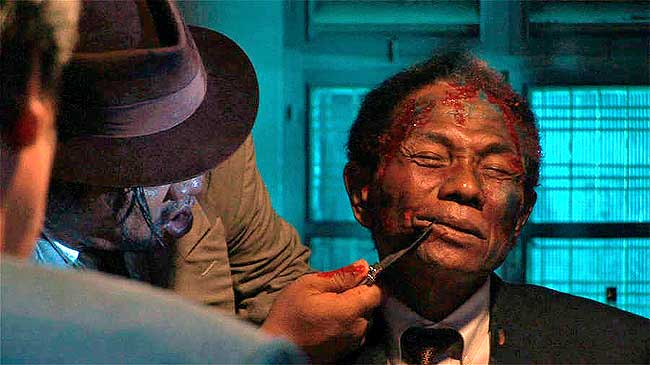
The Act of Killing
LEE HILL
LONDON-BASED WRITER. AUTHOR OF A GRAND GUY: THE ART AND LIFE OF TERRY SOUTHERN AND A BFI BOOK ON EASY RIDER.
Bests (in no particular order)Zero Dark Thirty (Kathryn Bigelow, 2012)
To the Wonder (Terrence Malick, 2012)
Après mai (Something in the Air, Olivier Assayas, 2012)
La Vie d’Adèle: chapitres 1 et 2 (Blue Is the Warmest Colour, Abdellatif Kechiche, 2013)
La grande bellezza (The Great Beauty, Paolo Sorrentino, 2013)
Blue Jasmine (Woody Allen, 2013)
Le Weekend (Roger Michell, 2013)
Enough Said (Nicole Holofcener, 2013)
Suzanne (Katell Quillévéré, 2013)
Gare du Nord (Claire Simon, 2013)
Exhibition (Joanna Hogg, 2013)
All Is Lost (J.C. Chandor, 2013)
The Counselor (Ridley Scott, 2013)
Where Are We Now? (Tony Oursler, 2013) (music video)
Love Is Lost (David Bowie, 2013) (music video)
Honourable mentions (in no particular order)
The Last Impresario (Gracie Otto, 2013)
Gloria (Sebastián Lelio, 2013)
12 Years a Slave (Steve McQueen, 2013)
Inside Llewyn Davis (Ethan Coen & Joel Coen, 2013)
Night Moves (Kelly Reichardt, 2013)
The Sarnos: A Life in Dirty Movies (Wiktor Ericsson, 2013)
Jodorowsky’s Dune (Frank Pavich, 2013)
Reissues
Scarecrow (Jerry Schatzberg, 1973), The Innocents (Jack Clayton, 1961) and kiss-the-ground accolades to Criterion and Masters of Cinema for their ongoing programs.
Less than meets the eyes and other senses
Gravity (Alfonso Cuarón, 2013)
Django Unchained (Quentin Tarantino, 2012)
Only God Forgives (Nicolas Winding Refn, 2013)
Stoker (Chan-wook Park, 2013)
World War Z (Marc Forster, 2013)
The Great Gatsby (Baz Luhrmann, 2013)
The Look of Love (Michael Winterbottom, 2013)

Blue Jasmine
WAI HO
FILM CRITIC AND PROGRAMMER, CHINA.
- Peleh Akhar (The Last Step, Ali Mosaffa, 2012)
- Môj pes Killer (My Dog Killer, Mira Fornay, 2013)
- E Agora? Lembra-me (What Now? Remind Me, Joaquim Pinto, 2013)
- XL (Marteinn Þórsson, 2013)
- Jiao you (Stray Dogs, Tsai Ming-liang, 2013)
- The Master (Paul Thomas Anderson, 2012)
- Uri Sunhi (Our Sunhi, Hong Sang-soo, 2013)
- Pardé (Closed Curtain, Jafar Panahi & Kamboziya Partovi, 2013)
- L’Inconnu du lac (Stranger by the Lake, Alain Guiraudie, 2013)
- Styd (Shame, Yusup Razykov, 2013)
ALEXANDER HORWATH
DIRECTOR OF THE AUSTRIAN FILMMUSEUM, VIENNA.
- Before Midnight (Richard Linklater, 2013)La Jalousie (Jealousy, Philippe Garrel, 2013)
- At Berkeley (Frederick Wiseman, 2013)Computer Chess (Andrew Bujalski, 2013)Norte, hangganan ng kasaysayan (Norte, the End of History, Lav Diaz, 2013)
- Le Dernier des injustes (The Last of the Unjust, Claude Lanzmann, 2013)
L’Image manquante (The Missing Picture, Rithy Panh, 2013) - Un Château en Italie (A Castle in Italy, Valeria Bruni-Tedeschi, 2013)L’Inconnu du lac (Stranger by the Lake, Alain Guiraudie, 2013)Je m’appelle hmmm… (Agnès B., 2013)Jimmy P. (Psychothérapie d’un Indien des Plaines) (Jimmy P., Arnaud Desplechin, 2013)Mouton (Marianne Pistone and Gilles Deroo, 2013)Nebraska (Alexander Payne, 2013)Night Moves (Kelly Reichardt, 2013)
- Återträffen (The Reunion, Anna Odell, 2013)E Agora? Lembra-me (What Now? Remind Me, Joaquim Pinto, 2013)I Used to Be Darker (Matthew Porterfield, 2013)
PETER HOURIGAN
LEADS FILM DISCUSSION GROUPS AT THE CENTRE FOR ADULT EDUCATION, MELBOURNE.
Out of the past:Lettre à la prison (Letter to Prison, Marc Scialom, 1969-70)
This film quickly disappeared on original release, not helped by Chris Marker’s rejection of it as not political enough. My standout title from Bologna’s Cinema Ritrovato.
Shah-re ziba (Beautiful City, Asghar Farhadi, 2004)
Now appearing in retrospectives, it shows that his 2011 Jodaeiye Nader az Simin (A Separation) was no accident.
Thanks to Shakespeare:
Richard II (Rupert Goold, 2012) Part of a BBC series, The Hollow Crown.
This featured the greatest performance I saw in 2013, with Ben Whishaw as Richard11.
Much Ado About Nothing (Josh Whedon, 2012)
Perhaps conceived almost as a home-movie with friends, this joyously captures the humour and humanity of Shakespeare.
Some films that gained a commercial release:
Vous n’avez encore rein vu (You Ain’t Seen Nothin’ Yet, Alain Resnais, 2012)
Saddled with a clumsy English title Resnais shows he can still make intellectually witty films.
V tumane (In the Fog, Sergei Loznitsa, 2012)
World War II and its often morally impossible problems still resonate in Russia.
Blancianieves (Pablo Berger, 2012)
The tale of Snow White and the styles of silent cinema are employed way beyond pastiche and the self-congratulatory humourlessness of The Artist (Michael Hazanavicius, 2011).
Stories We Tell (Sarah Polley, 2012)
Breaking apart conventions of documentary, fiction and essay films, this was an original, thought provoking film exploring family, storytelling, emotions and lots more.
Amour (Michael Haneke, 2012)
Such a compassionate look at one of life’s most difficult and unavoidable periods.
From the Melbourne International Film Festival:
Pardé (Closed Curtain, Jafar Panahi & Kambuzia Partovi, 2013)
Even when working under the most constrained conditions, Panahi and Partovi produce a masterpiece of insight and intellect and humour.
Workers (José Luis Valle, 2013)
A sardonic look at worker and how they are treated with a mordant humour that most pleasurably took me by surprise.
What is This Film Called Love? (Mark Cousins, 2012)
It might be a piece of indulgence – on the parts of both Cousins and myself, but this whimsical recording of a few days’ in a foreign city caught my spirit at the time of seeing it.

Blancianieves
CERISE HOWARD
FREELANCE WRITER AND BROADCASTER, PEREGRINE FILM CRITIC AND ARTISTIC DIRECTOR OF THE CZECH AND SLOVAK FILM FESTIVAL OF AUSTRALIA.
10 best new films seen in, or shortly to be seen in, general release in Melbourne, in a wobbly order of merit and with a few glaring omissions1. The Act of Killing (Joshua Oppenheimer, Christine Cynn & Anonymous, 2012)
The most extraordinary, densely ethically complex film I’ve seen for many a long year and amongst the least comfortable viewing experiences I’ve ever endured, I wish it was drawing a much longer bow in implicating the cinema in the barbaric massacring of countless innocents in Indonesia in the ’60s. Scarcely less bitter a pill to swallow is The Act of Killing‘s application of the cinematic apparatus as a rehabilitative, redemptive tool for certain frighteningly charismatic, film-mad perpetrators of just these very atrocities. An astonishing accomplishment, which I may yet never bring myself to watch again.
American Hustle (David O. Russell, 2013)
No (Pablo Larraín, 2012)
The Rocket (Kim Mordaunt, 2013)
Inside Llewyn Davis (Ethan Coen and Joel Coen, 2013)
Berberian Sound Studio (Peter Strickland, 2012)
Barbara (Christian Petzold, 2012)
Django Unchained (Quentin Tarantino, 2012)
The Place Beyond the Pines (Derek Cianfrance, 2012)
La grande bellezza (The Great Beauty, Paolo Sorrentino, 2013)
Best new films seen at the 2013 Melbourne International Film Festival
Computer Chess (Andrew Bujalski, 2013)
Tore tanzt (Nothing Bad Can Happen, Katrin Gebbe, 2013)
Jîn (Reha Erdem, 2013)
Grzeli nateli dgeebi (In Bloom, Nana Ekvtimishvili and Simon Groß, 2013)
The Capsule (Athina Rachel Tsangari, 2013)
Camille Claudel 1915 (Bruno Dumont, 2013)
Oh Boy! (Jan Ole Gerster, 2012)
Blue Ruin (Jeremy Saulnier, 2013)
All is Lost (J.C. Chandor, 2013)
Best new films seen at festivals elsewhere in 2013
Hořící keř (Burning Bush, Agnieszka Holland, 2013)
Pandy (Pandas, Matúš Vizár, 2013)
The Selfish Giant (Clio Barnard, 2013)
Môj pes Killer (My Dog Killer, Mira Fornay, 2013)
Heli (Amat Escalante, 2013)
Tian zhu ding (A Touch of Sin, Jia Zhang-ke, 2013)
A Field in England (Ben Wheatley, 2013)
Truba (Pipeline, Vitaly Mansky, 2013)
Miele (Honey, Valeria Golino, 2013)
Barring some poor CGI – something so great a natural world image-smith as Jodorowsky surely has no need for recourse to – La danza de la realidad (The Dance of Reality, Alejandro Jodorowsky, 2013)
The first nine-tenths of Vechnoe vozvraschenie (Eternal Homecoming, Kira Muratova, 2013)
Surprise block-bluster-y good times
The Hobbit: The Desolation of Smaug (Peter Jackson, 2013)
Viewed in 3D at 24fps. Notwithstanding that the film wasn’t shot to be viewed under the conditions I viewed it under, and that there can’t help but be compromise involved in a film being shot in any one format when it’s later to be delivered to audiences across multiple others, each imposing inexorable variations upon the virtues and failings of the original, I still enjoyed The Desolation of Smaug in 3D at 24fps immensely – all the more as I really hadn’t expected to, so aghast was I at the hypertrophied Blu-Ray shop demo ambience produced by the delivery of the first Hobbit instalment in 48fps 3D. Why, there are even wry tips of the hat in this to Jackson’s very first film, that no-budget splatter wonder, Bad Taste (1987), amidst one particularly brilliantly choreographed – and very funny – prolonged sequence of top notch mayhem. I’m now even looking forward to part three…
Cloud Atlas (Tom Tykwer, Andy Wachowski and Lana Wachowski, 2012)
No, really. Overstretching and cloyingly new-age-y, I nonetheless still found much to admire in this singular epic, which sees remarkable drag acts across gender, race, space and time perpetrated many times over by a clutch of famed but often barely recognisable stars, making for some startling reveals in the closing credits.
Greatest film-going sense of occasion
No contest: catching Murnau’s Sunrise (1927) from sundown, with live symphony orchestral accompaniment, on the Odessa steps during the 4th OIFF.
A little blowing of one’s own trumpet
I remain inordinately proud to have been integral in bringing to Melbourne screens, amongst some other fine offerings, a handful of masterpieces on gorgeous 35mm by the great, but nowadays vastly under-celebrated Czech animator Jiří Trnka, at the inaugural Czech and Slovak Film Festival of Australia. Wonderful things, I fancy, lie in store for a 2nd edition of the festival in 2014, which will doubtless consume much of my energy – and unavoidably again put a bit of a crimp in my non-Czech and Slovak film viewing – every bit as much as it did this year, but ultimately to hopefully even better, and still even better received, effect.
Greatest retrospectives
“Uptown Girl: The Cinema of Shirley Clarke” at ACMI – Clarke’s cinema was a long overdue discovery of the greatest revelatory import!
Courtesy of the Melbourne Cinémathèque: “Moving Through Time and Space: The Films of Chantal Akerman”; Dekalog (The Decalogue, Krzysztof Kieślowski, 1989) – seldom can three successive Wednesday nights have been better spent!, and “Troubled Heroes and Volatile Landscapes: The Cinema of Anthony Mann”, to name but three highlights.
“Shining Violence: Italian Giallo” at the Melbourne International Film Festival – not just for the joy of catching stalwart faves on 35mm on the big screen, like Dario Argento’s Profondo Rosso (Deep Red, 1975) and Tenebrae (1982, and even if shorn of those famous few seconds of spectacular parabolic fake blood action painting), and Lucio Fulci’s Non si sevizia un paperino (Don’t Torture a Duckling, 1972), but for the glorious psychedelic revelation that was Elio Petri’s Un tranquillo posto di campagna (A Quiet Place in the Country, 1968). If only there could have been a few more titles fleshing out the program!
Sergei Paradjanov retrospective in Odessa – not for the joy of accessing rare archival prints, as the projections were surely all digital, but especially for viewing Tini zabutykh predkiv (Shadows of Forgotten Ancestors, 1964) out of doors in the land of its creation, complemented by a worthy new biopic (Paradjanov, Serge Avedikian and Olena Fetisova, 2013) and a fascinating exhibition of Paradjanov’s collage work.
In Karlovy Vary – a fabulous retro miscellany including Všichni dobří rodáci (All My Compatriots, Vojtěch Jasný, 1968 – a gorgeous digital restoration of a key Czechoslovak New Wave film, upstaged only by the irrepressible Jasný himself); Kým sa skončí táto noc (Before Tonight is Over, Peter Solan, 1965, another excellent restoration of an under-travelled New Wave film); Pytel blech (A Bag of Fleas, Věra Chytilová, 1962); Cesta do pravěku (Journey to the Beginning of Time, Karel Zeman, 1955); Příchozí z temnot (The Arrival from the Darkness, Jan Stanislav Kolár, 1921, with a witty original score performed by Andrea Rottin), and The Ring (Alfred Hitchcock, 1927, with live piano accompaniment from Neil Brand).

The Rocket
BRIAN HU
ARTISTIC DIRECTOR OF THE SAN DIEGO ASIAN FILM FESTIVAL.
25 favourites, seen in Southern California or on the festival circuit.- Feng ai (‘Til Madness Do Us Part, Wang Bing, 2013)
- Du zhan (Drug War, Johnnie To, 2012)
- Soshite chichi ni naru (Like Father, Like Son, Hirokazu Kore-eda, 2013)
- Blue Jasmine (Woody Allen, 2013)
- Kaze tachinu (The Wind Rises, Hayao Miyazaki, 2013)
- Yi dai zong shi (The Grandmaster, Wong Kar-wai, 2013)
- Norte, hagganan ng kasaysayan (Norte, the End of History, Lav Diaz, 20130
- Her (Spike Jonze, 2013)
- Le Passé (The Past, Asghar Farhadi, 2013)
- Inside Llewyn Davis (Ethan Coen & Joel Coen, 2013)
- Yokomichi Yonosuke (A Story of Yonosuke, Shûichi Okita, 2013)
- Tian zhu ding (A Touch of Sin, Jia Zhang-ke, 2013)
- How to Disappear Completely (Raya Martin, 2013)
- Pardé (Closed Curtain, Jafar Panahi, 2013)
- Only Lovers Left Alive (Jim Jarmusch, 2013)
- Ba ma bu zai jia (Ilo Ilo, Anthony Chen, 2013)
- The Selfish Giant (Clio Barnard, 2013)
- Das merkwürdige Kätzchen (The Strange Little Cat, Ramon Zürcher, 2013)
- Yumen (J. P. Sniadecki, Huang Xiang & Xu Ruatao, 2013)
- Frances Ha (Noah Baumbach, 2012)
- Big Boy, (Shireen Seno, 2011)
- E Agora? Lembra-me (What Now? Remind Me, Joaquim Pinto, 2013)
- Before Midnight (Richard Linklater, 2013)
- Borgman (Alex van Warmerdam, 2013)
- Gravity (Alfonso Cuarón, 2013)
CHRISTOPH HUBER
FILM CRITIC FOR DIE PRESSE, VIENNA.
22(+2) twinkling twistsPain & Gain (Michael Bay, 2013)
L’étrange couleur des larmes de ton corps (The Strange Colour of Your Body’s Tears, Hélène Cattet and Bruno Forzani, 2013)
Steekspel (Tricked, Paul Verhoeven, 2012)
Notes On Film 6-B. Monologue 02: A Masque of Madness (Norbert Pfaffenbichler, 2013)
La danza de realidad (The Dance of Reality, Alejandro Jodorowsky, 2013) & Only God Forgives (Nicolas Winding Refn, 2013)
Muisteja – pieni elokuva 50-luvun Oulusta (Remembrance – A Small Movie About Oulu in the 1950s, Peter von Bagh, 2013)
Tian zhu ding (A Touch of Sin, Jia Zhang-ke, 2013)
L’Image manquante (The Missing Picture, Rithy Panh, 2013)
מי מפחד מהזאב הרע (Big Bad Wolves, Navot Papushado and Aharon Keshales, 2013)
Man tam (Blind Detective, Johnnie To, 2013)
Passages… (2. Version) (Harry Tomicek, 2001/12)
Holmes & Watson. Madrid Days (José Luis Garci, 2012)
Norte, hangganan ng kasaysayan (Norte, the End of History, Lav Diaz, 2013)
Tatort: Aus der Tiefe der Zeit (Dominik Graf, 2013)
Gravity (Alfonso Cuarón, 2013)
Educação sentimental (Sentimental Education, Júlio Bressane, 2013)
Kiss of the Damned (Xan Cassavetes, 2012) & Return to Nuke ‘Em High (Lloyd Kaufman, 2013)
Le Dernier des injustes (The Last of the Unjust, Claude Lanzmann, 2013)
Kein großes Ding (Klaus Lemke, 2013)
Hawaii 5-0 3.20 Olelo Pa’a (Joe Dante, 2013)
Gold (Thomas Arslan, 2013)
Deklica in Drevo (A Girl and a Tree, Vlado Škafar, 2013)
And a dirty dozen of special shorts
O is for Orgasm (Hélène Cattet and Bruno Forzani, 2012) & Dario Argento (Hélène Cattet and Bruno Forzani, 2013)
Film muto (Silent Film, Jean-Marie Straub, 2013)
The Capsule (Athina Rachel Tsangari, 2012) & 24 Frames per Century (Athina Rachel Tsangari, 2013)
X is for XXL (Xavier Gens, 2012)
Dreh & Trink (Veronika Franz and Severin Fiala, 2013)
Der Zug ein Leben (Harry Tomicek, 1999/2012)
Manhã de Santo António (The Morning of San Anthony, João Pedro Rodrigues, 2012)
H is for Hydro-Electric Diffusion (Thomas Cappelen Malling, 2012)
Vive l’amour (Monte Hellmann, 2013)
Ein neues Produkt (A New Product, Harun Farocki, 2012)
Verbrechen und Strafe: Dr. Mabuse, der Spieler, 12. Teil (Alexander Kluge, 2013)
F is for Fart (Iguchi Noburo, 2012)
The treasure trove
6 serious series
Alexander Zwo (Franz Peter Wirth, 1972) & Tatort: Tote brauchen keine Wohnung (Wolfgang Staudte, 1973) & Derrick 1.3 Stiftungsfest (Helmut Käutner, 1974) & Der Alte: Der Alte schlägt zweimal zu (José Giovanni, 1977) & Derrick 4.7 Mord im TEE 91 (Zbyněk Brynych, 1977) & Der Alte: Sportpalastwalzer (Zbyněk Brynych, 1980)
Winged Victory (George Cukor, 1944) & Edward, My Son (George Cukor, 1949) & A Life of Her Own (George Cukor, 1950) & Wild Is the Wind (George Cukor, 1957) & Love Among the Ruins (George Cukor, 1975)
El Fantasma del convento (The Phantom of the Convent, Fernando de Fuentes, 1934) & El hombre sin rosto (The Man Without a Face, Juan Bustillo Oro, 1950) & El espejo de la bruja (The Witch’s Mirror, Chano Urueta, 1962) & La tía Alejandra (Aunt Alejandra, Arturo Ripstein, 1979) & Veneno para las hadas (Poison for the Fairies, Carlos Enrique Taboada, 1984)
The Sentinel (Michael Winner, 1977) & Scream for Help (Michael Winner, 1984) & Death Wish 3 (Michael Winner, 1985) & Dirty Weekend (Michael Winner, 1993) & Parting Shots (Michael Winner, 1998)
Les cauchemars naissent la nuit (Nightmares Come at Night, Jess Franco, 1970) & X312 – Flug zur Hölle (X312: Flight to Hell, Jess Franco, 1971) & Downtown – Die nackten Puppen der Unterwelt (Jess Franco, 1975) & Die Marquise von Sade (Das Bildnis der Doriana Gray, Jess Franco, 1976) & Faceless (Les predateurs de la nuit, Jess Franco, 1987) & Paula-Paula (Jess Franco, 2010)
22 delectable doubles
Pour le Mérite (Karl Ritter, 1938) & The Blue Max (John Guillermin, 1966)
When a Stranger Calls (Fred Walton, 1979) & When a Stranger Calls Back (Fred Walton, 1993)
The Black Room (Roy William Neill, 1935) & La morte rouge (Victor Erice, 2006)
Käpt’n Rauhbein aus St.Pauli (Nurses for Sale, Rolf Olsen, 1971) & Reise ins Jenseits – Die Welt des Übernatürlichen (Journey to the Beyond, Rolf Olsen, 1975)
Le soldatesse (Women at War, Valerio Zurlini, 1965) & Seduto alla sua destra (Black Jesus, Valerio Zurlini, 1968)
Seven Footprints to Satan (Benjamin Christensen, 1929) & The Brotherhood of Satan (Bernard McEveety, 1971)
The Hellstrom Chronicles (Walon Greed, Ed Spiegel, 1971) & Bug (Jeannot Swarcz, 1975)
Man’s Calling (Allan Dwan, 1912) & Fifteen Maiden Lane (Allan Dwan, 1936)
Cheolgil Ueseo (On The Railway, Kim Song Gyo, 1960?) & Wolmido (Wolmi Island, Cho Gyong-sun, 1982)
Fantasmi a Roma (Ghosts of Rome, Antonio Pietrangeli, 1961) & La visita (Antonio Pietrangeli, 1963)
Happy Birthday To Me (J. Lee Thompson, 1981) & American Gothic (John Hough, 1988)
Mother Revised (Luther Price, 1988/2002) & Clown Revised (Luther Price, 1992-4/2003)
Stunts (Mark L. Lester, 1977) & The Funhouse (Tobe Hooper, 1981)
Nosferato in Brazil (Ivan Cardoso, 1970) & O Universo de Mojica Marins (Ivan Cardoso, 1978)
Halloween III: Season of the Witch (Tommy Lee Wallace, 1982) & Chopping Mall (Jim Wynorski, 1986)
Beatrice Cenci (Riccardo Freda, 1956) & Murder Obsession (Follia omicida, Riccardo Freda, 1981)
Tom Turk and Daffy (Chuck Jones, 1944) & Crows’ Feat (Robert McKimson, 1962)
Nek se čuje I naš glas (Let Our Voices Be Heard Too, Krsto Papić, 1968) & Izbavitelj (The Rat Saviour, Krsto Papić, 1976)
Slesar’i kancler (Locksmith and Chancelor, Vladimir Gardin, 1923) & Poslednij attraktion (The Last Attraction, Ol’ga Preobraženskaja, Ivan Pravov, 1930)
Central Airport (William A. Wellman, 1933) & Darby’s Rangers (William A. Wellman, 1958)
I Saw What You Did (William Castle, 1965) & I Saw What You Did (Fred Walton, 1988)
L’oro di Napoli (The Gold of Naples, Vittorio De Sica, 1954) [original 6-episode version] & Teen Kanya (Three Daughters, Satyajit Ray, 1961) [original 3-episode version]
30 singular sights
Wait Till the Sun Shines, Nellie (Henry King, 1952)
Údolí včel (Valley of the Bees, Frantisek Vlácil, 1967)
La notte dei diavoli (Night of the Devils, Giorgio Ferroni, 1972)
I Was Monty’s Double (John Guillermin, 1958)
Zwei Windhunde (Douglas Sirk, 1934)
Three Comrades (Frank Borzage, 1938)
Sakasu goningumi (Five Men From the Circus, Naruse Mikio, 1935)
The World Ten Times Over (Wolf Rilla, 1963)
Rio Conchos (Gordon Douglas, 1964)
Perrak (Alfred Vohrer, 1970)
Massacre at Central High (Rene Daalder, 1976)
Lucía (Humberto Solas, 1968)
Der Rosenkavalier (Paul Czinner, 1962)
Crime Does Not Pay No.19: Think It Over (Jacques Tourneur, 1938)
Polizeibericht – Überfall (Ernö Metzner, 1928)
Flight to Mars (Lesley Selander, 1951)
Yozhik v tumane (Hedgehog in the Fog) (Yuri Norstein, 1977)
The Chairman (J. Lee Thompson, 1969)
Bílá nemoc (Skeleton on Horseback, Hugo Haas, 1937)
Das Spinnennetz (Spider’s Web, Bernhard Wicki, 1989)
The Apprenticeship of Duddy Kravitz (Ted Kotcheff, 1974)
A Cold Night’s Death (Jerrold Freedman, 1973)
Warning Sign (Hal Barwood, 1985)
Apfelernte (Helga Fanderl, 1994)
Manuela (Gonzalo García Pelayo, 1976)
Viy (Konstantin Ershov and Georgi Kropachyov, 1967)
The Entity (Sidney J. Furie, 1982)
L’occhio dietro la parete (Eyes Behind the Wall, Giuliano Petrelli, 1977)
Gratinirani mozak Pupilije Ferkeverk (The Gratinated Brain of Pupilija Ferkeverk, Karpo Ačimović-Godina, 1970)
-30- (Jack Webb, 1959)

The Missing Picture
DAVID HUDSON
FILM CRITIC AT FANDOR/KEYFRAME.
- Before Midnight (Richard Linklater, 2013)
- The Act of Killing (Joshua Oppenheimer, Christine Cynn & Anonymous, 2012)
- The Wolf of Wall Street (Martin Scorsese, 2013)
- Das merkwürdige Kätzchen (The Strange Little Cat, Ramon Zürcher, 2013)
- The Unspeakable Act (Dan Sallitt, 2012)
- Gravity (Alfonso Cuarón, 2013)
- Tian zhu ding (A Touch of Sin, Jia Zhang-ke, 2013)
- Vic + Flo ont vu un ours (Vic + Flo Saw a Bear, Denis Côté, 2013)
- 12 Years a Slave (Steve McQueen, 2013)
- Pardé (Closed Curtain, Jafar Panahi and Kambuzia Partovi, 2013)
DARREN HUGHES
COMMUNICATIONS DIRECTOR AND FREELANCE WRITER IN KNOXVILLE, TENNESSEE.
Best Theatrical Releases of 2013Les Salauds (Bastards, Claire Denis, 2013)
Viola (Matías Piñeiro, 2012)
San zimei (Three Sisters, Wang Bing, 2012)
Like Someone in Love (Abbas Kiarostami, 2012)
The Act of Killing (Joshua Oppenheimer, Christine Cynn & Anonymous, 2012)
Before Midnight (Richard Linklater, 2013)
Tian zhu ding (A Touch of Sin, Jia Zhang-ke, 2013)
This is Martin Bonner (Chad Hartigan, 2013)
Frances Ha (Noah Baumbach, 2012)
Du zhan (Drug War, Johnnie To, 2012)
Best As-Yet-Unreleased Films of 2013
Das merkwürdige Kätzchen (The Strange Little Cat, Ramon Zürcher, 2013)
Norte, hangganan ng kasaysayan (Norte, the End of History, Lav Diaz, 2013)
Jiao you (Stray Dogs, Tsai Ming-liang, 2013)
Oktober November (October November, Götz Spielmann, 2013)
Night Moves (Kelly Reichardt, 2013)
Le Dernier des injustes (The Last of the Unjust, Claude Lanzmann, 2013)
Feng ai (‘Til Madness Do Us Part, Wang Bing, 2013)
Pardé (Closed Curtain, Jafar Panahi & Kambuzia Partovi, 2013)
L’Inconnu du lac (Stranger by the Lake, Alain Guiraudie, 2013)
Los insólitos peces gato (The Amazing Catfish, Claudia Sainte-Luce, 2013)
TARA JUDAH
MELBOURNE-BASED FILM WRITER AND CO-HOST OF RRR PODCAST, PLATO’S CAVE.
Australian theatrical release- The Loneliest Planet (Julia Loktev, 2011)
- Jagten (The Hunt, Thomas Vinterberg, 2012)
- Amour (Michael Haneke, 2012)
- L’Inconnu du lac (Stranger by the Lake, Alain Guiraudie, 2013)
- Stories We Tell (Sarah Polley, 2012)
- Après mai (Something in the Air, Olivier Assayas, 2012)
- L’enfant d’en haut (Sister, Ursula Meier, 2012)
- După dealuri (Beyond the Hills, Cristian Mungiu, 2012)
- Frances Ha (Noah Baumbach, 2012)
- V tumane (In The Fog, Sergei Loznitsa, 2012)
- Tore tanzt (Nothing Bad Can Happen, Katrin Gebbe, 2013)
- Tian zhu ding (A Touch of Sin, Jia Zhang-ke, 2013)
- L’inconnu du lac (Stranger by the Lake, Alain Guiraudie, 2013)
- Le Passé (The Past, Asghar Farhadi, 2013)
- The Selfish Giant (Clio Barnard, 2013)
- Leviathan (Lucien Castaing-Taylor and Véréna Paravel, 2012)
- The Immigrant (James Gray, 2013)
- După dealuri (Beyond the Hills, Cristian Mungiu, 2012)
- Wadjda (Haifaa Al-Mansour, 2012)
- La Vénus à la fourrure (Venus in Fur, Roman Polanski, 2013)
- Clown #1 (Luther Price, 2001), 16mm film print in a gallery bar annexed to the Oberhausen train station, midnight screening, Kurzfilmtage 2013
- Jeanne Dielman, 23 Quai du Commerce, 1080 Bruxelles (Chantal Akerman, 1975), 35mm film print at the Melbourne Cinémathèque
- Portrait of Jason (Shirley Clarke, 1967), 35mm film print, Uptown Girl: The Cinema of Shirley Clarke, Australian Centre for the Moving Image
- Un tranquillo posto di campagna (A Quiet Place in the Country, Elio Petri, 1968), 35mm film print, Shining Violence: Italian Giallo, Melbourne International Film Festival
- Je, tu, il, elle (Chantal Akerman, 1974) Melbourne Cinémathèque
- Les Parapluies de Cherbourg (The Umbrellas of Cherbourg, Jacques Demy, 1964), 2K DCP restoration, 66th Festival de Cannes
- Sanma no aji (An Autumn Afternoon, Yasujiro Ozu, 1962), 2K DCP restoration, 66th Festival de Cannes
- The Wicker Man – The Final Cut (Robin Hardy, 1973), 2K DCP restoration, The Astor Theatre
- La ragazza dal pigiama giallo (The Pyjama Girl Case, 1977)
- Ruka (The Hand, Jiří Trnka, 1965) 35mm film print, joint presentation from Melbourne Cinémathèque and Czech and Slovak Film Festival
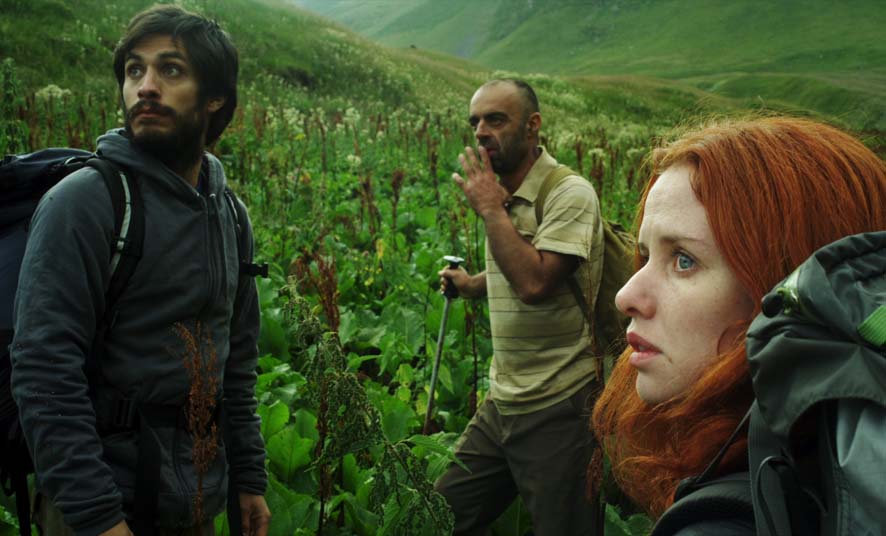
The Loneliest Planet
DOMINIK KAMALZADEH
FILM CRITIC AND JOURNALIST, VIENNA.
Computer Chess (Andrew Bujalski, 2013)E Agora? Lembra-me (What Now? Remind Me, Joaquim Pinto, 2013)
Frances Ha (Noah Baumbach, 2012)
Jiao you (Stray Dogs, Tsai Ming-liang, 2013)
L’Inconnu du lac (Stranger by the Lake, Alain Guiraudie, 2013)
Inside Llewyn Davis (Joel Coen & Ethan Coen, 2013)
I Used to be Darker (Matthew Porterfield, 2013)
Quai d’orsay (Bertrand Tavernier, 2013)
Nugu-ui ttal-do anin Haewon (Nobody’s Daughter Haewon, Hong Sang-soo, 2013)
Only Lovers Left Alive (Jim Jarmusch, 2013)
Nebraska (Alexander Payne, 2013)
Vaters Garten – Die Liebe meiner Eltern (Father’s Garden: The Love of My Parents, Peter Liechti, 2013)
Five firsts to remember
To agori troei to fagito tou pouliou (Boy Eating Bird’s Food, Ektoras Lygizos, 2012)
The Dirties (Matt Johnson, 2013)
Äta sova dö (Eat Sleep Die, Gabriela Pichler, 2012)
Mouton (Sheep, Gilles Deroo & Marianne Pistone, 2012)
Soldate Jeannette (Soldier Jane, Daniel Hoesl, 2013)
DANIEL KASMAN
EDITOR OF MUBI, NEW YORK.
Old oldMany by Allan Dwan (highlights include: The Thief’s Wife [1912], Stage Struck [1925], 15 Maiden Lane [1936], The Inside Story [1948], Woman They Almost Lynched [1953], The River’s Edge [1957])
[Als anthropologe im kriegsgefangenenlager feldbach bei graz] (Rudolf Pöch, 1915)
Betty Boop for President (Dave Fleischer, 1932)
Laughter in Hell (Edward L. Cahn, 1933)
Only Yesterday (John M. Stahl, 1933)
Green Fields (Jacob Ben-Ami & Edgar G. Ulmer, 1937)
Sans lendemain (Max Ophüls, 1939)
Rassenkundliche untersuchungen am gefangenen franzosen und belgiern im kriegsgefangenenlager kaisersteinbruch (niederdonau) (1940)
Hitler Lives (Don Siegel, 1945)
The Chase (Arthur Ripley, 1946)
The Chapman Report (George Cukor, 1962)
Chimes at Midnight (Orson Welles, 1965)
9 x Alberto Tambellini (Black Is [1966], Black Trip [1966], Black Trip 2 [1967], Blackout [1966], Moonblack [1969], Black Plus X [1966], Black TV [1968], Sun Black [1966-68], Black ‘67 [1967])
The Big Mouth (Jerry Lewis, 1967)
Korotkie vstrechi (Brief Encounters, Kira Muratova, 1967)
Hatsukoi: Jigoku-hen (Nanami: The Inferno of First Love, Susumu Hani, 1968)
N:O:T:H:I:N:G (Paul Sharits, 1968)
T,O,U,C,H,I,N,G (Paul Sharits, 1969)
A Casing Shelved (Michael Snow, 1970)
Side Seat Paintings Slides Sound Film (Michael Snow, 1970)
Which Way to the Front? (Jerry Lewis, 1970)
Dolgie provody (Long Farewells, Kira Muratova, 1971)
Minnie and Moskowitz (John Cassavetes, 1971)
Variations on a Cellophane Wrapper (David Rimmer, 1972)
Emperor of the North (Robert Aldrich, 1973)
Primary Stimulus (Robert Russett, 1977/1980)
Poznavaya belyy svet (Getting to Know the Big Wide World, Kira Muratova, 1979)
Deep Hearts (Robert Gardner, 1981)
Rich and Famous (George Cukor, 1981)
Klassenverhältnisse (Class Relations, Danièle Huillet & Jean-Marie Straub, 1984)
Mémoire des apparences (Life is a Dream, Raúl Ruiz, 1987)
13 x Dominik Graf (Die Katze [1988], Spieler [1990], Die Sieger [1994], Denk ich an Deutschland – Das Wispern im Berg der Ding [1997], Der Felsen [2002], München – Geheimnisse einer Stadt [2000], Die Freunde der Freunde [2002], Hotte im Paradies [2003], Kalter Frühling [2004]), Polizeiruf 110: Der scharlachrote Engel [2005], Eine Stadt wird erpresst [2006], Das Gelübde [2007], Deutschland 09 – Der Weg, den wir nicht zusammen gehen [2007], Das unsichtbare Mädchen [2011])
Films and videos by Jean-Luc Godard (highlights include: Hélas pour moi [Woe Is Me, 1993] Nouvelle Vague [1990], Deux fois cinquante ans de cinéma français [2 x 50 Years of French Cinema, 1995], Adieu au TNS [1998] Liberté et patrie [with Anne-Marie Miéville, 2002], Vrai faux passeport [2006])
Honeymoon (Dan Sallitt, 1998)
Aberration of Light: Dark Chamber Disclosure (Sandra Gibson & Luis Recoder, 2011)
Endeavour (Johann Lurf, 2010)
Old new
The Act of Killing (Joshua Oppenheimer, Christine Cynn & Anonymous, 2012)
Berberian Sound Studio (Peter Strickland, 2012)
Le cousin Jules (Cousin Jules, Dominique Benicheti, 1973)
Faust (Aleksandr Sokurov, 2011)
Frances Ha (Noah Baumbach, 2012)
La noche de enfrente (Night Across the Street, Raúl Ruiz, 2012)
Passion (Brian De Palma, 2012)
Le Pont du Nord (Jacques Rivette, 1981)
San zimei (Three Sisters, Wang Bing, 2012)
Student (Darezhan Omirbaev, 2012)
The Unspeakable Act (Dan Sallitt, 2012)
Viola (Matías Piñeiro, 2012)
Vous n’avez encore rien vu (You Ain’t Seen Nothin’ Yet, Alain Resnais, 2012)
New new
Le Dernier des injustes (The Last of the Unjust, Claude Lanzmann, 2013)
Blue Jasmine (Woody Allen, 2013)
By Pain of Rhyme and Arabesque of Foraging (David Gatten, 2013)
Computer Chess (Andrew Bujalski, 2013)
Un Conte de Michel de Montaigne (Jean-Marie Straub, 2013)
Cut (Christoph Girardet & Matthias Müller, 2013)
La danza de la realidad (The Dance of Reality, Alejandro Jodorowsky, 2013)
Die andere Heimat – Chronik einer Sehnsucht (Home from Home: Chronicle of a Vision, Edgar Reitz, 2013)
Du zhan (Drug War, Johnnie To, 2012)
E Agora? Lembra-me (What Now? Remind Me, Joaquim Pinto, 2013)
La fille de nulle part (The Girl from Nowhere, Jean-Claude Brisseau, 2012)
L’Image manquante (The Missing Picture, Rithy Pahn, 2013)
The Immigrant (James Gray, 2013)
La Jalousie (Jealousy, Philippe Garrel, 2013)
Jiao you (Stray Dogs, Tsai Ming-liang, 2013)
Joys of Waiting for the Broadway Bus (Ken Jacobs, 2013)
Konstellationen (Constellations, Helga Fanderl, 2012)
Lawinen der Erinnerung (Dominik Graf, 2012)
Lunar Almanac (Malena Szlam, 2013)
Man tam (Blind Detective, Johnnie To & Wai Ka-fai, 2013)
Mes séances de lutte (Love Battles, Jacques Doillon, 2013)
Mount Song (Shambhavi Kaul, 2013)
Norte, hangganan ng kasaysayan (Norte, the End of History, Lav Diaz, 2013)
Nugu-ui ttal-do anin Haewon (Nobody’s Daughter Haewon, Hong Sang-soo, 2013)
Pain & Gain (Michael Bay, 2013)
The Quiet Car (Ernie Gehr, 2013)
Redemption (Miguel Gomes, 2013)
Les Salauds (Bastards, Claire Denis, 2013)Screen Tone (Richard Tuohy, 2012)
The Starry Messenger (Marika Borgeson, 2013)
Sweet Exorcist (Pedro Costa, 2012)
Tessitura Calda (Paolo Gioli, 2013)
Trissákia 3 (Nick Collins, 2012)
Les Trois Désastres (The Three Disasters, Jean-Luc Godard, 2013)
Uri Sunhi (Our Sunhi, Hong Sang-soo, 2013)
Venezia 70 Future Reloaded – Wang Bing (Wang Bing, 2013)
Volvo Trucks – The Epic Split feat. Van Damme (Live Test 6) (Andreas Nilsson, 2013)
Yi dai zong shi (The Grandmaster, Wong Kar-wai, 2012)
What Now? Remind Me
CHRISTOPHER KEARNEY
INDEPENDENT SCREENWRITER, TV PRODUCTION AND ENGLISH TEACHER AT GEORGE M. STEINBRENNER HIGH SCHOOL, LUTZ, FLORIDA.
12 Years a Slave (Steve McQueen, 2013)Before Midnight (Richard Linklater, 2013)
Blue Jasmine (Woody Allen, 2013)
Renoir (Gilles Bourdos, 2012)
The Place Beyond the Pines (Derek Cianfrance, 2012)
The Attack (Ziad Doueiri, 2012)
Wadjda (Haifaa Al-Mansour, 2012)
Gravity (Alfonso Cuarón, 2013)
Lore (Cate Shortland, 2012)
Found (Scott Schirmer, 2012)
Honourable Mentions
All is Lost (J.C.Chandor, 2013)
Berberian Sound Studio (Peter Strickland, 2012)
Blackfish (Gabriela Cowperwaite, 2013)
The Bling Ring (Sofia Coppola, 2013)
La vie d’Adèle: chapitres 1 et 2 (Blue is the Warmest Colour, Abdellatif Kechiche, 2013)
Captain Phillips (Paul Greengrass, 2013)
The Conjuring (James Wan, 2013)
Disconnect (Henry Alex Rubin, 2012)
The East (Zal Batmanglij, 2013)
Europa Report (Sebastiàn Cordero, 2012)
Enough Said (Nicole Holofcener, 2013)
Frances Ha (Noah Baumbach, 2012)
Fruitvale Station (Ryan Coogler, 2013)
Kapringen (A Hijacking, Tobias Lindholm, 2012)
Much Ado About Nothing (Joss Whedon, 2012)
Mud (Jeff Nichols, 2012)
Museum Hours (Jem Cohen, 2012)
Nebraska (Alexander Payne, 2013)
Out of the Furnace (Scott Cooper, 2013)
Philomena (Stephen Frears, 2013)
Short Term 12 (Destin Cretton, 2013)
Side Effects (Steven Soderbergh, 2013)
Stories We Tell (Sarah Polley, 2012)
The Way Way Back (Nat Faxon & Jim Rash, 2013)
The World’s End (Edgar Wright, 2013)
EHSAN KHOSHBAKHT
ARCHITECT WHO WRITES ABOUT JAZZ AND FILM. HIS NEW BOOK, PUBLISHED IN IRAN, IS CELLULOID ARCHITECTURE.
1-2Massacre & film obsession:
Sanye Haye Sorbi (Seconds of Lead, Seyed Reza Razavi, 2012)
The Act of Killing (Joshua Oppenheimer, Christine Cynn & Anonymous, 2012)
3-4
Just/unjust:
Le Dernier des injustes (The Last of the Unjust, Claude Lanzmann, 2013)
Omar (Hany Abu-Assad, 2013)
5-6
Comedies about cinema:
Marcel Ophuls et Jean-Luc Godard, La rencontre de St-Gervais (Frédéric Choffat, Vincent Lowy, 2011)
My Name is Negahdar Jamali and I Make Westerns (Kamran Heidari, 2012)
7-8
Ars gratia artis:
André Masson et les quatre éléments (Jean Grémillon 1958) [revived in Edinburgh International Film Festival]
As I Was Moving Ahead Occasionally I Saw Brief Glimpses of Beauty (Jonas Mekas, 2000) [revived in London's BFI Southbank, as a part of Mekas retrospective]
9-10
Fishing/studying:
At Berkeley (Frederick Wiseman, 2013)
Leviathan (Lucien Castaing-Taylor and Véréna Paravel, 2012)
11-12
City symphonies (on the fringe of the city):
Oh Boy (Jan Ole Gerster, 2012)
Sacro GRA (Gianfranco Rosi, 2013)
13-14
Clean cut filmmaking:
La grande bellezza (The Great Beauty, Paolo Sorrentino, 2013)
La Vie d’Adèle – chapitres 1 et 2 (Blue Is the Warmest Colour, Abdellatif Kechiche, 2013)
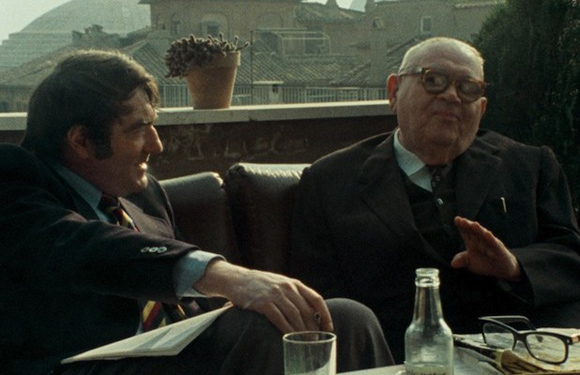
The Last of the Unjust
DYLAN KIEWEL
FILM STUDENT.
The Place Beyond the Pines (Derek Cianfrance, 2012)A new age East of Eden from Derek Cianfrance, balancing masterful camerawork and a densely layered story with career performances from nearly every component of the ensemble cast.
Laurence Anyways (Xavier Dolan, 2012)
While many have called La Vie d’Adèle the best love story of the year, this story of a romance that breaks down over the course of the title character’s stormy gender transition quite easily takes the cake for me. The passion and fury seen in the two lead actors Melvil Poupaud and Suzanne Clément also win over Adèle‘s duo though by a thinner margin.
Only God Forgives (Nicolas Winding Refn, 2013)
While the other frequent Gosling collaborator pales in comparison to Cianfrance in how he uses the actor, Refn packs this tale of revenge with nightmarish and existential visuals both eye catching and emotionally sickening. If more people went into this for its primal shock value and not to hear good dialogue there would be a lot less disappointment.
Prisoners (Denis Villeneuve, 2013)
A spiral down quite a dark rabbit hole with a performance from Hugh Jackman echoing Sean Penn in Mystic River and Jake Gyllenhaal in a predicament similar to Zodiac.
Renoir (Gilles Bourdos, 2012)
An appropriately languorous pace and imagery both vibrant and hazy captures in the painter’s style the master painter himself.
La Vie d’Adèle: chapitres 1 & 2 (Blue Is The Warmest Colour, Abdellatif Kechiche, 2013)
Best female on female of the year. Acting I mean.
Frances Ha (Noah Baumbach, 2012)
Best original character of the year though that can’t surprise anyone coming from Noah Baumbach.
Philomena (Stephen Frears, 2013)
A spot-on combo of low-key comedy and dark, compelling subject matter. Another great acting pair in Judi Dench and Steve Coogan.
Before Midnight (Richard Linklater, 2013)
Linklater finishes his trilogy with a result that feels much like a relationship study as observed by the late Eric Rohmer.
Reality (Matteo Garrone, 2012)
A thinly veiled fantasy tale à la Fellini with a dazzling outro shot.
Honorable Mention:
Simon Killer (Antonio Campos, 2012)
Obviously flawed but still there are traces of the portrait of a breakdown seen in Afterschool and a hypnotic music score.
+1 (Dennis Iliadis, 2013)
Bland acting and bad writing aside the film by the end feels like a nightmare that’s impossible to look away from through the accomplished delivery of its concept and imagery that disturbs like a Bacon painting.
NELSON KIM
NEW YORK-BASED WRITER, FILMMAKER AND TEACHER.
My favourite cinematic experience of the year was probably the final season (#5) of Breaking Bad. In particular, Episode 14 (“Ozymandias”), directed by Rian Johnson, was the most thrilling hour of television I’ve ever seen.Favourite feature films, in roughly descending order:
Gravity (Alfonso Cuarón, 2013)
Stories We Tell (Sarah Polley, 2012)
Jiao you (Stray Dogs, Tsai Ming-liang, 2013)
Frances Ha (Noah Baumbach, 2012)
American Hustle (David O. Russell, 2013)
Enough Said (Nicole Holofcener, 2013)
Al Midan (The Square, Jehane Noujaim, 2013)
Sun Don’t Shine (Amy Seimetz, 2012)
Before Midnight (Richard Linklater, 2013)
Yi dai zong shi (The Grandmaster, Wong Kar-wai, 2013)
Après mai (Something in the Air, Olivier Assayas, 2012)
Tian zhu ding (A Touch of Sin, Jia Zhang-ke, 2013)
The Immigrant (James Gray, 2013)
Her (Spike Jonze, 2013)
If 2013 wasn’t the greatest year for world cinema, at least in my limited viewing, it was an exceptionally strong year for low-budget American independent filmmaking, my specialised field as a practitioner and critic. Along with the Baumbach and Seimetz films listed above, I was dazzled and delighted by Newlyweeds (Shaka King, 2013), Short Term 12 (Destin Daniel Cretton, 2013), Mother of George (Andrew Dosunmu, 2013), Upstream Color (Shane Carruth, 2013), and Computer Chess (Andrew Bujalski, 2013), to name only my top favourites.
Stories We Tell
CARLOTTA KLIEMANN
WRITES FILM REVIEWS AND ESSAYS ON FILM FOR PSICOLOGIA CONTEMPORANEA. TEACHES COURSES ON ITALIAN CINEMA, WOMEN & CINEMA AND CONTEMPORARY INTERNATIONAL CINEMA.
La grande bellezza (The Great Beauty, Paolo Sorrentino, 2013)A virtuoso camerawork and editing amplifies the story of a socialite, his flânerie, his sentimental regrets and frustrated ambitions. But as in La Dolce Vita, at centre stage is the mesmerising beauty of the eternal city clashing with human ugliness and modernity. Showing little of Pasolinian “grace” for his characters, Sorrentino dissects with wry humour contemporary Roman and Italian society, devastated by two decades of Berlusconi era but responsible just the same for their own demise. A visually stunning picture imbued with powerful melancholia.
La Vie d’Adèle: chapitres 1 et 2 (Blue Is the Warmest Colour, Abdellatif Kechiche, 2013)
A first love which is also a lesbian love, narrated through illuminating shots, time lapses and the uneven balance between important and irrelevant moments in the protagonist’s life, as is the style of the filmmaker. What makes the film a long-lasting experience for the viewer is the riveting performance of the two actresses. A tranche de vie which seems to turn fiction into reality and vice versa. A film that the debate on the titillation of male viewers does not hinder, and one of the best depictions of amour fou.
Wadjda (Haifaa Al-Mansour, 2012)
A hymn to female youth and self-determination with the pace of a pre-adolescent. Deceptively simple, Wadjda illustrates the oppression and limitations women in certain Arab countries are subjected to, but shows how those strict rules are to some degree self-inflicted. The film is a pessimistic take on the state of gender relations and the stifling role played by religion and tradition, against which even love subsides, but its inspiring ending provides a glimmer of hope for future generations.
Jagten (The Hunt, Thomas Vinterberg, 2012)
Powerful in its capacity to strike alternatively the key of ambiguity and plausibility, the film unravels through two parallel lines: one condenses contemporary phobia re: pedophilia, the other brings about the primal fear of the “other” as the potential transgressor of society’s rules. When these two lines accidentally intersect, a community expels its foreign body. The power of words and that of the unsaid: a pervasive modern tragedy.
RAINER KNEPPERGES
FILMMAKER, COLOGNE, GERMANY.
My 51 favourite films seen in 2013 for the first time. In chronological order: my momentary mini-history of film.Film de famille Grenffulle – Alphonse XIII à Bois-Boudran (1913)
Ingeborg Holm (Victor Sjöström, 1913)
Children of Eve (John H. Collins, 1915)
Ménilmontant (Dimitri Kirsanoff, 1926)
Brudeferden i Hardanger (Bridal Party in Hardanger, Rasmus Breistein, 1926)
East Side, West Side (Allan Dwan, 1927)
The Ring (Alfred Hitchcock, 1927)
Dynamite (Cecil B. DeMille, 1929)
Indiscreet (Leo McCarey, 1931)
To the Last Man (Henry Hathaway, 1933)
Les Misérables (Raymond Bernard, 1934)
The Murder Man (Tim Whelan, 1935)
They Won’t Forget (Mervyn LeRoy, 1937)
Alexander’s Ragtime Band (Henry King, 1938)
Brigham Young (Henry Hathaway, 1940)
Mikaheri no tô (Introspection Tower, Hiroshi Shimizu, 1941)
Holy Matrimony (John M. Stahl, 1943)
I bambini ci guardano (The Children are Watching Us, Vittorio De Sica, 1944)
Champagne Charlie (Alberto Cavalcanti, 1944)
Home in Indiana (Henry Hathaway, 1944)
I’ll Be Seeing You (William Dieterle, 1944)
La parta del cielo (Vittorio De Sica, 1945)
The Rocking Horse Winner (Anthony Pelissier, 1949)
Prince of Foxes (Henry King, 1949)
The Sound of Fury (Cy Endfield, 1950)
Gone to Earth (Michael Powell & Emeric Pressburger, 1950)
Fourteen Hours (Henry Hathaway, 1951)
Here’s a Health to the Barley Mow (Peter Kennedy, 1952)
Little Fugitive (Ray Ashley, Morris Engel & Ruth Orkin, 1953)
Oss Oss Wee Oss (Alan Lomax, 1953)
Prince Valiant (Henry Hathaway, 1954)
Texas Lady (Tim Whelan, 1955)
Autumn Leaves (Robert Aldrich, 1956)
Fort Dobbs (Gordon Douglas, 1958)
Les Dragueurs (The Chasers, Jean-Pierre Mocky, 1959)
Seven Thieves (Henry Hathaway, 1960)
Denn das Weib ist schwach (Wolfgang Glück, 1961)
Two Rode Together (John Ford, 1961)
Gypsy (Mervyn LeRoy, 1962)
Life at the Top (Ted Kotcheff, 1965)
Bonanza: Clarissa (Lewis Allen, 1967)
Wake in Fright (Ted Kotcheff, 1971)
Blutiger Freitag (Bloody Friday, Rolf Olsen, 1972)
The Apprenticeship of Duddy Kravitz (Ted Kotcheff, 1974)
The Muppet Movie (James Frawley, 1979)
Running on Empty (Sidney Lumet, 1988)
Nordstadt (Michael Kupczyk, 2005)
Lucky Louie (Andrew D. Weyman, 2006)
Mamma Mia! (Phyllida Lloyd, 2008)
Collapse (Chris Smith, 2009)
Super (James Gunn, 2010)
My 2013 top 15
Captain Phillips (Paul Greengrass, 2013)
The Conjuring (James Wan, 2013)
Enough Said (Nicole Holofcener, 2013)
Gravity (Alfonso Cuarón, 2013)
Just 45 Minutes From Broadway (Henry Jaglom, 2012)
Lincoln (Steven Spielberg, 2012)
Lutz (Oliver Held, 2013)
Oz the Great and Powerful (Sam Raimi, 2013)
Sexmonster! (Jörg Buttgereit & Thilo Gosejohann, 2013)
Silver Linings Playbook (David O. Russell, 2012)
The Starry Messenger (Bedwyr Williams, 2013)
This Is 40 (Judd Apatow, 2012)
This Is the End (Evan Goldberg & Seth Rogen, 2013)
We’re the Millers (Rawson Marshall Thurber, 2013)
Ein Wochenende in Deutschland (A Weekend in Germany, Jan Soldat, 2012)
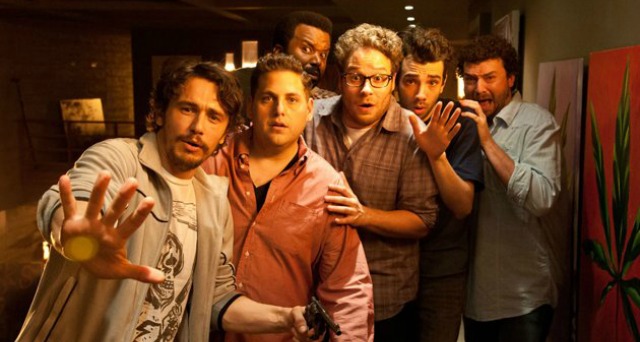
This is the End
JAY KUEHNER
CONTRIBUTES REGULARLY TO CINEMA SCOPE AND FANDOR, AND TEACHES CONSTRUCTIVE FILM CRITICISM AT THE NORTHWEST FILM FORUM IN SEATTLE.
Such a vast list serves as its own commentary. In 2013, let each film go where it may.Costa da Morte (Coast of Death, Lois Patiño, 2013)
A Mãe e o Mar (The Mother and the Sea, Gonçalo Tocha, 2013)
Leviathan (Lucian Castaing-Taylor and Véréna Paravel, 2012)
Manakamana (Stephanie Spray and Pacho Velez, 2013)
Redemption (Miguel Gomes, 2013)
L’Image manquante (The Missing Picture, Rithy Panh, 2013)
L’Inconnu du lac (Stranger by the Lake, Alain Guiraudie, 2013)
The Act of Killing (Joshua Oppenheimer, Christine Cynn & Anonymous, 2012)
După dealuri (Beyond the Hills, Cristian Mingiu, 2012)
E Agora? Lembra-me (What Now? Remind Me, Joaquim Pinto, 2013)
O Corpo de Afonso (The King’s Body, João Pedro Rodrigues, 2013)
Los Posibles (Santiago Mitre and Juan Onorfi Barbato, 2013)
Los ilusos (The Wishful Thinkers, Jonás Trueba, 2013)
Mouton (Gilles Deroo and Marianne Pistone, 2012)
Loubia Hamra (Bloody Beans, Narimane Mari, 2013)
Soshite chichi no naru (Like Father, Like Son, Hirokazu Koreeda, 2013)
Feng ai (‘Til Madness Do Us Part, Wang Bing, 2013)
Pine Ridge (Anna Eborn, 2013)
Stop the Pounding Heart (Roberto Minervini, 2013)
Mille Soleils (A Thousand Suns, Mati Diop, 2013)
The Selfish Giant (Clio Barnard, 2013)
La última película (Raya Martin and Mark Peranson, 2013)
Història de la meva mort (The Story of My Death, Albert Serra, 2013)
Double Play: James Benning and Richard Linklater (Gabe Klinger, 2013)
Stemple Pass (James Benning, 2012)
Jiao you (Stray Dogs, Tsai Ming-liang, 2013)
Lukas nino (Lukas the Strange, John Torres, 2013)
Le Dernier des injustes (The Last of the Unjust, Claude Lanzmann, 2013)
L’Armée du salut (Salvation Army, Abdellah Taïa, 2013)
O Novo Testamento de Jesus Cristo segundo João (The New Testament of Jesus Christ According to John, Joaquim Pinto and Nuno Leonel, 2013)
L’étrange couleur des larmes de ton corps (The Strange Colour of Your Body’s Tears, Helene Cattet and Bruno Forzani, 2013)
Das merkwürdige Kätzchen (The Strange Little Cat, Ramon Zürcher, 2013)
Când se lasa seara peste Bucuresti sau metabolism (When Evening Falls on Bucharest or Metabolism, Corneliu Porumboiu, 2013)
Tian zhu ding (A Touch of Sin, Jia Zhang-ke, 2013)
La Jalousie (Jealousy, Phillippe Garrel, 2013)
Yumen (J.P. Sniadecki, Huang Xiang and Xu Ruotao, 2012)
Ida (Pawel Pawlikowski, 2013)
Nugu-ui ttal-do anin Haewon (Nobody’s Daughter Haewon, Hong Sang-soo, 2013)
A Spell to Ward Off the Darkness (Ben Rivers and Ben Russell, 2013)
Norte, hangganan ng kasaysayan (Norte, the End of History, Lav Diaz, 2013)
Les Salauds (Bastards, Claire Denis, 2013)
Frances Ha (Noah Baumbach, 2012)
At Berkeley (Frederick Wiseman, 2013)
ADAM KUNTAVANISH
CRITIC AND EDITOR FOR THE TORONTO-BASED ONLINE PUBLICATION NEXT PROJECTION.
- Yi dai zong shi (The Grandmaster, Wong Kar-wai, 2013)
In the non-Weinsteinised cut, Wong expands his usual scope without lessening the unrequited yearning by incorporating the martial into the emotional. - Upstream Color (Shane Carruth, 2013)
In the follow-up to one of my favourite debuts of the 2000s, Primer, Shane Carruth again manages to tease the abstract but impossibly emotional ramifications from another knotty, lo-sci-fi concept. - L’Inconnu du lac (Stranger by the Lake, Alain Guiraudie, 2013)
Guiraudie’s characters are geographically and morally isolated in a pristine wilderness, only to become corrupted by the consequences of desire. - The World’s End (Edgar Wright, 2013)
The loose thematic trilogy of Shaun of the Dead and Hot Fuzz ends with another buddy genre mash-up with stern lessons for arrested slacker adolescence. - Computer Chess (Andrew Bujalski, 2013)
Indie king Bujalski uses period equipment to take a cockeyed look at the source of our digital age. - Xi you xiang mo pian (Journey to the West: Conquering the Demons, Stephen Chow & Chi-kin Kwok, 2013)
An exemplar of Chow’s brand of nonsense comedy; a loving literary adaptation; an action-romance extravaganza: all wrapped into one. - Le Passé (The Past, Asghar Farhadi, 2013)
A narrative and thematic companion to my favourite film of 2011, A Separation, Asghar Farhadi’s follow-up reinforces his place as one of cinema’s premier dramatists and masters of moral ambiguity. - Before Midnight (Richard Linklater, 2013)
After a seemingly perfect send-off in Before Sunset, Linklater, Delpy and Hawke up the emotional ante to reveal the day-to-day work of maintaining a relationship. - A Field in England (Ben Wheatley, 2013)
another genre whatsit from the mind of Ben Wheatley, this time a claim to the grubby, hallucinatory English period throne once held by Michael Reeves and Ken Russell. - In a World… (Lake Bell, 2013)
Lake Bell’s triple threat as star, writer and director mirrors her protagonist’s tragicomic uphill climb literally to be heard.
The following made their non-festival premieres within the US in 2013 (and I didn’t include them in last year’s poll):
Du zhan (Drug War, Johnnie To, 2012)
A última vez que vi Macau (The Last Time I Saw Macao, João Pedro Rodrigues & João Rui Guerra da Mata, 2012)
Leviathan (Lucien Castaing-Taylor & Véréna Paravel, 2012)
Like Someone in Love (Abbas Kiarostami, 2012)
Vous n’avez encore rien vu (You Ain’t Seen Nothin’ Yet, Alain Resnais, 2012)

The Grandmaster
EUGENIA LAI
Best 2013 commerical releasesParadies: Hoffnung (Paradise: Hope, Ulrich Seidl, 2013)
Paradies: Glaube (Paradise: Faith, Ulrich Seidl, 2012)
Paradies: Liebe (Paradise: Love, Ulrich Seidel, 2012)
Post Tenebras Lux (Carlos Reygadas, 2012)
Tian zhu ding (A Touch of Sin, Jia Zhang-ke, 2013)
Student (Darezhan Omirbayev, 2012)
Când se lasa seara peste Bucuresti sau metabolism (When Evening Falls on Bucharest or Metabolism, Corneliu Porumboiu, 2013)
Trois exercices d’interpretation (Three Exercises of Interpretation, Cristi Puiu, 2013)
Der Glanz des Tages (The Shine of Day, Tizza Covi & Rainer Frimmel, 2012)
După dealuri (Beyond the Hills, Cristian Mingiu, 2012)
The Act of Killing (Joshua Oppenheimer, Christine Cynn & Anonymous, 2012)
Jiao you (Stray Dogs, Tsai Ming-liang, 2013)
Best – repertoires/festivals 2013 (seen in cinemas)
Le Printemps (Spring, Marcel Hanoun, 1972)
Huacho (Alejandro Fernández Almendras, 2009)
Sentados frente al fuego (Alejandro Fernández Almendras, 2011)
Loin du Vietnam (Far from Vietnam, Joris Ivens, Jean-Luc Godard, Alain Resnais, Chris Marker, William Klein, Claude Lelouch & Agnès Varda, 1967)
Halley (Sebastian Hofmann, 2012)
Los mejores temas (The Greatest Hits, Nicolas Pereda, 2012)
Los últimos cristeros (The Last Christeros, Matias Meyer, 2011)
Der Wald vor lauter Bäumen (The Forest for the Trees, Maren Ade, 2003)
Dokfa nai meuman (Mysterious Object at Noon, Apichatpong Weerasethakul, 2000)
Abschied von gestern (Yesterday Girl, Alexander Kluge, 1966)
Die Artisten in der Zirkuskuppel: Ratlos (The Artist in the Circus Dome: Clueless, Alexander Kluge, 1968)
Gelegenheitsarbeit einer Sklavin (Part-Time Work of a Domestic Slave, Alexander Kluge, 1973)
Deutschland im Herbst (Germany in Autumn, Alexander Kluge, 1978)
Rani radovi (Zelimir Zilnik, 1969)
Démanty noci (Diamonds of the Night, Jan Nemec, 1964)
Mucedníci lásky (Martyrs of Love, Jan Nemec, 1967)
Glykia symmoria (Sweet Bunch, Nikos Nikolaidis, 1983)
Slnko v sieti (The Sun in a Net, Stefan Uher, 1962)
Duo Sang (A Borrowed Life, Wu Nien-Jen, 1994)
Skrivánci na niti (Larks on a String, Jirí Menzel, 1990)
Trans-Europ-Express (Alain Robbe-Grillet, 1966)
Portrait of Jason (Shirley Clarke, 1967)
Furyo shonen (Bad Boys, Susumu Hani, 1961)
The War Game (Peter Watkins, 1965)
Play (Ruben Östlund, 2011)
La rivière du hibou (An Occurence at Owl Creek Bridge, Robert Enrico, 1962)
Mitote (Mexican Ritual, Eugenio Polgovsky, 2012)
Antoine et Antoinette (Jacques Becker, 1947)
10 Rillington Place (Richard Fleischer, 1971)
La Libertad (Freedom, Lisandro Alonso, 2001)
Mise à sac (Pillaged, Alain Cavalier, 1967)
MARC LAURIA
PART-TIME SCRIPTWRITER, FULL-TIME CINEPHILE.
Time stands still dept.The Clock (Christian Marclay, 2010)
Leviathan (Lucian Castaing-Taylor and Véréna Paravel, 2012)
Death squads dept.
The Act of Killing (Joshua Oppenheimer, Christine Cynn and Anonymous, 2012)
The Gatekeepers (Dror Moreh, 2012)
Zero Dark Thirty (Kathryn Bigelow, 2012)
The ghost of Rohmer dept.
Before Midnight (Richard Linklater, 2013)
Computer Chess (Andrew Bujalski, 2013)
The ghost of Mandingo dept.
12 Years a Slave (Steve McQueen, 2013)
Django Unchained (Quentin Tarantino, 2012)
Asian auteurs run wild dept.
Tian zhu ding (A Touch of Sin, Jia Zhang-ke, 2013)
Yi dai zong shi (The Grandmaster, Wong Kar-wai, 2013)
The Altman/Ashby/Towne/Scorsese New Hollywood revival dept.
American Hustle (David O. Russell, 2013)

Leviathan
MAXIMILIAN LE CAIN
EXPERIMENTAL FILMMAKER, CORK, IRELAND.
The messy patterns of my film viewing are not really dictated by what’s newly released, but here are a few scattered highlights of 2013 in no particular order…Longest Video Ever in the World on YT. keeps Going 606H [25 Days] Counter Stuck 222Hr by YouTube user Everybody Every1. The robots have taken over the spaceship. Makes for beautiful, haunting, conceptually terrifying viewing. Can we really afford to acknowledge how momentous and challenging this work is on so many levels, unintentionally or not?
Three further profound cinematic shocks I have no wish to recover from: Spring Breakers (Harmony Korine, 2012), Copacabana Mon Amour (Rogério Sganzerla, 1970), Blast of Silence (Allen Baron, 1961).
Leviathan (Lucien Castaing-Taylor and Véréna Paravel, 2012): digital cinema reaches full maturity.
Raúl Ruiz’s La noche de enfrente (Night Across the Street, 2012) and, even more so, the late master’s magnificent Ballet aquatique (2011).
From the Philippines: John Torres’ Lukas Nino (Lukas the Strange, 2013), Lav Diaz’s Siglo ng pagluluwal (Century of Birthing, 2011) and, best of all, Gym Lumbera’s Anak Araw (Albino, 2012).
From home, that is, from the Irish experimental underground: Rouzbeh Rashidi’s HSP: There Is No Escape From The Terrors of The Mind (2013) and Dean Kavanagh’s A Harbour Town (2013) proved the best works yet by these prodigious and utterly fearless filmmakers.
What else? A word of warning to the many who were quick to dismiss Rob Zombie’s The Lords of Salem (2012): we need Zombie more than you might think. While on the subject of the dismissed, Cormac McCarthy’s astonishing script for The Counselor (Ridley Scott, 2013) deserved to have been made by Peckinpah.
And since I recently vanished (hopefully for good) into Re:Voir’s boxset of Adolpho Arrietta’s films, all memories of any other DVDs purchased this year seem to have magically evaporated.
ELAINE LENNON
INDEPENDENT SCHOLAR WHO WRITES ABOUT FILM.
- Gravity (Alfonso Cuarión, 2013) outer space
- This Is 40 (Judd Apatow, 2012) inner space
- Hitchcock (Sacha Gervasi, 2012) psycho space
- The Bling Ring (Sofia Coppola, 2013) ultra space
- Only God Forgives (Nicolas Winding Refn, 2013) ultra lurid
- Spring Breakers (Harmony Korine, 2012) ultra trash
- Lincoln (Steven Spielberg, 2012) oratory, invective & gloves
- La grande bellezza (The Great Beauty, Paulo Sorrentino, 2013) ultra italiano
- Django Unchained (Quentin Tarantino, 2012) ultra spaghetti
- Frozen (Chris Buck & Jennifer Lee, 2013) ultra animo

Only God Forgives
DENNIS LIM
DIRECTOR OF PROGRAMMING, FILM SOCIETY OF LINCOLN CENTER, NEW YORK.
Top 10 2013 premieres
1. L’Inconnu du lac (Stranger by the Lake, Alain Guiraudie, 2013)
2. Norte, hangganan ng kasaysaya (Norte, The End Of History, Lav Diaz, 2013)
3. Redemption (Miguel Gomes, 2013)
4. E Agora? Lembra-me (What Now? Remind Me, Joaquim Pinto, 2013)
5. Only Lovers Left Alive (Jim Jarmusch, 2013)
6. Manakamana (Stephanie Spray and Pacho Velez, 2013)
7. Jiao you (Stray Dogs, Tsai Ming-Liang, 2013)
8. Tian zhu ding (A Touch of Sin, Jia Zhang-ke, 2013)
9. Computer Chess (Andrew Bujalski, 2013)
10. Mouton (Gilles Deroo and Marianne Pistone, 2013)
2. Norte, hangganan ng kasaysaya (Norte, The End Of History, Lav Diaz, 2013)
3. Redemption (Miguel Gomes, 2013)
4. E Agora? Lembra-me (What Now? Remind Me, Joaquim Pinto, 2013)
5. Only Lovers Left Alive (Jim Jarmusch, 2013)
6. Manakamana (Stephanie Spray and Pacho Velez, 2013)
7. Jiao you (Stray Dogs, Tsai Ming-Liang, 2013)
8. Tian zhu ding (A Touch of Sin, Jia Zhang-ke, 2013)
9. Computer Chess (Andrew Bujalski, 2013)
10. Mouton (Gilles Deroo and Marianne Pistone, 2013)
JB MABE
FILMMAKER, PROGRAMMER, LIBRARIAN, CHICAGO.
1. The work of Becca Hall, Julian Antos and Kyle Westphal running theNorthwest Chicago Film Society.
2. Forget the Past (Adam Paradis, 2013, 35mm)
Josh Fadem Slept in His Clothes (Josh Fadem, 2013, internet)
Our Summer Made Her Light Escape (Sasha Waters Freyer, 2012, 16mm)
fog vortex (Christina Battle, 2013, installation)
Utopia & Ribbon Candy (Luther Price, 2012, 35mm slides)
3. Beginning of the End (Bert I. Gordon, 1957, 35mm)
4. To the Wonder (Terrence Malick, 2013, 35mm)
The theatrical trailer for Zardoz (anonymous, 1974, 35mm)
Watercolor (Fall Creek) (Vincent Grenier, 2013, digital)
Gold Moon, Sharp Arrow (Malic Amalya, 2013, 16mm)
Wrecked (Ian Curry, 2013, 16mm performance)
hiLarious clip from 30 Rock!! (Nathan Fielder, 2012, internet)
5. Portrait of Jason (Shirley Clarke, 1967, 35mm)
Maître-Vent (Simon Quéhiellard, 2012, digital)
Foxfur (Damon Packard, 2012, digital)
Sharony! (Jennet Thomas, 2000, digital)
“Wheels Ontario” sketches on Kroll Show (Jonathan Krisel, 2013, TV)
6. “Wrecking Ball” at The American Music Awards (Miley Cyrus, 2013, TV performance)
7. See You Next Tuesday (Drew Tobia, 2013, digital)
I Can’t Sleep (Claire Denis, 1994, 35mm)
The Intruder (Roger Corman, 1962, 35mm)
Sarah McLachlan “Angel” Animal Cruelty Video ***ORIGINAL VERSION***
(Megan Amram, 2013, internet)
Behind the Meatball (Frank Tashlin, 1945, 35mm)
8. Gunman’s Walk (Phil Karlson, 1958)
9. Zardoz (John Boorman, 1974, 35mm)
“Animal Control” episode in series 5 of Parks and Recreation (Craig Zisk, 2013, TV)
The Crimson Kimono (Samuel Fuller, 1959, 35mm)
Dark Waters (André De Toth, 1944, 35mm)
10. Theobromine (Moe McPhearson, 2013, digital)
Them Oracles (Alee Peoples, 2012, 16mm)
primitive (Benjamin Balcom, 2012, 16mm)
A Body Without Organs (Stephen Graves, 2012, digital)
Light Streaming (Kathleen Rugh, 2012, 16mm)
Darna: A Stone Is a Heart You Cannot Swallow (Jon Lazam, 2013, digital)
11. This list is due before I see Blast Of Silence (Allen Baron, 1961), The Party (Blake Edwards, 1968), and Colossus: The Forbin Project (Joseph Sargent, 1970) on 35mm in the last two weeks of December. I say this less because I think those films will enter my top ten list, and more to brag on Chicago’s community of great programmers and institutions bringing films to us every day.
FIDEL JESÚS QUIRÓS MAQUEIRA
FILM WEBSITE EDITOR, HAVANA, CUBA.
I have to confess that I have become increasingly more stubborn when it comes to attending film exhibition, so this list narrows every year. There was almost nothing from Hollywood’s pics, but rather plenty at its margins. Paul Schrader’s The Canyons is a slasher film deconstruction, with solid dialogue and authentic visuals of the “wealthy” A.L. The film subverts the traditional crime narrative to show the horrors of passion. Quentin Tarantino’s Django Unchained is one of the few authentic black spirit vindications, taking the spectators to the extremes of cinematic pleasures. Brazilian filmmaker Walter Salles came to travel the American geographic and human landscape, making his own the mood of Kerouac’s beatnik novel On the Road.Another Brazilian filmmaker, from Recife, Heito Lacerdas makes his film debut with Tatuagem, which deals with the burden of traditional narrative, but manages ultimately to create its own visual tale of cabaret theatre representation, and even a film within film, thanks to its committed immersion in Brazilian countercultural roots. Argentinean Lucía Puenzo’s Wakolda descends to the weird and stunning landscape of the Patagonia, in an imaginary appointment with the Nazi doctor Mengele. Puenzo creates a film of her own that is an auteur, social, lyrical and commercial film at the same time.
Marcos Berger, a gay Argentinean filmmaker, creates in Hawaii a moral tale of repressed desire and love, in an idyllic landscape of a provincial villa, the perfect scenery for frustration, solitude but also love and dreams. Canadian Bruce LaBruce’s Gerontophilia, called by many a soft LaBruce, turned out to be for me an enchanting work, a realistic depiction of love exceptions.
Even though France increasingly emulates Hollywood fare, it still produces each year a batch of unique films. Jacques Audiard’s Rust and Bone shows how the French constantly surpass their own aesthetic boundaries, this time reinventing gritty realism, imbuing it with physical lyricism. And if someone doubts that the French are constantly reinventing cinema, and its genres, there is the brilliant Valérie Donzelli’s Declaration of War, a funny shot of melodrama.
I am faithful to East European flicks at the Havana Festival. Last year it was Christian Petzold’s Barbara, a detailed account of the day-by-day surveillance of individual lives during the communist period in East Germany, and the final redemption of the protagonist through love and endurance. This year it was Eighty Letters by Václav Kadrnka, a film I found at first a pedantic, overlong kind of short film, but which gradually becomes an exciting feature with a minimalist approach to the tedium of 1980s Czechoslovakia and the caged lives of its citizens, through the tale of the Kafkian odyssey of a mother and son’s emigration application process.
I conclude with the superb Pablo Berger’s Blancanieves, which, according to its director, was conceived before the also-black-and-white-silent French film, The Artist. It shows how much film art has evolved to digital from its very roots, from fairytales to a postmodern vision of them.
Behind the Candelabra (Steven Soderbergh, 2013)
The Canyons (Paul Schrader, 2013)
Django Unchained (Quentin Tarantino, 2012)
On the Road (Walter Salles, 2012)
Tatuagem (Tattoo, Hilton Lacerda, 2013)
Wakolda (Lucía Puenzo, 2013)
Hawaii (Marco Berger, 2013)
Gerontophilia, (Bruce La Bruce, 2013)
De rouille et d’os (Rust and Bone, Jacques Audiard, 2012)
La Guerre est Declarée (Declaration of War, Valérie Donzelli, 2011)
Barbara (Christian Petzold, 2012)
Osmdesát dopisů (Eighty Letters, Václav Kadrnka, 2011)
Blancanieves (Pablo Berger, 2012)
The Canyons
MIGUEL MARIAS
ECONOMIST; FORMER DIRECTOR OF THE SPANISH FILM ARCHIVE (1986-88). AUTHOR OF BOOKS ON MANUEL MUR OTI AND LEO MCCAREY. HAS WRITTEN FOR MOST SPANISH FILM MAGAZINES, NOW MAINLY WRITING FOR FOREIGN ONLINE MAGAZINES.
A) Great films seen for the first time, made since 2008La Fille de nulle part (The Girl from Nowhere, Jean-Claude Brisseau, 2012), Une Autre Vie (Another Life, Emmanuel Mouret, 2013), My Sister’s Keeper (Nick Cassavetes, 2009), Vous n’avez encore rien vu (You Ain’t Seen Nothin’ Yet, Alain Resnais, 2012), Mud (Jeff Nichols, 2011/2), Uri Sunhi (Our Sunhi, Hong Sang-soo, 2013), Le Temps de l’aventure (Just a Sigh, Jérôme Bonnell, 2013), Les Salauds (Bastards, Claire Denis, 2013), L’Image manquante (The Missing Picture, Rithy Panh, 2013)
B) Great films seen for the first time, made before 2008
Dorogoí tsenoí (The Horse That Weeps, Mark Donskoí, 1957), Nazi Concentration Camps (George Stevens, 1945), Echoes of Silence (Peter Emanuel Goldman, 1962-5//7), Fue no shiratama (Eternal Heart/Undying Pearl, Shimizu Hiroshi, 1929), Germinal (Albert Capellani, 1913), L’Assommoir (Albert Capellani, 1908), Die Mörder sind unter uns (The Murderers Are Among Us, Wolfgang Staudte, 1946), Tuntematon Sotilas / Okänd Soldat (The Unknown Soldier, Edvin Laine, 1955), Cigalon (Marcel Pagnol, 1935), Sasame-yuki (Fine Snow / The Makioka Sisters, Ichikawa Kon, 1983), Ludwig II (Glanz und Ende eines Königs) (Helmut Käutner, 1954/5), Les Rendez-vous du Diable (Haroun Tazieff, 1958/9), Onna no za (A Woman’s Place, Narusē Mikio, 1961/2), Disneyland, mon vieux pays natal (Arnaud des Pallières, 2000), Kahdeksan surmanluotia (Eight Deadly Shots, Mikko Niskanen, 1972), Turumba (Kidlat Tahimik, 1981), Hollywood Story (William Castle, 1951), Something To Live For (George Stevens, 1951/2), Osorezan no onna (The Innocent Witch, Goshō Heinosukē, 1965), Posliesloviie (Epilogue, Marlien Khutsiiev, 1983), Eien no Hito (Immortal Love / Eternal Love, Kinoshita Keisukē, 1961), Kono ko wo Nokoshite (Children of Nagasaki, Kinoshita Keisukē, 1983)
C) Very good films seen for the first time, made since 2008
Promised Land (Gus Van Sant, 2012), Age Is… (Stephen Dwoskin, 2012), Història de la meva mort (Story of My Death, Albert Serra, 2013), Like Someone in Love (Abbas Kiarostami, 2012), Nugu-ui ttal-do anin Haewon (Nobody’s Daughter Hae-won, Hong Sang-soo, 2012/3), San zimei (Three Sisters, Wang Bing, 2012), Before Midnight (Richard Linklater, 2013), Muisteja (Pieni elokuva 1950-luvun Oulusta)/Minnen (En liten film om Uleåborg på 1950-talet) (Remembrance: A Small Film About Oulu in the 1950s, Peter von Bagh, 2013), Ohjaaja matkalla ihmiseksi-Mikko Niskasen tarina (The Story of Mikko Niskanen, Peter von Bagh, 2010), Jean-Luc Godard: Le Désordre exposé (Céline Gailleurd & Olivier Bohler, 2012), L’Inconnu du Lac (Stranger by the Lake, Alain Guiraudie, 2013), La Vie d’Adèle: chapitres 1 et 2 (Blue is the Warmest Colour, Abdellatif Kechiche, 2013), Eloxio da distancia/Elogio de la distancia (Praise of Distance, Felipe Vega & Julio Llamazares, 2008), We Are What We Are (Jim Mickle, 2013), Cinco elementos sobre cualquier universe (Ideas sobre paisaje) (Mercedes Álvarez, 2010), Celluloid Man (Shivendra Singh Dungarpur, 2012), Flight (Robert Zemeckis, 2012), My Son, My Son, What Have Ye Done (Werner Herzog, 2009), La casa Emak Bakia (Oskar Alegria, 2012), Saddle the Wind (José Oliveira, 2013)
D) Very good films seen for the first time, made before 2008
A Life in the Balance (Harry Horner, 1954/5), The Unguarded Moment (Harry Keller, 1956), The Unfaithful (Vincent Sherman, 1947), The Case Against Brooklyn (Paul Wendkos, 1958), The Alligator People (Roy Del Ruth, 1959), Night Editor (Henry Levin, 1946), The Notebook (Nick Cassavetes, 2004), Fyrvaktarens dotter (The Lighthousekeeper’s Daughter, Georg af Klercker, 1918), Lettre d’un cineaste à sa fille. (Eric Pauwels, 2000), Sierra (Alfred E. Green, 1950), O canto do mar (Alberto Cavalcanti, 1950/52/54), Drenge (Nils Malmros, 1977), Marabangong bangungot (Perfumed Nightmare, Kidlat Tahimik, 1977), Dongfang hong (The East Is Red, Wang Ping, 1965), Trapped (Fred Walton, 1989), Split Second (Dick Powell, 1953), Rails & Tails (Alison Eastwood, 2007), Back Pay (William A. Seiter, 1930), Ostatni etap (The Last Stage, Wanda Jakubowska, 1947/8), Konjiki yasha (Damned Gold, Shimizu Hiroshi, 1937), Mudar de vida (Paulo Rocha, 1966), Le Tunnel (Kurt Bernhardt, 1933), The Man from Earth / Jerome Bixby’s ‘The Man from Earth’ (Richard Schenkman, 2007), The Unknown (Henry Levin, 1946), Beware, My Lovely (Harry Horner, 1952), Vicki (Harry Horner, 1953), And So They Were Married (Elliott Nugent, 1936), Aki Tachinu (The Approach of Autumn, Narusē Mikio, 1960), When A Stranger Calls Back (Fred Walton, 1993), Larceny (George Sherman, 1948), Olympia 52 (Chris Marker, 1952), Unhook the Stars (Nick Cassavetes, 1996), Untamed (Jack Conway, 1929), Cry ‘Havoc’ (Richard Thorpe, 1943), White Cargo (Richard Thorpe, 1942), Strange Holiday (Arch Oboler, 1945), Hell Below (Jack Conway, 1933), The Easiest Way (Jack Conway, 1930/1), Ever in My Heart (Archie L. Mayo, 1933), Four Guns to the Border (Richard Carlson, 1954)
E) Great films rediscovered or re-evaluated by a new vision
Koibumi (Love Letters, Tanaka Kinuyô, 1953), Quatre nuits d’un rêveur (Four Nights of a Dreamer, Robert Bresson, 1971), Mietiél (The Snowstorm, Vladimir Basov, 1964), The Sun Shines Bright (John Ford, 1953), Bad Day At Black Rock (John Sturges, 1954), Gaslight (George Cukor, 1944), Young Cassidy (John Ford & Jack Cardiff, 1965), Sylvesternacht. Ein Dialog (Douglas Sirk, 1977), Sprich zu mir wie der Regen (Douglas Sirk, 1975), Four Faces West/They Passed This Way (Alfred E. Green, 1948), The Naked Dawn (Edgar G. Ulmer, 1954), Bourbon Street Blues (Douglas Sirk, 1978), It Should Happen To You (George Cukor, 1954), Murder Is My Beat (Edgar G. Ulmer, 1955), Wheel of Ashes (Peter Emanuel Goldman, 1968/9), Pearl of the South Pacific (Allan Dwan, 1955), A Shot in the Dark (Blake Edwards, 1964), The Honeymoon Machine (Richard Thorpe, 1961), Stolen Holiday (Michael Curtiz, 1936/7)
F) Very good pictures rediscovered or re-evaluated (not always for the best) by a new vision
Captain Carey, U.S.A. (Mitchell Leisen, 1949/50), The Naked Jungle (Byron Haskin, 1953), The Marrying Kind (George Cukor, 1952), Le Puritain (The Puritan, Jeff Musso, 1937/8), Possessed (Curtis Bernhardt, 1947), Brewster’s Millions (Allan Dwan, 1944/5), Four Daughters (Michael Curtiz, 1938), Pat and Mike (George Cukor, 1952), Let’s Make Love (George Cukor, 1960), Heller in Pink Tights (George Cukor, 1960), Sodankylä ikuisesti. Elokuvan vuosisata (Sodankylä Forever. The Century of Cinema, Peter von Bagh, 2010), La Dolorosa (Jean Grémillon, 1934), Souls at Sea (Henry Hathaway, 1937), Libeled Lady (Jack Conway, 1936), The Jayhawkers! (Melvin Frank, 1959), The Maverick Queen (Joseph Kane, 1956), Red Mountain (William Dieterle; coll. John V. Farrow, 1951), War Paint (Lesley Selander, 1953), Girls About Town (George Cukor, 1931/2), Ulee’s Gold (Victor Nunez, 1997), Rockabye (George Cukor, 1932), Uma abella na chuva (Fernando Lopes, 1972), Back From Eternity (John V. Farrow, 1956), Payment on Demand (Curtis Bernhardt, 1951), La pasión desnuda (Naked Passion, Luis César Amadori, 1953), 36 Hours (George Seaton, 1964)
NEIL MCGLONE
WRITER FOR SIGHT AND SOUND, FILM ADVISOR AND RESEARCHER FOR MARK COUSINS’ A STORY OF CHILDREN AND FILM.
Short Term 12 (Destin Daniel Cretton, 2013)Upstream Color (Shane Carruth, 2013)
Under the Skin (Jonathan Glazer, 2013)
Leones (Jazmín López, 2012)
Leviathan (Lucien Castaing-Taylor and Véréna Paravel, 2012)
Blue Ruin (Jeremy Saulnier, 2013)
La Vie d’Adèle: chapitres 1 et 2 (Blue Is the Warmest Colour, Abdellatif Kechiche, 2013)
Vi är bäst! (We are the Best!, Lukas Moodysson, 2013)
Starred Up (David Mackenzie, 2013)
Ida (Pawel Pawlikowski, 2013)
Short Term 12 – wears its heart on its sleeve without ever falling into the trap of over-sentimentality. I don’t mind admitting it reduced me to tears on several occasions!
Under the Skin – a film like this comes along once every 20 years or so; stark, clinical, the modern equivalent of a Roeg/Cammell collaboration, sound design and score incredible.
Leviathan – real footage doc that feels like a horror film vs found footage film that attempts to be a horror film.
Other film highlights this year: being asked to be film advisor and researcher on Mark Cousins’ A Story of Children and Film then attending its premiere with Mark and the gang in Cannes; watching Shane Meadows’ Stone Roses movie at 3:15am in the big tent at Midnight Sun Film Festival where strong Finnish vodka was passed round freely and every Roses song was sung at full volume; Peter von Bagh’s most personal film to date Muisteja – pieni elokuva 1950-luvun Oulusta (aka Remembrance) reducing Marco Bellocchio to tears as he sat next to me at the screening; enjoying ten days in Bologna at Il Cinema Ritrovato with Alexander Payne and other cinephiles where I saw one of my favourite movies projected for the first time, Sans Lendemain (1940) by Max Ophüls and discovered the noir-like qualities of Yves Allégret’s Une si jolie petite plage (Riptide, 1949) through the shimmering cinematography of Henri Alekan; whilst undertaking a career overview interview with Alan Rudolph being asked by him to be his official biographer; being invited by Ben Wheatley to a private screening of A Field in England then later in the year meeting him and Nic Roeg in Brighton; a resurgence in strong British films this year with Kelly + Victor, The Selfish Giant and Brit-horror The Borderlands. A more recent film highlight for this year has been Abel Gance’s Napoleon (1927) at the Royal Festival Hall with Carl Davis score.
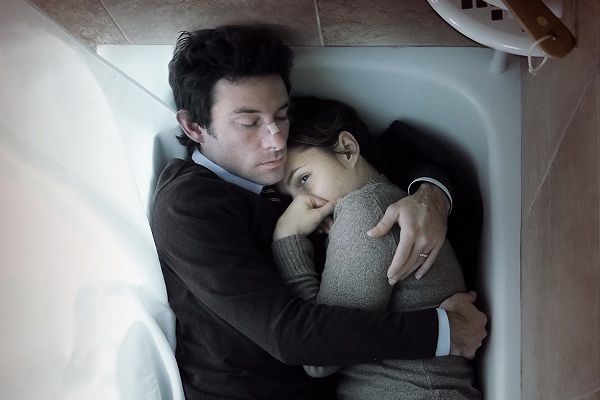
Upstream Color
DUNCAN MCLEAN
FILM STUDIES LECTURER AND REVIEWER.
12 Years a Slave (Steve McQueen, 2013)Steve McQueen continues his rise with 12 Years a Slave, a brutal, relentless film and the most important film yet made about pre-Civil War slavery.
All is Lost (J.C. Chandor, 2013)
It was great to see a filmmaker trust his audience enough that he didn’t feel the need to spoon-feed them. All is Lost is a compelling, minimalist film built around an amazing central performance.
American Hustle (David O. Russell, 2013)
David O. Russell has had a massive year, culminating in this darkly comedic caper film featuring strong performances from a cast of Russell regulars.
Captain Phillips (Paul Greengrass, 2013)
An interesting procedural film which is elevated thanks to a commanding performance from Hanks and strong direction from Greengrass.
Gravity (Alfonso Cuarón, 2013)
The most overwhelming cinematic experience in recent memory, Cuarón manages to make space simultaneously beautiful and terrifying.
Her (Spike Jonze, 2013)
A surrealist film with subject matter that could have been silly if the film wasn’t so very sincere. Unconventional voice performances from a disembodied Johansson and Phoenix.
Life of Pi (Ang Lee, 2012)
If not for Gravity this would have been the visual achievement of the year. Ang Lee took a novel universally considered to be un-filmable and turned it into a visual feast.
Silver Linings Playbook (David O. Russell, 2012)
The most life affirming film of the year, Russell took the otherness out of mental illness in this touching and hilarious story. My pick for best film of the year.
Stoker (Park Chan-wook, 2013)
Park’s first English language film retains his gift for stunning visuals and is a creepy and compelling thriller which elicits a visceral reaction.
The Way Way Back (Nat Faxon & Jim Rash, 2013)
A witty and affecting coming of age story featuring some brilliant comedic performances particularly from Sam Rockwell and Allison Janney.
Other Notable Films
Blancanieves (Pablo Berger, 2012)
Django Unchained (Quentin Tarantino, 2012)
Prisoners (Denis Villeneuve, 2013)
Rush (Ron Howard, 2013)
Zero Dark Thirty (Kathryn Bigelow, 2012)
DAVID MELVILLE
WRITER AND LECTURER, EDINBURGH, UK.
We often think of “classic” films as products of the past. Yet the best of this year can hold its own with the all-time greats. Now is a good time to be in love with cinema…La grande bellezza (The Great Beauty, Paolo Sorrentino, 2013)
The film that restored my faith in Italian cinema – after three decades of stagnation and decline. A glittering tour of the not-so-dolce vita, with sequences that approach sheer poetry.
Only God Forgives (Nicolas Winding Refn, 2013)
Technicolor noir can go no further than this gangster tale set in a Day-Glo Bangkok. As an incestuous Mafia mother, Kristin Scott-Thomas is among the most seductive but terrifying women in film history!
The Eye of the Storm (Fred Schepisi, 2011)
This took two years to reach the UK, but is well worth the wait. From a novel by Patrick White (one of the 20th Century’s greatest authors) this is a note-perfect study in family breakdown. Judy Davis and Geoffrey Rush excel as the siblings; Charlotte Rampling, as the mother, is beyond perfection.
Jeune et jolie (Young & Beautiful, François Ozon, 2013)
In this cool and slyly erotic tale, a teenage girl ventures into prostitution. Ozon does not explain or endorse her actions…he trusts us to watch and join the dots. In the radiant Marine Vacth, a dazzling new star is born.
Behind the Candelabra (Steven Soderbergh, 2013)
Can a great performance in itself make a great film? Michael Douglas as Liberace might almost make you say yes. At least the ‘80s are now the stuff of “period” drama.
Other outstanding films (released this year):
The Paperboy (Lee Daniels, 2012)
O Gebo e a sombra (Gebo and the Shadow, Manoel de Oliveira, 2012)
Vous n’avez encore rien vu (You Ain’t Seen Nothin’ Yet, Alain Resnais, 2012)
Byzantium (Neil Jordan, 2012)
To the Wonder (Terrence Malick, 2012)
Blancanieves (Pablo Berger, 2012)
The Canyons (Paul Schrader, 2013)
Worst Films
Los amantes pasajeros (I’m So Excited!, Pedro Almodóvar, 2013)
This airborne farce plays like Benny Hill dubbed into Spanish – except that Benny Hill had better jokes.
Blue Jasmine (Woody Allen, 2013)
So you were rich. Now you aren’t. Get over it.
Exciting rediscoveries on DVD:
Al di là del bene e del male (Beyond Good and Evil, Liliana Cavani, 1977)
Carmen (Christian-Jaque, 1944)
Necropolis (Franco Brocani, 1970)
Pandora and the Flying Dutchman (Albert Lewin, 1951)
J’étais une aventurière (I Was an Adventuress, Raymond Bernard, 1938)
These have been so hard to see for so long that they are virtually new movies!

Behind the Candelabra
ADRIAN MENDIZABAL
FILIPINO CINEPHILE FROM MANILA. HE WISHES TO WRITE MORE ABOUT CINEMA IN THE YEARS TO COME.
Lukas Nino (Lukas the Strange, John Torres, 2013)Guerrilla is a Poet (Sari & Kiri Dalena, 2013)
Pantomina sa mga anyong ikinubli ng alon (Pantomime for Figures Shrouded by Waves, Jon Lazam, 2013) (short)
Before Midnight (Richard Linklater, 2013)
Islands (Whammy Alcazaren, 2013)
The Search for Weng-Weng (Andrew Leavold, 2013)
Ang Pagbabalat ng Ahas (Timmy Harn, 2013)
Maliw (Soliloquies, Rob Jara, 2013)
Ilo Ilo (Anthony Chen, 2013)
Porno (Adolf Alix Jr, 2013)
Quick Change (Eduardo Roy, 2013)
La última película (Raya Martin and Mark Peranson, 2013)
iNay (Carl Joseph Echague-Papa, 2013)
Iskalawags (Keith Deligero, 2013)
Debosyon (Devotion, Alvin Yapan, 2013)
As of this writing, I haven’t watched some local Filipino films that might be part of the list like Lav Diaz’s critically lauded Norte, End of History and Raya Martin’s How to Disappear Completely. I also missed Mes de Guzman’s Steel is the Earth during its run at Cinema Rehiyon Reloaded last August 2013.
Some notable films I’ve seen this year include Joshell Montañano’s unreleased experimental film Alipin ng Sining (Art Slave, 2013) somewhat reminiscent of the avant-garde Fluxfilms. I also like Jerrold Tarog’s Sana Dati (If Only, 2013), Hannah Espia’s Transit and Jet Leyco’s audacious, multilayered political film Bukas na lang sapagat gabi na (Leave It For Tomorrow For the Night Has Fallen, 2013).
LLOYD MICHAELS
EDITOR, FILM CRITICISM.
Frances Ha (Noah Baumbach, 2012)12 Years a Slave (Steve McQueen, 2013)
Barbara (Christian Petzold, 2012)
Stories We Tell (Sarah Polley, 2012)
La Vie d’Adèle: chapitres 1 et 2 (Blue is the Warmest Colour, Abdellatif Kechiche, 2013)
MADS B. MIKKELSEN
PROGRAMMER, CPH:DOX / COPENHAGEN INTERNATIONAL DOCUMENTARY FESTIVAL.
Nine films that made cinema exciting and dangerous this year. In no particular new world order:Loubia Hamra (Bloody Beans, Narimane Mari, 2013)
Feng ai (‘Til Madness Do Us Part, Wang Bing, 2013)
Natpwe, the Feast of the Spirits (Tiane Doan na Champassak and Jean Dubrel, 2013)
The Dirties (Matt Johnson, 2013)
La última película (Raya Martin and Mark Peranson, 2013)
Head and Hands (my black angel) (Aida Ruilova, 2013)
Shen Jing (Hooly Bible, Li Hongqi, 2013)
Återträffen (The Reunion, Anna Odell, 2013)
Les Trois Désastres (The Three Disasters, Jean-Luc Godard, 2013)
2013 also happened to be the year where a lot of people (myself included) had the chance to re-view Jacques Rivette’s Out 1: Noli me tangere (1971) and Out 1: Spectre (1974) in one go – this time with subtitles. An ideal, timeless film from one of the greatest minds in cinema.
PS. By the time of this writing, I am yet to see the latest films by the two great romantics of Albert Serra and Philippe Garrel who will no doubt qualify as exciting and, yes, dangerous. Beware!
DAVID MILLER
TRUSTEE AND PROGRAMMER KESWICK FILM CLUB.
La grande bellezza (The Great Beauty, Paolo Sorrentino, 2013)Nebraska (Alexander Payne, 2013)
Cloud Atlas (Tom Tykwer, Andy & Lana Wachowski, 2012)
Dallas Buyers Club (Jean-Marc Vallée, 2013)
Like Someone In Love (Abbas Kiarostami, 2012)
Blancanieves (Pablo Berger, 2012)
La jaula de oro (The Golden Dream, Diego Quemada-Diez, 2013)
Vi är bäst! (We Are the Best!, Lukas Moodyson, 2013)
White Tiger (Karen Shakhnazarov, 2012)
The Gatekeepers (Dror Moreh, 2012)
And one that was awful: What Richard Did (Lenny Abrahamson, 2012)

Cloud Atlas
OLAF MÖLLER
CINEPHILE, WRITER, TRANSLATOR AND CURATOR, COLOGNE, GERMANY.
Olaf Möller’s Eleven FriendsTeam Manager Team (Films of the Year)
L’Image manquante (The Missing Picture, Rithy Panh, 2013)
Namyŏng-dong 1985 (National Security, Chŏng Chiyŏng, 2012)
First Team (Line-up in strictly alphabetical order)
Återträffen (The Reunion, Anna Odell, 2013)
Le Beau danger (René Frölke, 2013)
Le Dernier des Injustes (The Last of the Unjust, Claude Lanzmann, 2013)
Muisteja – Pieni elokuva 1950-luvun Oulusta (Remembrance – A Small Movie About Oulu in the 1950s, Peter von Bagh, 2013)
My Mefaḥed MeZeʾeb Harʿ (Big Bad Wolves, ˀharon Qešales & Nabot Papušado, 2013)
Norte, Hangganan ng Kasaysayan (Norte, the End of History, Lav Diaz, 2013)
Paradesi (The Vagabond, Bala, 2013)
Sorg og glæde (Sorrow and Joy, Nils Malmros, 2013)
-Trudno byt’ bogom (Hard To Be a God, Aleksej Jurevič German [finished by Aleksej Aleksejevič German & Svetlana Karmalita], 2013)
Der Unfertige (The Incomplete, Jan Soldat, 2013)
Za Marksa… (For Marx…, Svetlana Baskova, 2012)
Substitutes
Die andere Heimat – Chronik einer Sehnsucht (Home From Home – Chronicle of a Vision, Edgar Reitz, 2013) // At Berkeley (Frederick Wiseman, 2013) // Boven is het stil (It’s All So Quiet, Nanouk Leopold, 2013) // Camille Claudel 1915 (Bruno Dumont, 2013) // Dí rénjié zhī – Shéndōu lóngwáng 3D (Young Detective Dee: Rise of the Sea Dragon 3D {Tsui Hark}, 2013) // O fim e os meios (Means to an End, Murilo Salles, 2013) // Kaze tachinu (The Wind Rises, Miyazaki Hayao, 2013) // Kopfkino (Lene Berg, 2012) // A Messenger From The Shadows. Notes on Film 06 – A. Monologue 01 (Norbert Pfaffenbichler, 2012/13) & A Masque of Madness. Notes on Film 06 – B. Monologue 02 (Norbert Pfaffenbichler, 2013) // Saatvin Sair (The Seventh Walk, Amit Dutta, 2013) // Vos’merka (Break Loose, Aleksej Učitel’, 2013) // Yksitoista ihmisen kuvaa (11 Images of a Human, Anastasia Lapsui & Markku Lehmuskalio, 2012)
+ Tatort: Aus der Tiefe der Zeit (Dominik Graf, TV 2013)
Extended Team
00 Schneider – Im Wendekreis der Eidechse (Helge Schneider [& Andrea Schumacher], 2013) // Ba ͑d al-mawqīya (After the Battle, Yusrī Naṣr-Allāh, 2012) // Before Midnight (Richard Linklater) // Deklica in drevo (A Girl and a Tree; Vlado Škafar) // Dialogue d’ombres (Danièle Huillet & Jean-Marie Straub, 1954-2013) // Exhibition (Joanna Hogg) // Fata Morgana (Peter Schreiner, 2013) // Fēng Ài (‘Til Madness Do Us Part, Wáng Bìng, 2013) // Finsterworld (Frauke Finsterwalder, 2013) // Gerontophilia (Bruce LaBruce, 2013) // Goeng1 si1 (Rigor Mortis, Maak Zeon Lung {Juno Mak}, 2013) // Já Visto, Jamais Visto (Seen, Never Seen, Andrea Tonacci, 2013) // Kahaani (Story, Sujoy Ghosh, 2012) // Kuuden päivän juoksu (Six Day Run, Mika Taanila, 2013) // Lei bik waa gwai mei hai lit - Kei waan je (Tales From the Dark 2, Can Gaa Soeng{Gordon Chan}, Lau4 Gwok3 Coeng1 {Lawrence Lau}, Taai3 Dik6 Lo4 Ban1 Gwaan1 {Teddy Robin Kwan}, 2013) // Mariposa – Sa Hawla ng Gabi (Mariposa in the Cage of the Night, Richard Villarosa Somes, 2012) // Mes séances de lutte (Love Battles, Jacques Doillon, 2013) // Only God Forgives (Nicolas Winding Refn, 2013) // Parce que j’étais peintre (Because I was a Painter, Christophe Cognet, 2013) // Pirika na filmu (Pirika on Film, Želimir Žilnik, 2013) // Rol’ (The Role, Konstantin Lopušanskij, 2013) // Rangbhoomi (Kamal Swaroop, 2013) // Skurstenis (The Chimney, Laila Pakalniņa, 2013) // Under the Skin (Jonathan Glazer, 2013)
Medical Staff
(film/video-based/related installations and/or exhibitions, film/video art projects, films seen in exhibitions, and other creations such as these; plus: a theatre piece just like the movies its director makes)
8. Mai (May 8th; Romuald Karmakar, 2013) // “The Beginning. Living Figures Dying” (video installation; Clemens von Wedemeyer, 2013) // “Chess” (video installation; Lorna Simpson, 2013) // “Dà gǔzǐ duī – Millet Mountain” (video installation, as presented at the 55. Esposizione Internazionale d’Arte – Il Palazzo Enciclopedico; Kàn Xuān, 2012/13) // Dirty Young Loose (Lene Berg, 2013) // “[Electric Assemblage Videomural rooted in Stan VanDerBeek's Movie-Drome project, as presented at the 55. Esposizione Internazionale d'Arte – Il Palazzo Enciclopedico, 2013]” // How Not To Be Seen. A Fucking Didactic Educational .Mov File (Hito Steyerl, 2013) // Imitation of Life (Mathias Poledna, 2013) // “Murmel Murmel” (theater production; Herbert Fritsch, 2012) // Shirley – Visions of Reality (Gustav Deutsch, 2013) & “Visions of Reality” (exhibition; Hanna Schimek & Gustav Deutsch, 2013) // “Tilaa massa tilassa massa litassa maalit: ali tila – Material Conditions of Inner Spaces” (video & light installation; Erkka Nissinen, 2013) // a poem written by 5 poets at once (first attempt) (Tanaka Kōki, 2013) // “Utopia” (slide show; Luther Price, 2012) // You Killed the Underground Film or the Real Meaning of Kunst bleibt… bleibt… (Wilhelm Hein, 2013)
Olaf Möller’s Eleven Veterans 2013
Team Manager (Auteur Revelation of the Year)
Samhold må til (Olav Dalgard, 1935)
Vi bygger landet (Olav Dalgard, 1936)
By og land, hand i hand (Olav Dalgard, 1937)
Lenkene brytes (Olav Dalgard, 1938)
Det drønner gjennom dalen (Olav Dalgard, 1938)
Gryr i Norden (Olav Dalgard, 1939)
Om kjærlighet synger de (The Song of Love, Olav Dalgard, 1946)
First Team (Line-Up in strictly alphabetical order)
Almost a Friar (Allan Dwan, 1912)
[L'Arrivée d'un train en gare de La Ciotat, filmée en procédé stereoscopic Lumière] (Louis Lumière, 1935)
Clown (complete revised) (Luther Price, 2003)
Keisatsukan (Policeman, Uchida Tomu, 1933)
Naan Kadavul (I Am God, Bala, 2009)
Operation Diplomat (John Guillermin, 1953)
Rings um eine Kirche (Götz Hirt-Reger, 1943)
The Rosary Murders (Fred Walton, 1987)
Svetlyj gorod [fragment] (Bright Town, Ol’ga Preobraženskaja [& Ivan Pravov], 1928)
Ursus (Mighty Ursus, Carlo Campogalliani, 1961)
Žena s krajolikom (Woman with Landscape, Ivica Matić, 1975)
+ Los Angeles Plays Itself [2013 revision] (Thom Andersen)
Substitutes
Blutiger Freitag (Bloody Friday, Rolf Olsen, 1972) // Dernek (Country Fair, Zoran Tadić, 1975) // Le fatiche di Ercole (Hercules, Pietro Francisci, 1958) // Das Gesicht im Dunkeln (Double Face, Riccardo Freda, 1969) // Kämp (Valentin Vaala, 1970) // Kanko no machi (Jubilation Street, Kinoshita Keisuke, 1944) // Kŏmŭn mŏri (Black Hair, Yi Manhŭi, 1964) // Ein langer Ritt nach Eden (Günter Hendel, 1974) // Most Dangerous Man Alive (Allan Dwan, 1961) // Mother (Revised) (Luther Price, 2002) // Nidhanaya (The Treasure, Lester James Peries, 1973) // Ongaku kigeki: Horoyoi jinsei (The Tipsy Life, Kimura Sotoji, 1933) // Päonien-Quickstep (Harry Tomicek, 2011) // Piejūras klimats [destroyed; 1992 edit of the remains] (Maritime Climate, Rolands Kalniņš, 1974) // Rapture (John Guillermin, 1965) // rein/raus (Jan Soldat, 2010) // [Scènes érotiques réalisée pour le Animateur Stéréoscopique] (René Bünzli, ~1900) // Ta’ det som en mand, frue! (Take It Like a Man, Ma’am!, Mette Knudsen & Elisabeth Rygaard & Li Vilstrup, 1975) // La torna (Francesc Bellmunt, 1978) // [Verscharren von Kadavern in einem Bomberntrichter] (Götz Hirt-Reger, 1943) // When a Stranger Calls (Fred Walton, 1979) // White Rock (Tony Maylam, 1977) // Yuddham Sei (Wage War, Myshkin, 2011) // Zvanyj užin (The Dinner Party, Fridrich Ėrmler, 1953)
Extended Team
235.000.000 (Uldis Brauns [& Biruta Veldre & Laima Žurgina], 1967) // Le 15/8 (Chantal Akerman & Samy Szlingerbaum, 1973) // Aadukalam (Vetrimaaran, 2011) // Aamua kaupungissa (Morning in the City, Jörn Donner, 1954) // After the Garden: Dusty Ricket (Luther Price, 2007) // Akmens un šķembas (Stone and Flinders, Rolands Kalniņš, 1966) // Aloumínio tīs Elládos (Aluminium of Greece, Roússos Koúndouros, 1965) // L’Ami de monsieur [outtake, dance scene] (Pierre de Cuvier, 1936) // El ángel desnudo (Carlos Hugo Christensen, 1946) // Ani imoto (Older Brother, Younger Sister, Kimura Sotoji, 1935) // Anja (Ol’ga Preobraženskaja, 1927) // A.P. (Anno passato, Karpo Godina, 1966) // April Fools Day (Fred Walton, 1986) // Asuntopula (Holger Harrivirta, 1947) // Barcelona (James Stevens-Edwards, 1927) // Das blaue Band (Harry Tomicek, 2011) // Border (Simone Häckel & Kolja Barbara Kunt & Ariane Pauls & Markus Ruff & Simon Specht, 2006) // The Burglar (Paul Wendkos, 1957) // Can – Free Concert (Peter Przygodda, 1972) // Carnet de identidad (Llorenç Soler, 1970) // Circus goningumi (Five Men in the Circus, Naruse Mikio, 1935) // The Crowded Day (John Guillermin, 1954) // Donde mueren las palabras (Where Words Fail, Hugo Fregonese, 1946) // [Doris Day in 'Mitternachtsspitzen' von Irene] (promotional short, German dubbed version; 1960) // Einmal eine große Dame sein (Gerhard Lamprecht, 1934) // Enoken no Seishun Suikoden (Romantic and Crazy, Yamamoto Kajiro, 1934) // Eröffnung der ersten Teilstrecke der Reichsautobahn Frankfurt a.M. – Darmstadt am 19. Mai 1935 (1935) // [Experiments with stereoscopic moving images by William Friese-Greene] (~1890-93) // El Fantasma del convento (The Phantom of the Convent, Fernando de Fuentes, 1934) // Fifteen Maiden Lane (Allan Dwan, 1936) // Flavia, la monaca musulmana (Flavia the Heretic, Gianfranco Mingozzi, 1974) // Geschwisterliebe (Jan Soldat, 2007) // I giorni dell’ira (Day of Anger, Tonino Valerii, 1967) // Graf Porno und die liebesdurstigen Töchter (1969; Günter Hendel) // [Guinean students performing voluntary work in Cuba] (Josefina Crato & José Bolama & Flora Gomes & Sana na N’Hada, 1969) // Harmagedon – Erään maailman loppu (Juha Rosma [& Jussi Parviainen], 1986) // Hitch Hitch Hitchcock (Zoran Tadić, 1969) // Humanic passt immer: Märzenbecher (Axel Corti, 1968) // Ikárie XB 1 (Icarus XB 1, Jindřich Polák, 1963) // Inkblot # 44: Aqua Woman (Luther Price, 2011) // Interim (Jan Soldat, 2011) // Ja, babuška, Iliko i Illarion (I, Grandmother, Iliko and Illarion, Tengiz Abuladze, 1963) // Jaros (Marran Gosov, 1970) // Käpt’n Rauhbein aus St. Pauli (Nurses for Sale, Rolf Olsen, 1971) // Karnaval cvetov (Carnival of Flowers, Nikolaj Ėkk, 1935) // Kattradhu Thamizh (Learned Tamil, Ram, 2007) // Ključi ščast’ja [fragment] (The Keys to Happiness, Vladimir Gardin & Jakov Protazanov [& Giovanni Vitrotti], 1913) // Kon’yaku yubiwa (Engēji ringu) (Engagement Ring, Kinoshita Keisuke, 1950) // Kristally (Crystals, Jakov Kaplunov, 1948) // Laysa lahum wuǧūd (They Do Not Exist, Muṣṭafā Abū ͑ Alī, 1974) // Die lustigen Weiber von Tirol (Hans Bilian, 1964) // Maciste all’inferno (Maciste in Hell, Riccardo Freda, 1962) // Mademoiselle Else (Isabelle Prim, 2010) // Mala seoska priredba (A Little Village Performance, Krsto Papić, 1972) // The Mormon (Allan Dwan, 1912) // Mr. Wonderful (Luther Price, 1988) // Nandalala (Myshkin, 2010) // Ni liv, historien om Jan Baalsrud (Nine Lives, Arne Skouen, 1957) // No. 10 Blues – Goodbye, Saigon (Osada Norio, 1975-2012) // North Beach (Dion Vigne, 1958) // Noticiari de Barcelona No 15: Libertat d’espressió (Antoni Ribas, 1978) // Now Is the Time to Put On Your Glasses (Norman McLaren, 1951) // Ongaku eiga: Hyakumannin no gasshō (Chorus of One Million Voices, Tomioka Atsuo, 1935) // La patria del rata (Ratsy, Francisco Lara Polop, 1981) // Peppino e Violetta (Never Take No For an Answer, Maurice Cloche, 1949) // Plebej [fragment] (Plebeian, Jakov Protazanov, 1915) // Poslednij attrakcion (The Last Attraction, Ol’ga Preobraženskaja & Ivan Pravov, 1929) // [Promo per 'La vendetta è il mio perdono'] (1968) // Rendezvous With Annie (Allan Dwan, 1946) // River Body (Anne Severson, 1971) // Robinzon Kruzo (Robinson Crusoe, Aleksandr Andrievskij, 1947) // Roma contro Roma (War of the Zombies, Giuseppe Vari, 1963) // San Diego Surf (Andy Warhol [& Paul Morrissey], 1968/96) // Sekidō koete (Across the Equator, Tsuburaya Eiji, 1936) // Sethu (Bala, 1999) // Der Sex-Agent (Günter Hendel, 1978) // Shitō no densetsu (A Legend Or Was It?, Kinoshita Keisuke, 1963) // Il signor Max (Mister Max, Mario Camerini, 1937) // Das Stundenhotel von St. Pauli (Hotel by the Hour, Rolf Olsen, 1970) // The Thief’s Wive (Allan Dwan, 1912) // Tietokoneet palvelevat (Computers Serve, Risto Jarva, 1968) // [Trailer für 'Im singenden Rössl am Königssee'] (1963) // Up in Mabel’s Room (Allan Dwan, 1944) // V allejach parka (In the Alleys of the Park, Lidija Stepanova, 1952) // Vi vil leve! (Rolf Randall & Olav Dalgard, 1946) // Yoru no henrin (The Shape of Night, Nakamura Noboru, 1964) // Yūyakegumo (Clouds at Twilight, Kinoshita Keisuke, 1956)
Medical Staff
(film/video-based/related installations and/or exhibitions, film/video art projects, films seen in exhibitions, and other creations such as these)
Art Kept Me Out Of Jail. Homage To Jacques Mesrine (Jan Fabre, 2009) // Burn (Reynold Reynolds & Patrick Jolley, 2002) // Eigengrau (The Inner Self in Outer Space) (Melvin Moti, 2011) // “Einige Nachrichten an das All” (film-theatre-performance; Kay Voges, 2011) // Ghiro ghiro tondi – Carrousel de jeux (Angela Ricci Lucchi & Yervant Gianikian, 2006) // “Heimat – sandwich construction” (multi-media installation; 2006; Kolja Barbara Kunt) // “The House in the Middle” (installation [includes The House in the Middle, 1954, Federal Civil Defense Authority]; Stephan Mörsch, 2009) // “Ihminen ja tiede” (“Man and Science”, film installation; Mika Taanila, 2011) // Nečajannye radosty [unfinished, destroyed; 2006 edit of the remains] (Unintentional Pleasures, Rustam Chamdamov, 1972-74) // The Return of Bruce Nauman’s “Bouncing Balls” (Francesco Vezzoli, 2006) // Spindrift [2013 reconstruction by Mika Taanila] (Jan Bark & Erkki Kurenniemi, 1967) // “Soft Rains – #6: Suburban Horror” (multi-media installation; Jennifer & Kevin McCoy, 2003)
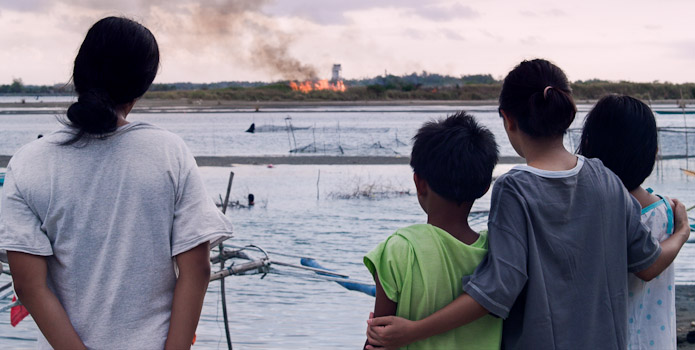
Norte, the End of History
BRENT MORROW
CINEPHILE AND INFREQUENT KEEPER OF THE BLOG TECHNICOLOR RED, MELBOURNE.
1. L’Inconnu du lac (Stranger by the Lake, Alain Guiraudie, 2013)
2. Tian zhu ding (A Touch of Sin, Jia Zhang-ke, 2013)
3. Man tam (Blind Detective, Johnnie To, 2013)
4. The World’s End (Edgar Wright, 2013)
5. La danza de la realidad (The Dance of Reality, Alejandro Jodorowsky, 2013)
6. Computer Chess (Andrew Bujalski, 2013)
7. Les Salauds (Bastards, Claire Denis, 2013)
8. Top of the Lake (Jane Campion, 2013)
9. Di renjie: shen du long wang (Young Detective Dee: Rise of the Sea Dragon, Tsui Hark, 2013)
10. The Lone Ranger (Gore Verbinski, 2013)
11. Le Dernier des injustes (The Last of the Unjust, Claude Lanzmann, 2013)
12. Before Midnight (Richard Linklater, 2013)
13. Paradies: Hoffnung (Paradise: Hope, Ulrich Seidl, 2013)
14. Vic+Flo ont vu un ours (Vic+Flo Saw a Bear, Denis Côté, 2013)
15. White Reindeer (Zach Clark, 2013)
A banner year for DTV with Ninja: Shadow of a Tear (Isaac Florentine, 2013), 12 Rounds 2: Reloaded (Roel Reiné, 2013), The Package (Jesse V. Johnson, 2013) and the barely-theatrically-released Man of Tai Chi (Keanu Reeves, 2013) exhibiting greater comprehension of action form than the majority of big studio entertainments. 2. Tian zhu ding (A Touch of Sin, Jia Zhang-ke, 2013)
3. Man tam (Blind Detective, Johnnie To, 2013)
4. The World’s End (Edgar Wright, 2013)
5. La danza de la realidad (The Dance of Reality, Alejandro Jodorowsky, 2013)
6. Computer Chess (Andrew Bujalski, 2013)
7. Les Salauds (Bastards, Claire Denis, 2013)
8. Top of the Lake (Jane Campion, 2013)
9. Di renjie: shen du long wang (Young Detective Dee: Rise of the Sea Dragon, Tsui Hark, 2013)
10. The Lone Ranger (Gore Verbinski, 2013)
11. Le Dernier des injustes (The Last of the Unjust, Claude Lanzmann, 2013)
12. Before Midnight (Richard Linklater, 2013)
13. Paradies: Hoffnung (Paradise: Hope, Ulrich Seidl, 2013)
14. Vic+Flo ont vu un ours (Vic+Flo Saw a Bear, Denis Côté, 2013)
15. White Reindeer (Zach Clark, 2013)
BILL MOUSOULIS
FOUNDING EDITOR OF SENSES OF CINEMA. AUSTRALIAN INDEPENDENT FILMMAKER NOW BASED IN EUROPE.
Când se lasa seara peste Bucuresti sau metabolism (When Evening Falls on Bucharest or Metabolism, Corneliu Porumboiu, 2013)Nugu-ui ttal-do anin Haewon (Nobody’s Daughter Haewon, Hong Sang-soo, 2013)
I Limouzina (The Limousine, Nikos Panayotopoulos, 2013)
O quinto evanxeo de Gaspar Hauser (The Fifth Gospel of Kaspar Hauser, Alberto Gracia, 2013)
Jîn (Reha Erdem, 2013)
I Teleftaia Farsa (One Last Joke, Vassilis Raisis, 2013)
Miss Violence (Alexandros Avranas, 2013)
September (Penny Panayotopoulou, 2013)
Blue Jasmine (Woody Allen, 2013)
Na kathesai kai na koitas (Standing Aside, Watching, Giorgos Servetas, 2013)

Nobody’s Daughter Haewon
PETER NAGELS
CINEPHILE, LIBRARIAN AND DREAM RESEARCHER, MELBOURNE.
Tabu (Miguel Gomes, 2012)Kolka Cool (Juris Poskus, 2011)
Mystery Road (Ivan Sen, 2013)
Computer Chess (Andrew Bujalski, 2013)
Gravity (Alfonso Cuarón, 2013)
Oblivion (Joseph Kosinski, 2013)
Tian zhu ding (A Touch of Sin, Jia Zhangke, 2013)
Les Salauds (Bastards, Claire Denis, 2013)
The Great Gatsby (Baz Luhrman, 2013)
MARIO NAITO
PRESIDENT OF THE CUBAN FILM ASSOCIATION.
12 Years a Slave (Steve McQueen, 2013)Jagten (The Hunt, Thomas Vinterberg, 2012)
Blancanieves, (Pablo Berger, 2011)
Heli (Amat Escalante, 2013)
Amour (Michael Haneke, 2012)
Cesare deve morire (Caesar Must Die, Paolo Taviani & Vittorio Taviani, 2011)
Django Unchained (Quentin Tarantino, 2012)
Holy Motors (Leos Carax, 2012)
RENFREU NEFF
FILM JOURNALIST, EDITORIAL CONSULTANT, FASHION STYLIST.
Best of 201312 Years a Slave (Steve McQueen, 2013)
Philomena (Stephen Frears, 2013)
La grande bellezza (The Great Beauty, Paolo Sorrentino, 2013)
Only Lovers Left Alive (Jim Jarmusch, 2013)
The Butler (Lee Daniels, 2013) – contender Best Ensemble Cast
American Hustle (David O. Russell, 2013) – contender Best Ensemble Cast
Most overrated
Gravity (Alfonso Cuarón, 2013)
La Vie d’Adèle: chapitres 1 et 2 (Blue Is the Warmest Colour, Abdellatif Kechiche, 2013)
The Invisible Woman (Ralph Fiennes, 2013)
August: Osage County (John Wells, 2013) – notable for cast, otherwise tedious
Inside Llewyn Davis (Ethan Coen & Joel Coen, 2013) – just couldn’t get inside Llewyn Davis
Nebraska (Alexander Payne, 2013) – luminous black/white cinematography; flat, empty, snow-covered landscape, drab screenplay. Ever been to Nebraska?
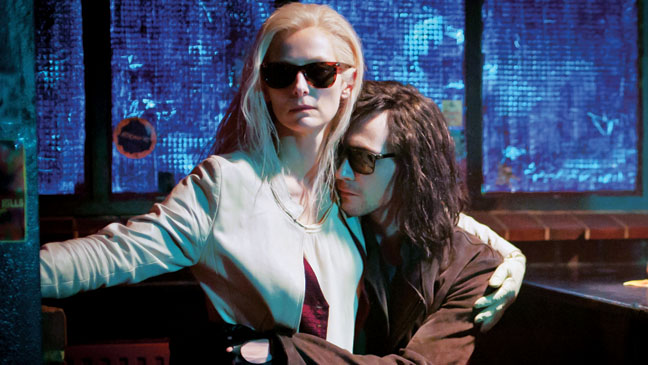
Only Lovers Left Alive
BORIS NELEPO
FILM CRITIC AND PROGRAMMER; CONTRIBUTING EDITOR TO SÉANCE MAGAZINE AND CORRESPONDENT FOR FESTIVAL DEL FILM LOCARNO.It was a very good year. Oddly enough, while fewer and fewer people are watching movies around the world, the number of brilliant and incredible films is ever growing. I will not pretend to be objective since I do not believe it is possible at all: the following register is my personal review of this year, spent mostly in front of the screen. And if there something I do believe, it is the fact that the future of cinema includes its past. The history of film is not as yet accomplished, which means that each year brings a plethora of unexpected discoveries. Hence, I сhose to deliver two lists, one of this year’s titles and the other of rediscovered classics.
New films:
25. Les Rencontres d’après minuit (You and the Night, Yann Gonzalez, 2013)
24. After Earth (M. Night Shyamalan, 2013)
23. Pays barbare (Barbaric Land, Yervant Gianikian, Angela Ricci Lucchi, 2013)
22. Wara no tate (Shield of Straw, Takashi Miike, 2013)
21. The Unity of All Things 物之合 (Alexander Carver, Daniel Schmidt, 2013)
20. Stemple Pass (James Benning, 2013)
19. Norte, hangganan ng kasaysayan (Norte, The End of History, Lav Diaz, 2013)
18. Pirika na filmu (Pirika on Film, Želimir Žilnik, 2013)
17. Redemption (Miguel Gomes, 2013)
16. L’Inconnu du lac (Stranger by the Lake, Alain Guiraudie, 2013)
15. The Immigrant (James Gray, 2013)
14. The Canyons (Paul Schrader, 2013)
13. Muisteja – Pieni elokuva 1950-luvun Oulusta (Remembrance – A Small Movie about Oulu in the 1950s, Peter von Bagh, 2013)
12. Foudre (Lightning, Manuela Morgaine, 2013)
11. Les Trois Désastres (The Three Disasters, Jean-Luc Godard, 2013)
10. Se Eu Fosse Ladrão, Roubava (If I Were a Thief… I’d Steal, Paulo Rocha, 2013)
9. Kaze tachinu (The Wind Rises, Hayao Miyazaki, 2013)
8. Història de la meva mort (Story of My Death, Albert Serra, 2013)
7. La Jalousie (Jealousy, Philippe Garrel, 2013)
6. Upstream Color (Shane Carruth, 2013)
5. The Invisible Life (A Vida Invisível, Vítor Gonçalves, 2013)
4. Nugu-ui ttal-do anin Haewon (Nobody’s Daughter Haewon, Hong Sang-Soo, 2013)
3. Sangue (Blood, Pippo Delbono, 2013)
2. E Agora? Lembra-me (What Now? Remind Me, Joaquim Pinto, 2013)
1. Only Lovers Left Alive (Jim Jarmusch, 2013)
Retrospectives:24. After Earth (M. Night Shyamalan, 2013)
23. Pays barbare (Barbaric Land, Yervant Gianikian, Angela Ricci Lucchi, 2013)
22. Wara no tate (Shield of Straw, Takashi Miike, 2013)
21. The Unity of All Things 物之合 (Alexander Carver, Daniel Schmidt, 2013)
20. Stemple Pass (James Benning, 2013)
19. Norte, hangganan ng kasaysayan (Norte, The End of History, Lav Diaz, 2013)
18. Pirika na filmu (Pirika on Film, Želimir Žilnik, 2013)
17. Redemption (Miguel Gomes, 2013)
16. L’Inconnu du lac (Stranger by the Lake, Alain Guiraudie, 2013)
15. The Immigrant (James Gray, 2013)
14. The Canyons (Paul Schrader, 2013)
13. Muisteja – Pieni elokuva 1950-luvun Oulusta (Remembrance – A Small Movie about Oulu in the 1950s, Peter von Bagh, 2013)
12. Foudre (Lightning, Manuela Morgaine, 2013)
11. Les Trois Désastres (The Three Disasters, Jean-Luc Godard, 2013)
10. Se Eu Fosse Ladrão, Roubava (If I Were a Thief… I’d Steal, Paulo Rocha, 2013)
9. Kaze tachinu (The Wind Rises, Hayao Miyazaki, 2013)
8. Història de la meva mort (Story of My Death, Albert Serra, 2013)
7. La Jalousie (Jealousy, Philippe Garrel, 2013)
6. Upstream Color (Shane Carruth, 2013)
5. The Invisible Life (A Vida Invisível, Vítor Gonçalves, 2013)
4. Nugu-ui ttal-do anin Haewon (Nobody’s Daughter Haewon, Hong Sang-Soo, 2013)
3. Sangue (Blood, Pippo Delbono, 2013)
2. E Agora? Lembra-me (What Now? Remind Me, Joaquim Pinto, 2013)
1. Only Lovers Left Alive (Jim Jarmusch, 2013)
25. Gado Bravo (António Lopes Ribeiro, Max Nosseck, Portugal, 1934, 35mm, Berlinale, The Weimar Touch Retrospective)
24. The Camera: Je or La Camera: I (Babette Mangolte, USA/France, 1977, 35mm, Doclisboa, Moving Stills – Photography, Photographers and Documentary Film)
23. Nidhanaya (The Treasure, Lester James Peries, 1972, Sri Lanka, Venice classics)
22. Vrane (Crows, Gordan Mihić, Ljubiša Kozomara, Yugoslavia, 1969, 35mm, goEast-Symposium Bright Black Frames – New Yugoslav Film between Subversion and Critique)
21. Sekido Koete (Across the Equator, Eiji Tsubaraya, Japan, 1936, 35mm, Il Cinema Ritrovato, Il Giappone parla!)
20. Smorgasbord (Jerry Lewis, 1983, 35mm, Viennale, Jerry Lewis Retrospective)
19. Bless Their Little Hearts (Billy Woodberry, USA, 1984, 35mm, Harvard at the Gulbenkian in Lisbon)
18. Brandos Costumes (Alberto Seixas Santos, 1975, Portugal, 35mm, Lisbon & Estoril Film Festival, Jorge Silva Melo Retrospective)
17. Jutro (The Morning, Mladomir Puriša Đorđević, Yugoslavia, 1967, 35mm, goEast-Symposium Bright Black Frames – New Yugoslav Film between Subversion and Critique)
16. Maynila: Sa mga kuko ng liwanag (Manila in the Claws of Light, Lino Brocka, Philippines, 1975, Cannes Classics)
15. Ce Répondeur ne prend pas de Messages (This Answering Service Takes no Messages, Alain Cavalier, France, 1979, Doclisboa, Alain Cavalier Retrospective)
14. East Side, West Side (Allan Dwan, USA, 1927, 35mm, Il Cinema Ritrovato, Allan Dwan Retrospective)
13. Corridas de alegría (Gonzalo García Pelayo, Spain, 1982, Viennale, Gonzalo García Pelayo Retrospective)
12. Oshibka inzhenera Kochina (Engineer Kochin’s Error, Aleksandr Mačeret, USSR, 1939, 35mm, Il Cinema Ritrovato, La guerra è vicina: 1938-1939)
11. Love Among the Ruins (George Cukor, UK, 1975, 35mm, George Cukor Retrospective in Locarno)
10. Agosto (Jorge Silva Melo, 1988, Portugal, 35mm, Lisbon & Estoril Film Festival, Jorge Silva Melo Retrospective)
9. München – Geheimnisse einer Stadt (Munich: Secrets of a City, Dominik Graf, Michael Althen, 2000, 35mm, Dominik Graf Retrospective in Rotterdam)
8. The Lusty Men (Nicholas Ray, USA, 1952, Il Cinema Ritrovato)
7. Mudar de Vida (Change of Life, Paulo Rocha, Portugal, 1966, 35mm, Hommage to Paulo Rocha in Locarno + program of Harvard at the Gulbenkian in Lisbon)
6. Batang West Side (Lav Diaz, Philippines, 2001, 35mm, premiere of restored print in Locarno)
5. La porta del cielo (Vittorio De Sica, Italy, 1945, 35mm, Il Cinema Ritrovato, Vittorio De Sica Retrospective)
4. Vivir en Sevilla (Gonzalo García Pelayo, Spain, 1978, Viennale, Gonzalo García Pelayo Retrospective)
3. Il Bacio di Tosca (Tosca’s Kiss, Daniel Schmid, Switzerland, 1984, Venice classics)
2. A Matter of Time (Vincente Minnelli, USA/Italy, 1976, 35mm, Festival Temps d’Images: O Cinema à volta de Cinco Artes – Cinco Artes à volta do Cinema in Lisbon)
1. Rich and Famous (George Cukor, USA, 1981, 35mm, George Cukor Retrospective in Locarno)
24. The Camera: Je or La Camera: I (Babette Mangolte, USA/France, 1977, 35mm, Doclisboa, Moving Stills – Photography, Photographers and Documentary Film)
23. Nidhanaya (The Treasure, Lester James Peries, 1972, Sri Lanka, Venice classics)
22. Vrane (Crows, Gordan Mihić, Ljubiša Kozomara, Yugoslavia, 1969, 35mm, goEast-Symposium Bright Black Frames – New Yugoslav Film between Subversion and Critique)
21. Sekido Koete (Across the Equator, Eiji Tsubaraya, Japan, 1936, 35mm, Il Cinema Ritrovato, Il Giappone parla!)
20. Smorgasbord (Jerry Lewis, 1983, 35mm, Viennale, Jerry Lewis Retrospective)
19. Bless Their Little Hearts (Billy Woodberry, USA, 1984, 35mm, Harvard at the Gulbenkian in Lisbon)
18. Brandos Costumes (Alberto Seixas Santos, 1975, Portugal, 35mm, Lisbon & Estoril Film Festival, Jorge Silva Melo Retrospective)
17. Jutro (The Morning, Mladomir Puriša Đorđević, Yugoslavia, 1967, 35mm, goEast-Symposium Bright Black Frames – New Yugoslav Film between Subversion and Critique)
16. Maynila: Sa mga kuko ng liwanag (Manila in the Claws of Light, Lino Brocka, Philippines, 1975, Cannes Classics)
15. Ce Répondeur ne prend pas de Messages (This Answering Service Takes no Messages, Alain Cavalier, France, 1979, Doclisboa, Alain Cavalier Retrospective)
14. East Side, West Side (Allan Dwan, USA, 1927, 35mm, Il Cinema Ritrovato, Allan Dwan Retrospective)
13. Corridas de alegría (Gonzalo García Pelayo, Spain, 1982, Viennale, Gonzalo García Pelayo Retrospective)
12. Oshibka inzhenera Kochina (Engineer Kochin’s Error, Aleksandr Mačeret, USSR, 1939, 35mm, Il Cinema Ritrovato, La guerra è vicina: 1938-1939)
11. Love Among the Ruins (George Cukor, UK, 1975, 35mm, George Cukor Retrospective in Locarno)
10. Agosto (Jorge Silva Melo, 1988, Portugal, 35mm, Lisbon & Estoril Film Festival, Jorge Silva Melo Retrospective)
9. München – Geheimnisse einer Stadt (Munich: Secrets of a City, Dominik Graf, Michael Althen, 2000, 35mm, Dominik Graf Retrospective in Rotterdam)
8. The Lusty Men (Nicholas Ray, USA, 1952, Il Cinema Ritrovato)
7. Mudar de Vida (Change of Life, Paulo Rocha, Portugal, 1966, 35mm, Hommage to Paulo Rocha in Locarno + program of Harvard at the Gulbenkian in Lisbon)
6. Batang West Side (Lav Diaz, Philippines, 2001, 35mm, premiere of restored print in Locarno)
5. La porta del cielo (Vittorio De Sica, Italy, 1945, 35mm, Il Cinema Ritrovato, Vittorio De Sica Retrospective)
4. Vivir en Sevilla (Gonzalo García Pelayo, Spain, 1978, Viennale, Gonzalo García Pelayo Retrospective)
3. Il Bacio di Tosca (Tosca’s Kiss, Daniel Schmid, Switzerland, 1984, Venice classics)
2. A Matter of Time (Vincente Minnelli, USA/Italy, 1976, 35mm, Festival Temps d’Images: O Cinema à volta de Cinco Artes – Cinco Artes à volta do Cinema in Lisbon)
1. Rich and Famous (George Cukor, USA, 1981, 35mm, George Cukor Retrospective in Locarno)
DARRAGH O’DONOGHUE
HIS ESSAY ON ANDRZEJ WADJDA WILL APPEAR IN POLISH CINEMA IN A TRANSNATIONAL CONTEXT (FORTHCOMING).
Highlight of 2013Finally UK viewers got to see Louie (Louis C.K., 2010- ). I have long revered Larry David; Louie is frequently compared to his Curb your Enthusiasm (Robert B. Weide et al, 2000-2011), but conceptually and formally Louie leaves it in the ha’penny place, frequently, discomfitingly, and thrillingly going beyond mere “funny” (the episode “Miami” had not one laugh) into something else entirely.
Top 5
1. & 2. Goliyon ki raasleela : Ram-Leela (A Play of Bullets: Ram-Leela, Sanjay Leela Bhansali, 2013) and Much Ado About Nothing (Joss Whedon, 2012)
Two very different but complementary takes on Shakespeare. Significantly and refreshingly, both dispense with the British performers who tend to bring a whiff of the classroom with them. Whedon’s Much Ado is a monochrome Kammerspiel, and finally raises TV’s greatest auteur to the ranks of major filmmakers. Bhansali’s undoubted visual exuberance has too often been dissipated by bluster and inept story-telling, but, grounded in a failsafe text and powered by sensational chemistry between his leads, he calls in the debt owed by Baz Luhrmann’s Hindi-inflected William Shakespeare’s Romeo + Juliet (1996). Speaking of Luhrmann…
3. The Great Gatsby (Baz Luhrmann, 2013)
This is how literary adaptations should be made and rarely are: like Mansfield Park (Patricia Rozema, 1999) and Le Temps retrouvé (Time Regained, Raúl Ruiz, 1999), this is a reading rather than a synopsis of a classic novel, informed by accumulated critical speculation, reader response and multiple cultural and historical perspectives. Luhrmann’s using Eastern film styles to adapt canonical Western literature is inspired, while the book’s anti-Semitic conception of Meyer Wolfsheim is recuperated by the casting of Hindi superstar Amitabh Bachchan. But the whole conceptual apparatus stands or falls by the casting of Gatsby. Leo, after a misguided decade seeking “serious” acting “credibility”, was born to play Jay Gatsby. He has always been most potent as surface, image, projecting screen.
4. Post tenebras lux (Carlos Reygadas, 2012)
5. This is 40 (Judd Apatow, 2012)
Forget the increasingly toothless pastiches of Hirokazu Koreeda; when did Judd Apatow become the new Ozu?! Pain, scatology and formal rigour.
With respect to:
Los amantes pasajeros (I’m So Excited!, Pedro Almodóvar, 2013)
The Americans (Adam Arkin et al, 2013)
Django Unchained (Quentin Tarantino, 2012)
După dealuri (Beyond the Hills, Cristian Mungiu, 2012)
É na terra não é na lua (It’s the Earth not the Moon, Gonçalo Tocha, 2011)
The Lone Ranger (Gore Verbinski, 2013)
Mistérios de Lisboa (Mysteries of Lisbon, Raúl Ruiz, 2010), the full six-episode TV version
Nugu-ui ttal-do anin Haewon (Nobody’s Daughter Haewon, Hong Sang-soo, 2013)
“The Secret life of the Cat” (Helen Sage, 2013), episode of the BBC2 series Horizon
This is the End (Evan Goldberg and Seth Rogen, 2013)
Duds and disappointments
Broadchurch (James Strong and Euros Lyn, 2013)
The affection generated by this series is baffling. It was bombastic and derivative, a Killing-by-the-Sea, right down to the Scandi-ballad over the closing credits. Granted, David Tennant and Olivia Colman were remarkable, but the plotting was at once predictable and unconvincing, the “Expressionist” tics irritating, and the dialogue often atrocious. Yet it wasn’t half as bad as Top of the Lake (Jane Campion amd Garth Davis, 2013), one of the worst things I have ever seen.
Celluloid Man: a Film on P.K. Nair (Shivendra Singh Dungarpur, 2012)
A Field in England (Ben Wheatley, 2013)
Gravity (Alfonso Cuarón, 2013)
Krrish 3 (Rakesh Roshan, 2013)
Life of Pi (Ang Lee, 2012)
Lore (Cate Shortland, 2012)
Mea Maxima Culpa: Silence in the House of God (Alex Gibney, 2012)
Secretion (Willie Doherty, 2013)
As with John le Carré and the Cold War, Willie Doherty lost his subject with the alleged ending of the Northern Ireland Troubles. His hypnotic narrations and circling cameras, deprived of urgency, have become mere tics.
Spirit of ’45 (Ken Loach, 2013)
Spring Breakers (Harmony Korine, 2012)
The Place Beyond the Pines (Derek Cianfrance, 2012)
To the Wonder (Terrence Malick, 2012)
Although Malick-bashing is no longer such fun when even his sycophants are doing it.
Reissue of the year
On Our Own Doorstep (1983, Kieran Hickey)
Part of the Dublin Film Festival retrospective to Ireland’s great lost auteur, this is a government informational against littering Hickey and writing partner Philip Davison morphed into Buñuel/Tex Avery nightmare.
Conversely, the 2012 Agnès Varda-approved digital restoration of Lola (Jacques Demy, 1961), one of the most beautiful films ever made, is horrible.
Home entertainment of the year
The British Film Institute Blu-ray/DVD of Penthesilia and Riddles of the Sphinx (Laura Mulvey and Peter Wollen, 1974 and 1977)
The “essay film” has become increasingly fashionable, but in truth most examples are exactly that, illustrated prose texts. Legendary academics Mulvey and Wollen tried to re-imagine and re-constitute the essay in filmic form. It is easy to critique these political films for their political failures – elitism, Orientalism, blindness to class issues – but easier to be exhilarated by their formal and intellectual daring.
Best actress
At long last our greatest TV comic actress gets a film role worthy of her: Julia Louis-Dreyfus in Enough Said (Nicole Holofcener, 2013).
Best actor
Benjamin Murmelstein in Le Dernier des injustes (The Last of the Unjust, Claude Lanzmann, 2013).
I mean no disrespect to the subject of this film – Murmelstein was Judenältester in the Theresienstadt concentration camp – or to cast doubt on the veracity of his testimony. I certainly don’t mean to compare his to the psychos’ drama in the faintly dubious The Act of Killing (Joshua Oppenheimer, Christine Cynn and Anonymous, 2012). But all appearance in front of a camera is a performance, and whatever prejudices a viewer comes with to this film will be blown away by Murmelstein’s sheer physical and moral presence. Although Lanzmann nearly blows it himself by adding a self-regarding prologue to his astonishing 1975 interview session with Murmelstein.

Much Ado About Nothing
SVENERIK OLSEN
ARTIST AND CRITIC BASED IN MINNEAPOLIS.
- The Act of Killing (Joshua Oppenheimer, Christine Cynn & Anonymous, 2013)
- Short Term 12 (Destin Cretton, 2013)
- Upstream Color (Shane Carruth, 2013)
- Stories We Tell (Sarah Polley, 2013)
- Le Passé (The Past, Asghar Farhdi, 2013)
- La Vie d’Adèle: chapitres 1 et 2 (Blue is the Warmest Colour, Abdel Kechiche, 2013)
- Blue Jasmine (Woody Allen, 2013)
- Francis Ha (Noah Baumbach, 2013)
- După dealuri (Beyond the Hills (Cristian Mungiu, 2012)
- Side Effects (Steven Soderbergh, 2013)
- At Berkeley (Frederick Wiseman, 2013)
- Spring Breakers (Harmony Korine, 2013)
- Computer Chess (Andrew Bujalski, 2013)
- Inside Llewyn Davis (Joel & Ethan Coen, 2013)
- Passion (Brian De Palma, 2013)
GEORGE PAPADOPOULOS
GENERAL MANAGER OF INDEPENDENT FILM DISTRIBUTOR, ACCENT FILM ENTERTAINMENT, MELBOURNE.
La Vie d’Adèle: chapitres 1 et 2 (Blue is the Warmest Colour, Abdellatif Kechiche, 2013)American Hustle (David O. Russell, 2013)
Before Midnight (Richard Linklater, 2013)
Inside Llewyn Davis (Ethan & Joel Coen, 2013)
Gravity (Alfonso Cuarón, 2013)
Computer Chess (Andrew Bujalski, 2013)
Spring Breakers (Harmony Korine, 2013)
Prisoners (Denis Villeneuve, 2013)
Blue Jasmine (Woody Allen, 2013)
Frances Ha (Noah Baumbach, 2013)
MICHAEL PATTISON
FILM CRITIC, UK.
2013 unreleased world premieres
1. Jiao you (Stray Dogs, Tsai Ming-liang, 3013)
2. Història de la meva mort (Story of My Death, Albert Serra, 2013)
3. Workers (José Luis Valle, 2013)
4. Eastern Boys (Robin Campillo, 2013)
5. Before You Know It (P.J. Raval, 2013)
6. El futuro (Luis López Carrasco, 2013)
7. El Rayo (Hassan’s Way: El Rayo, Fran Araújo and Ernesto de Nova, 2013)
8. Un ramo de cactus (A Bouquet of Cactus, Pablo Llorca, 2013)
9. Le Dernier des injustes (The Last of the Unjust, Claude Lanzmann, 2013)
2013 UK theatrical releases2. Història de la meva mort (Story of My Death, Albert Serra, 2013)
3. Workers (José Luis Valle, 2013)
4. Eastern Boys (Robin Campillo, 2013)
5. Before You Know It (P.J. Raval, 2013)
6. El futuro (Luis López Carrasco, 2013)
7. El Rayo (Hassan’s Way: El Rayo, Fran Araújo and Ernesto de Nova, 2013)
8. Un ramo de cactus (A Bouquet of Cactus, Pablo Llorca, 2013)
9. Le Dernier des injustes (The Last of the Unjust, Claude Lanzmann, 2013)
1. La grande bellezza (The Great Beauty, Paolo Sorrentino, 2013)
2. După dealuri (Beyond the Hills, Cristian Mungiu, 2012)
3. Leviathan (Lucien Castaing-Taylor & Véréna Paravel, 2012)
4. Gravity (Alfonso Cuarón, 2013)
5. Stoker (Alexey Balabanov, 2010)
6. Before Midnight (Richard Linklater, 2013)
7. Mea Maxima Culpa: Silence in the House of God (Alex Gibney, 2012)
8. Silence (Pat Collins, 2012)
2013 retrospective highlights2. După dealuri (Beyond the Hills, Cristian Mungiu, 2012)
3. Leviathan (Lucien Castaing-Taylor & Véréna Paravel, 2012)
4. Gravity (Alfonso Cuarón, 2013)
5. Stoker (Alexey Balabanov, 2010)
6. Before Midnight (Richard Linklater, 2013)
7. Mea Maxima Culpa: Silence in the House of God (Alex Gibney, 2012)
8. Silence (Pat Collins, 2012)
1. Deseret (James Benning, 1995) Edition Filmmuseum DVD
2. The Lusty Men (Nicholas Ray, 1952) London IFF
3. Cargo 200 (Alexey Balabanov, 2007) Bradford IFF
4. The Unknown (Tod Browning, 1927) IndieLisboa
5. Remorques (Stormy Waters, Jean Grémillon, 1941) Edinburgh IFF
6. Schalcken the Painter (Leslie Megahey, 1979) BFI DVD/BD
7. L’étrange Monsieur Victor (Jean Grémillon, 1938) Edinburgh IFF
2. The Lusty Men (Nicholas Ray, 1952) London IFF
3. Cargo 200 (Alexey Balabanov, 2007) Bradford IFF
4. The Unknown (Tod Browning, 1927) IndieLisboa
5. Remorques (Stormy Waters, Jean Grémillon, 1941) Edinburgh IFF
6. Schalcken the Painter (Leslie Megahey, 1979) BFI DVD/BD
7. L’étrange Monsieur Victor (Jean Grémillon, 1938) Edinburgh IFF
The Story of My Death
YOANA PAVLOVA
EDITOR-IN-CHIEF OF FESTIVALISTS.COM
I admit I am not much of a list person, so my top 3 of 2013 consists of films I find difficult to compare with each other and respectively rate.Upstream Color (Shane Carruth, 2013)
An auteur’s work per se without any sense of self-indulgence, an intriguing mixture of genres and a poetically frightening (or frighteningly poetic) take on society.
Trydno byt bogom (Hard to Be a God, Aleksei German, 2013)
So many years after the fall of the Iron Curtain, Russian cinema is still a mystery to the Western world. I read a lot of puzzled and/or superficial reviews after the premiere in Rome, written mostly by people who are not familiar with the work of the brothers Strugatsky. As someone who grew up immersed in Russian language and culture due to political reasons (I am Bulgarian), I feel privileged enough to sense the mastermind behind this films, as well as all the difficult decisions that were made by the director in order to create a piece of art that is completely independent from the original novel, yet still conveys its message.
Manakamana (Stephanie Spray and Pacho Velez, 2013)
Fresh and minimalist in a way that gives me hope for the future of cinema, be it documentary or fiction.
I would also like to highlight the full retrospective of Kira Muratova, organised by the IFF Rotterdam in the beginning of 2013. It was amazing to see all these films together!
ANTONI PERIS
WRITER FOR MIRADAS DE CINE AND TRANSIT.
It’s really been a great movie year and a very difficult selection. Here are (some) of my favourites, many of them reflecting life in a very heterogeneous and cinematographic way:
1. La grande belleza (The Great Beauty, Paolo Sorrentino, 2013)
2. Before Midnight (Richard Linklater, 2013)
3. A última vez que vi Macao (The Last Time I Saw Macao, João Pedro Rodrigues & João Rui Guerra da Mata, 2012)
4. Francis Ha (Noah Baumbach, 2012)
5. Laurence Anyways (Xavier Dolan, 2012)
6. First Cousin Once Removed (Alan Berliner, 2012)
7. A Field in England (Ben Wheatley, 2013)
8. The Congress (Ari Folman, 2013)
10. 36 (Nawapol Thamrongrattanaritt, 2012)
11. Kaze tachinu (The Wind Rises, Hayao Miyazaki, 2013)
12. Blue Jasmine (Woody Allen, 2013)
13. Après mai (Something in the Air, Olivier Assayas, 2012)
14. The Master (P.T. Anderson. 2012)
15. The World’s End (Edgar Wright, 2013)
16. Tabu (Miguel Gomes, 2012)
17. Paradies: Liebe (Paradise: Love, Ulrich Seidl, 2012)
18. Ernest et Célestine (Stéphane Aubier, Vincent Patar & Benjamin Renner, 2012)
19. Soshite chichi ni naru (Like Father, Like Son, Hirokazu Kore-eda, 2013)
20. The Act of Killing (Joshua Oppenheimer, Christine Cynn & Anonymous, 2012)
21. Museum Hours (Jem Cohen, 2012)
2. Before Midnight (Richard Linklater, 2013)
3. A última vez que vi Macao (The Last Time I Saw Macao, João Pedro Rodrigues & João Rui Guerra da Mata, 2012)
4. Francis Ha (Noah Baumbach, 2012)
5. Laurence Anyways (Xavier Dolan, 2012)
6. First Cousin Once Removed (Alan Berliner, 2012)
7. A Field in England (Ben Wheatley, 2013)
8. The Congress (Ari Folman, 2013)
10. 36 (Nawapol Thamrongrattanaritt, 2012)
11. Kaze tachinu (The Wind Rises, Hayao Miyazaki, 2013)
12. Blue Jasmine (Woody Allen, 2013)
13. Après mai (Something in the Air, Olivier Assayas, 2012)
14. The Master (P.T. Anderson. 2012)
15. The World’s End (Edgar Wright, 2013)
16. Tabu (Miguel Gomes, 2012)
17. Paradies: Liebe (Paradise: Love, Ulrich Seidl, 2012)
18. Ernest et Célestine (Stéphane Aubier, Vincent Patar & Benjamin Renner, 2012)
19. Soshite chichi ni naru (Like Father, Like Son, Hirokazu Kore-eda, 2013)
20. The Act of Killing (Joshua Oppenheimer, Christine Cynn & Anonymous, 2012)
21. Museum Hours (Jem Cohen, 2012)
SIERRA PETTENGILL
BROOKLYN-BASED DOCUMENTARY FILMMAKER.
The Act of Killing (Joshua Oppenheimer, Christine Cynn & Anonymous, 2012)Après mai (Something in the Air, Olivier Assayas, 2012)
Tian zhu ding (A Touch of Sin, Jia Zhang-ke, 2013)
Butter on the Latch (Josephine Decker, 2013)
Computer Chess (Andrew Bujalski, 2013)
Démanty noci (Diamonds of the Night, Jan Němec, 1964, at BAM)
Exit Elena (Nathan Silver, 2012)
Fuck for Forest (Michal Marczak, 2012)
Holy Motors (Leos Carax, 2012)
Kapringen (A Hijacking, Tobias Lindholm, 2012)
Let the Fire Burn (Jason Osder, 2013)
The Machine Which Makes Everything Disappear (Tinatin Gurchiani, 2013)
Museum Hours (Jem Cohen, 2013)
Narco Cultura (Shaul Schwarz, 2013)
Northern Light (Nick Bentgen, 2013) **full disclosure: I worked on this
Post Tenebras Lux (Carlos Reygadas, 2012)
Public Hearing (James N. Kienitz Wilkins, 2013)
Streetwise (Martin Bell, Mary Ellen Clark, 1984, 16mm print at UnionDocs)
Worm (Andrew Bowser, 2013)
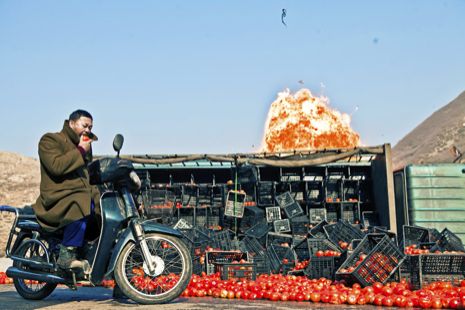
A Touch of Sin
RAYMOND PHATHANAVIRANGOON
FESTIVAL PROGRAMMER AND PRODUCER WHO HAS NOT HAD A PERMANENT ABODE FOR THE LAST FOUR YEARS.
In no order:Museum Hours (Jem Cohen, 2012)
Paradies: Glaube (Paradise: Faith, Ulrich Seidl, 2012),
V tumane (In the Fog, Sergei Loznitsa, 2012)
Yi dai zong shi (The Grandmaster, Wong Kar-wai, 2013)
Kaze tachinu (The Wind Rises, Hayao Miyazaki, 2013)
Blue Ruin (Jeremy Saulnier, 2013)
L’Inconnu du lac (Stranger by the Lake, Alain Guiraudie, 2013)
Jiao you (Stray Dogs, Tsai Ming-Liang, 2013)
Djúpiõ (The Deep, Baltasar Kormákur, 2012)
Les Salauds (Bastards, Claire Denis, 2013)
Unfortunately I have not seen many of the American year-end films such as 12 Years a Slave, Inside Llewyn Davis, All is Lost and American Hustle. But it has been an exceptional year for first-time directors, with outstanding movies which could have easily been in my top ten such as Grzeli nateli dgeebi (In Bloom, Nana Ekvtimishvili & Simon Gross, 2013), Uroki garmonii (Harmony Lessons, Emir Baigazin, 2013), Chunmeng (Longing for the Rain, Yang Tian-yi, 2013), La juala de oro (The Golden Dream, Diego Quemada-Diez, 2013) and Ilo Ilo (Anthony Chen, 2013).
DAVID PHELPS
WRITER AND TRANSLATOR WHO HAS CONTRIBUTED TO NUMEROUS PUBLICATIONS, INCLUDING MUBI NOTEBOOK, CINEMA SCOPE AND FILM COMMENT.
Some Events“1913”, “1933” and “1938-1939” retrospectives (programmed, respectively, by Mariann Lewinsky for Bologna’s Il Cinema Ritrovato, Bruce Goldstein for Film Forum, and Peter von Bagh for Il Cinema Ritrovato)
Allan Dwan retrospectives (programmed by Charles Silver for MoMA and Dave Kehr for Il Cinema Ritrovato)
Traveling Light online/global release (through Lumière)
Some Favourite Discoveries – Older Films (on film)
Les cambrioleurs modernes (1906, programmed in Il Cinema Ritrovato)
Almost a Friar/The Thief’s Wife (Allan Dwan, 1912, programmed by Charles Silver and Dave Kehr in MoMA and Il Cinema Ritrovato’s Dwan retrospectives)
Engelein (Urban Gad, 1913, programmed by Mariann Lewinsky in Il Cinema Ritrovato’s “1913”)
Film de famille Grefhulles – Alphonse XIII à bois-boudran (1913, ibid.)
Léonce cinématographiste (Léonce Perret, 1913, ibid.)
Tigris (Vincenzo Denizot, 1913, ibid.)
Le brasier ardent (Ivan Mosjoukine, Alexandre Volkoff, 1923, programmed by Charles Silver and Vika Paranyuk in MoMA’s “Films Albatros”)
Feu Mathias Pascal (171 min, Marcel L’Herbier, 1924, ibid.)
Frozen Justice (extract, Allan Dwan, 1929, programmed by Dave Kehr in Il Cinema Ritrovato’s “Allan Dwan, Noble Primitive”)
Alibi (Rowland West, 1929, programmed by C. Mason Wells in Anthology’s “Andrew Sarris: Expressive Esoterica”)
Ladies of Leisure (Frank Capra, 1930, programmed by Bruce Goldstein in Film Forum’s “Barbara Stanwyck”)
David Golder (Julien Duvivier, 1931, programmed in Le Desperado’s “Julien Duvivier”)
Sittin’ on a Backyard Fence (Earl Duvall, 1933, programmed by Greg Ford in Film Forum’s “1933)
Rufus Jones for President (Roy Mack, 1933, programmed by Bruce Goldstein in Film Form’s “1933″)
Sitting Pretty (Harry Joe Brown, 1933, ibid.)
This Day and Age (Cecil B. DeMille, 1933, ibid.)
Das Stahltier (Willy Zielke, 1934, programmed in Zeughauskino’s “Wiederentdeckt”)
Ana Imoto (Sotoji Kimura, 1935, programmed by Alexander Jacoby and Johan Nordström in Il Cinema Ritrovato’s “Japan Speaks Out! Part 2″)
Kochiyama Soshun (Sadao Yamanaka, 1935, ibid.)
The Girl of the Golden West (Robert Z. Leonard, 1938, programmed by the Cinemateca Portuguesa)
Summer Holiday (Rouben Mamoulian, 1948, programmed by the Cinemateca Portuguesa)
Weegee’s Coney Island (Weegee, 1954, programmed by Ken Jacobs in MoMA’s “Carte Blanche: Ken Jacobs”)
The Winter Footage/Globe/Make Light on Film (Ken Jacobs, 1964/1969/1995, programmed in Anthology Film Archives’ “Insistent Clamor Forever: Ken Jacobs Turns 80!”)
Story of a Prostitute (Seijun Suzuki, 1965, programmed in Arsenal’s “Seijun Suzuki”)
Troublemakers (Robert Machover and Norman Fruchter, 1966, programmed by Jed Rapfogel and Michael Chaiken in Anthology’s “A Tribute to Amos Vogel”)
The Black Film Series (Aldo Tambellini, 1966-68, programmed by Joshua Siegel in MoMA’s “To Save and Project”)
What’s the Matter with Helen? (Curtis Harrington, 1971, programmed by Nick Pinkerton and Nicolas Rapold in the 92YTribeca’s “Overdue: Curtis Harrington”)
Suite California Stops & Passes 1&2 (Robert Nelson, 1976/1978, programmed by Mark McElhatten in the NYFF’s “Views from the Avant-Garde”)
Primary Stimulus (Robert Russett, 1977, programmed by Mark McElhatten and Mark Toscano in “Views from the Avant-Garde”)
All the Marbles (Robert Aldrich, 1981, programmed by Le Desperado)
The Cable Guy (Ben Stiller, 1996, programmed by Dennis Lim in The Film Society of Lincoln Center’s “Ben Stiller Directs”)
Im Schatten (aka In The Shadows, Thomas Arslan, 2010, programmed by Rajendra Roy, Anke Leweke, and Sophie Cavoulacos in MoMA’s “The Berlin School”)
Some Favourite Discoveries – Newer Movies** (one on film)
The Act of Killing (159 min, Joshua Oppenheimer, Christine Cynn and Anonymous, 2012)
Alain Badiou on fictional capital/capital fictions (Bioecon TV, 2012)
Areas of Sympathy (Maximilian Le Cain, 2013)
At Berkeley (Frederick Wiseman, 2013)
Auto-Collider XVIII (Ernie Gehr, 2013)
Bound 2 (Nick Knight, 2013)
Broken Tongue (Mónica Savirón, 2013)
Brooklyn Series (Ernie Gehr, 2013)
The Canyons (Paul Schrader, 2013)
The Conjuring (James Wan, 2013)
Le Dernier des injustes (Claude Lanzmann, 2013)
Du zhan (Drug War, Johnnie To, 2012)
Ennui Ennui (Gabriel Abrantes, 2013)
Fast & Furious 6 (Justin Lin, 2013)
O Gebo e a Sombra (Gebo and the Shadow, Manoel de Oliveira, 2012)
Halbschatten (Nicolas Wackerbarth, 2013)
Irresolute (Scott Barley, 2013)
It’s a Wonderful Face (Hannah Frank, 2013)
Joys of Waiting for the Broadway Bus 1-4 (Ken Jacobs, 2013)
La última película (Raya Martin and Mark Peranson, 2013)
Listening to the Space in My Room (Robert Beavers, 2013)
Ein neues produkt (Harun Farocki, 2012)
Nugu-ui ttal-do anin Haewon (Nobody’s Daughter Haewon, Hong Sang-Soo, 2013) / Uri Sunhi (Our Sunhi, Hong Sang-Soo, 2013)
Pain & Gain (Michael Bay, 2013)
Les Salauds (Bastards, Claire Denis, 2013)
South Park, Season 17 (Trey Parker and Matt Stone, 2013)
Square Dance, McIntosh County, Oklahoma, 1939 (Sílvia das Fadas, 2013)
Jiao you (Stray Dogs, Tsai Ming-liang, 2013)
Time is the Sun (Isiah Medina, 2013)
Trash Humpers (Harmony Korine, 2009) & Spring Breakers (Harmony Korine, 2012)
The Unity of All Things (Alexander Carver and Daniel Schmidt, 2013)
A Vida Invisível (Vítor Gonçalves, 2013)
Where 2 (A.E. Benenson/Douglas Gordon/Alfred Hitchcock/html, present)
The Wolf of Wall Street (Martin Scorsese, 2013)
** Well, not unfalteringly favourite, but plausibly pivotal – maybe. Newer, in any case.
Least favourite
12 Years a Slave (Steve McQueen, 2013)
At Berkeley (Frederick Wiseman, 2013)
L’Inconnu du lac (Stranger by the Lake, Alain Guiraudie, 2013)
Norte, hangganan ng kasaysaya (Norte, The End Of History, Lav Diaz, 2013)
Upstream Color (Shane Carruth, 2013)
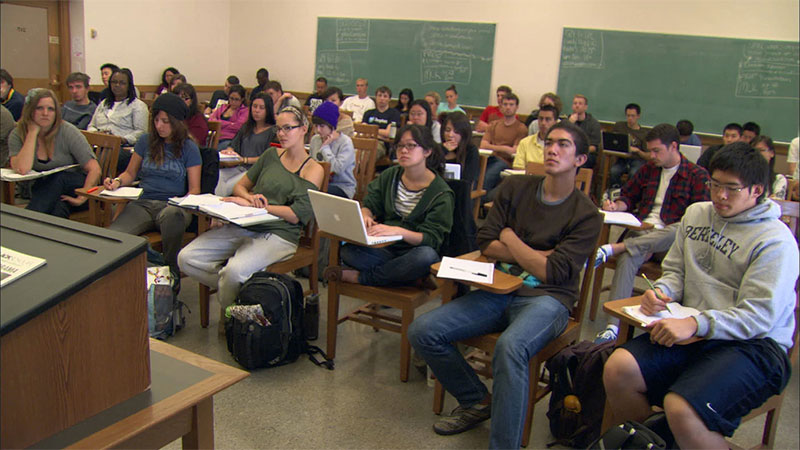
At Berkeley
JIT PHOKAEW
CINEPHILE LIVING IN BANGKOK, THAILAND.
Favourite foreign films- Eclipses (Daniel Hui, 2011)
- Florentina Hubaldo, CTE (Lav Diaz, 2012)
- Co gai tren song (The Girl on the River, Nhat Minh Dang, 1987)
- Innocents (Wong Chen-Hsi, 2012)
- The Counselor (Ridley Scott, 2013)
- A Harbour Town (Dean Kavanagh, 2013)
- Le Camion (The Lorry, Marguerite Duras, 1977)
- A Floresta de Jonathas (Jonathas’ Forest, Sergio Andrade, 2012)
- Yang tidak dibicarakan ketika membicarakan cinta (What They Don’t Talk About When They Talk About Love, Mouly Surya, 2013)
- Yi dai zong shi (The Grandmaster, Wong Kar-wai, 2013)
- Siglo ng pagluluwal (Century of Birthing, Lav Diaz, 2011)
- O luna in Thailanda (A Month in Thailand, Paul Negoescu, 2012)
- Et la lumière fut (And Then There Was Light, Otar Iosseliani, 1989)
- History of Water (Dean Kavanagh, 2012)
- Satyagraha (Prakash Jha, 2013)
- Spring Breakers (Harmony Korine, 2012)
- HSP: There Is No Escape from the Terrors of the Mind (Rouzbeh Rashidi, 2013)
- Silencio en la nieve (Frozen Silence, Gerardo Herrero, 2011)
- The Silent War (Felix Chong, Alan Mak, 2012)
- Bang Bang (Andrea Tonacci, 1971)
- Jag saknar dig (I Miss You, Anders Grönros, 2011)
- The Attacks of 26/11 (Ram Gopal Varma, 2013)
- Welcome to the Punch (Eran Creevy, 2013)
- Der Verdingbub (The Foster Boy, Markus Imboden, 2011)
- L’Invitation (The Invitation, Claude Goretta, 1973)
- No tengas miedo (Don’t Be Afraid, Montxo Armendáriz, 2011)
- Baara (Work, Souleymane Cissé, 1980)
- Bushidou shikkusutîn (Bushido Sixteen, Tomoyuki Furumaya, 2010)
- Aïcha (Yamina Benguigui, 2009-12) (TV series)
- Chanthaly (Mattie Do, 2013)
- Kwam lambag yagyen nai chuang cheewit kong nai bew (A Hardship of a Lamp, Trying to Be Like the Sun, Thanapruet Prayoonphrom, 2013)
- Mary Is Happy, Mary Is Happy (Nawapol Thamrongrattanarit, 2013)
- Roke muang (Wonderful Life, Teeranit Siangsanoh, 2013)
- Before Sunset (Supalerk Silarangsri and Atchareeya Jattuporn, 2013)
- Friends Shift (Boonyarit Wiangnon, 2013)
- W (Chonlasit Upanigkit, 2013)
- Luk e-san (Son of the Northeast, Vichit Kounavudhi, 1983)
- Rak ngo ngo (Love Syndrome, Pantham Thongsang, 2013)
- Pagga kong kru wanpen (The Pen of Teacher Wanpen, Tossapol Boonsinsukh, 2003)
- Awasarn Loksuay (The End of Beautiful World, Pun Homchuen and Onusa Donsawai, 2013)
- Amoksiklav GPO (Teeranit Siangsanoh, 2013)
- Karaoke Girl (Visra Vichit-Vadakan, 2013)
- Sai nam tid shoer (By the River, Nontawat Numbenchapol, 2013)
- Tonight 2 (Teeranit Siangsanoh, 2013)
- Tang Wong (Kongdej Jaturanrasmee, 2013)
- Grean Fiction (Chookiat Sakveerakul, 2013)
- Rai galwayla (Timeless, Wachara Kanha, 2013)
- I Kill My Father (Boonchanin Soodtasom, 2012)
- Mue jorn (In Bandits’ Hands, Vichit Kounavudhi, 1961)
- Sam wan song khuen rak lerk loey (Three Days Two Nights, Thitipong Chaisati, Samkan Chotikasawad and Sorathep Vetwongsatip, 2012)
- Avant que de tout perdre (Just Before Losing Everything, Xavier Legrand, 2013)
- Nous n’irons pas mourir (We Won’t Go There to Die, Jean Berthier, 2011)
- Maritime (Dean Kavanagh, 2012)
- Walang kaluluwah (Not a Soul, Jet Leyco, 2012)
- Childhood Has Gone (Zhao Shou Wei, 2013)
- Marionetten (Boris von Borresholm, 1964)
- Gaarud (The Spell, Umesh Kulkarni, 2009)
- Atlantic Avenue (Laure de Clermont-Tonnerre, 2013)
- Good Night (Muriel d’Ansembourg, 2012)
- Broken Crayon (Ang Geck-Geck, 2012)
- Wahabtoka Al Muta’h (I Offered You Pleasure, Farah Shaer, 2012)
- All the Lines Flow Out (Charles Lim Yi Yong, 2012)
- Hermitage (Carmelo Bene, 1968)
- La Maison vide (The Empty House, Mathieu Hippeau, 2013)
- Première neige (First Snow, Michaël Lalancette, 2012)
- Grindhouse for Utopia (Tani Thitiprawat, 2013)
- Hungary Man Boo (Viriyaporn Boonprasert, 2012)
- Wantayahat (Busarin Seengam, 2013)
- Garnbarn pid term (My Homework, Theeraphat Ngathong, 2012)
- Her Life (Kanvara Lomthaisong, 2013)
- Hong tee 17 (Sign of Sin, Pawinee Mingchue, 2013)
- Anajak jai (Endless Realm, Eakalak Maleetipawan, 2013)
- Rumlueg hategarn mue wantee 3 meenakom porsor 2549 (Remembering the Incident on March 3, 2006, Pongsakorn Ruedeekunrungsi, 2013)
- La double vie de Maniejan (Ratchapoom Boonbunchachoke, 2013)
- The Age of Anxiety (Taiki Sakpisit, 2013)
- Gai jig deg tai bon pag ong (A Hen Pecks a Kid to Death on the Mouth of an Earthen Jar, Chulayarnnon Siriphol, 2013)
- The Fourthland of Heaven (Pramote Sangsorn, 2013)
- Kao gala (Unknown Territory, Eakarpon Settasuk, 2013)
- Be-Where (Pornsiri Tongbaisri, 2013)
- See yag wangploeng (Wangploeng Intersection, Natpakhan Khemkhaw, 2013)
- Lux (“Form” Far Away, Kamonwan Chantarat, 2013)
- Kum sap chang kong lao pee prai (The Curse of the Spirits, Viriyaporn Boonprasert, 2013)
- Dao tee pen numkang (Star Is Ice, Wachara Kanha, 2013)
- Namta wan, namtal ped (Sweet Tear, Spicy Sugar, Ongart Hanchanawong, 2013)
- 2413482/The Number You Have Dialed Is Not Available Now (Suphisara Kittikunarak, 2013)
- Pooying konnee…suay tee sud (She’s the Most Beautiful, Kittisap Erbsuk, 2013)
- Chongwang (Gap, Misak Chinphong, 2012)
- Duangjai (My Heart, Eakalak Anantasomboon, 2012)
- Sawasdi Manob (Hey Manob I Really Need You, Tanaset Siriwattanadirek, Wandee Taboonpong, 2013)
- Darling, Morning, Goodnight (Natchanon Vana, 2012)
- Ubattihate (The Accident, Dawut Sassanapitax, 2012)
- Surveillance (Prap Boonpan, 2012)
- Abacadabra (Kittanai Tang, 2012)
- Stana (Status, Chantana Tiprachart, 2013)
- No Address (Sattaya Janchana, 2013)
- Hug liam rug (Love Twist, Somghad Meyen, 2013)
- Lan yai lae ruenglao pee pong (Tales of a Grandmother, Wittaya Kanthapan, 2013)
- 10,000 Miles (Poppat Vongsupa, 2012)
- Cradle (Tidathip Sanchart, 2013)
- Mor plian hua book huasai (Doctor Changes, Paritas Hutangkoon, 2013)
- The Romantic (Tani Thitiprawat and Teeranit Siangsanoh, 2013)
- A Story for the Modlins (Sergio Oksman, 2012)
- Tundong Magiliw: Pasaan isinisilang siyang mahirap? (Tondo, Beloved: To What are the Poor Born?, Jewel Maranan, 2012)
- 100 mankai ikita neko (The Cat That Lived a Million Times, Tadasuke Kotani, 2012)
- The Act of Killing (Joshua Oppenheimer, Christine Cynn and Anonymous, 2012)
- Mein Schloss (My Castle, Amy Adler, 2012)
- Cambodia, After Farewell (Iv Charbonneau-Ching, 2012)
- 40 Years of Silence: an Indonesian Tragedy (Robert Lemelson, 2009)
- Nang barn (Homemade, Sivaroj Kongsakul, 2013)
- Fahtum pandinsoong (Boundary, Nontawat Numbenchapol, 2013)
- Songtaew kwamfun 2009-2012 (Project Version) (Imagery Minibus (Project Version), Supakit Seksuwan, 2012)
- Lom tulakom (Octoblur, Patana Chirawong, 2013)
- Wanipog panayjorn (The Musician, Poopaan Sornwismongkol, 2013)
- Bor pen yang (The Pond, Teerawat Rujenatham, Athapol Tarnrat, 2013)
- Justiça (Justice, Maria Ramos, 2004)
- The Third Eye (Unaloam Chanrungmaneekul and Thitiphun Bumrungwong, 2013)
- Mit sahai tarn nueng (A Comrade, Abhichon Rattanabhayon and Watcharee Rattanakree, 2013)
- Rang song (The Medium, Fapirom Waiwong, 2013)
- Saint Helena’s Exile (Karl Alexander Weck, 2008)
- Green House Effect I (Kompai Kaengraeng, 2013)
- Trči za život (Run for Life, Mladen Matičević, 2011)
- Prachathipatai (Paradoxocracy, Pen-ek Ratanaruang and Pasakorn Pramoolwong, 2013)
- Censor Must Die (Ing K, Manit Sriwanichpoom, 2013)
- Le populisme au féminin (Hanna Ladoul, Matthieu Cabanes and Marco La Via, 2012)
- Nargis: When Time Stopped Breathing (Muang Myint Aung and Kyaw Kyaw Oo, 2010)
- Oh Sheep! (Gottfried Mentor, 2012)
- Le chat du rabbin (The Rabbi’s Cat, Antoine Delesvaux and Joann Sfar, 2011)
- Vision (Keawalee Warutkomain, 2013)
- Au poil (The Perfect Fit, Hélène Friren, 2012)
- Evangerion shin gekijôban: Kyu (Evangelion: 3.0 You Can (Not) Redo, Hideaki Anno, Mahiro Maeda, Masayuki and Kazuya Tsurumaki, 2012)
- Dream Jobs (Gail Piyanan Suntasiri, 2012)
- I Was a Child of Holocaust Survivors (Ann Marie Fleming, 2010)
- Meitantei Conan: Zekkai No Private Eye (Detective Conan: Private Eye in the Distant Sea, Kobun Shizuno, 2013)
- Yamishibai: Japanese Ghost Stories (Tomoya Takashima, 2013) (TV series)
- Nowhere (Ekarach Kaewmahing, 2013)
- In Transit (Jakrawal Nilthamrong, 2013)
- Soi Nana (Fan Hsiao-lan, 2012)
- Anonymous (Arnont Nongyao, 2013)
- Che Is Still Alive (Nuttapol Sawasdee, 2013)
- Monk and Motorcycle Taxi Rider (Chulayarnnon Siriphol, 2013)
- Untitled (Son of a Bitch) (Namfon Udomlertlak, 2013)
- Tape for Bangkok: Documents (Lin Chi-wei, 2012)
- Father and I (Thanaphon Inthong, 2013)
- P’Mew (Norapat Sakartornsup, 2013)
- Silent Poet (Tada Hengsapkul, 2013)
- Upstream (Xu Qu, 2010-11)
- Life Draw.i..n…g…g… (Peeraphat Kittisuwat, 2013)
- House of Hope (Homage to Montien Boonma) (Navin Rawanchaikul, 2013)
- Villa in the Slums (Phil America and Orawan Arunrak, 2013)
- Melancholy of a Video (Ukrit Sa-nguanhai, 2013)
ANDRÉA PICARD
FILM WRITER AND CURATOR, WAVELENGTHS, TORONTO INTERNATIONAL FILM FESTIVAL.
1. Norte, hangganan ng kasaysayan (Norte, the End of History, Lav Diaz, 2013)
2. L’Inconnu du lac (Stranger by the Lake, Alain Guiraudie, 2013)
3. Tian zhu ding (A Touch of Sin, Jia Zhang-ke, 2013)
4. Història de la meva mort (Story of my Death, Albert Serra, 2013)
5. Feng Ai (‘Til Madness Do Us Part, Wang Bing, 2013)
6. E Agora? Lembra-me (What Now? Remind Me, Joaquim Pinto, 2013)
7. Das merkwürdige Kätzchen (The Strange Little Cat, Ramon Zurcher, 2013)
8. Jiao you (Stray Dogs, Tsai-Ming liang, 2013)
9. Mille Soleils (A Thousand Suns, Mati Diop, 2013); O Corpo de Afonso (The King’s Body, Joao Pedro Rodrigues, 2013); Redemption (Miguel Gomes, 2013)
10. Mouton (Gilles Deroo and Marianne Pistone, 2013)
2. L’Inconnu du lac (Stranger by the Lake, Alain Guiraudie, 2013)
3. Tian zhu ding (A Touch of Sin, Jia Zhang-ke, 2013)
4. Història de la meva mort (Story of my Death, Albert Serra, 2013)
5. Feng Ai (‘Til Madness Do Us Part, Wang Bing, 2013)
6. E Agora? Lembra-me (What Now? Remind Me, Joaquim Pinto, 2013)
7. Das merkwürdige Kätzchen (The Strange Little Cat, Ramon Zurcher, 2013)
8. Jiao you (Stray Dogs, Tsai-Ming liang, 2013)
9. Mille Soleils (A Thousand Suns, Mati Diop, 2013); O Corpo de Afonso (The King’s Body, Joao Pedro Rodrigues, 2013); Redemption (Miguel Gomes, 2013)
10. Mouton (Gilles Deroo and Marianne Pistone, 2013)

Stranger by the Lake
MATÍAS PIÑEIRO
ARGENTINEAN FILMMAKER, BASED IN NEW YORK.
L’Inconnu du lac (Stranger by the Lake, Alain Guiraudie, 2013)Nugu-ui ttal-do anin Haewon, (Nobody’s Daughter Haewon, Hong Sang-soo, 2013)
El loro y el cisne (The Parrot and the Swan, Alejo Moguillansky, 2013)
Sip’ohi – el lugar del Manduré (Sip´ohi – the Place of Manduré Fish, Sebastián Lingiardi, 2011)
Tang huang you difu (Emperor visits the Hell, Lou Li, 2012)
Història de la meva mort (Story of my Death, Albert Serra, 2013)
The Unspeakable Act (Dan Sallitt, 2012)
Damsels in Distress (Whit Stillman, 2011)
La Jealousie (Jealousy, Philippe Garrel, 2013)
Los ilusos (The Wishful Thinkers, Jonás Trueba, 2013)
Le Dernier des injustes (The Last of the Unjust, Claude Lanzmann, 2013)
Vous n´avez encore rien vu (You Ain´t Seen Nothing Yet, Alain Resnais, 2012)
Trois exercises d’interprétation (Three Exercises of Interpretation, Cristi Puiu, 2013)
Gebo e a sombra (Gebo and the Shadow, Manoel de Oliveira, 2012)
Costa da morte (Death Coast, Lois Patiño, 2013)
Arraianos (Eloy Enciso Cachafeiro, 2013)
E Agora? Lembra-me (What Now? Remind Me, Joaquim Pinto, 2013)
Outtakes from the Life of a Happy Man (Jonas Mekas, 2013)
The Unity of All Things (Daniel Schmidt & Alexander Calver, 2013)
La última película (Mark Peranson & Raya Martin, 2013)
Traveling Light (Gina Telaroli, 2011)
Manakamana (Stephanie Spray & Pacho Velez, 2013)
KAZIK RADWANSKI
CINEPHILE LIVING IN BANGKOK, THAILAND.
TORONTO BASED FILMMAKER, CO-FOUNDER OF MDFF.
At Berkeley (Fredrick Wiseman, 2013)Das merkwürdige Kätzchen (The Strange Little Cat, Ramon Zürcher, 2013)
E Agora? Lembra-me (What Now? Remind Me, Joaquim Pinto, 2013)
Tang huang you difu (Emperor Visits the Hell, Luo Li, 2012)
Història de la meva mort (Story of my Death, Albert Serra, 2013)
L’Inconnu du lac (Stranger by the Lake, Alain Guiraudie, 2013)
La última película (The Last Film, Mark Peranson & Raya Martin, 2013)
Manakamana (Stephanie Spray & Pacho Velez, 2013)
Listening to the Space in my Room (Robert Beavers, 2013)
Ma belle gosse (My Blue-Eyed Kid, Shalimar Preuss, 2012)
Mille soleils (A Thousand Suns, Mati Diop, 2013)
Uri Sunhi (Our Sunhi, Hong Sang-soo, 2013)
Stop the Pounding Heart (Roberto Minervini, 2013)
Jiao you (Stray Dogs, Tsai Ming-liang, 2013)
The War (James Benning, 2012)
Vic+Flo ont vu un ours (Vic+Flo Saw a Bear, Denis Côté, 2013)
ALESSANDRO RAJA
FOUNDER AND CEO OF FESTIVALSCOPE.
Borgman (Alex Van Warmerdam, 2013)L’Inconnu du lac (Stranger by the Lake, Alain Guiraudie, 2013)
La grande bellezza (The Great Beauty, Paolo Sorrentino, 2013)
Gravity (Alfonso Cuarón, 2013)
Gloria (Sebastian Lelio, 2013)
Uroki Garmonii (Harmony Lessons, Emir Baigazin, 2013)
Stop the Pounding Heart (Roberto Minervini, 2013)
Heli (Amat Escalante, 2013)
Ida (Pawel Pawlikowski, 2013)
Blue Ruin (Jeremy Saulnier, 2013)

Ida
LALIT RAO
SCREENWRITER AND MEMBER OF THE INTERNATIONAL FEDERATION OF FILM CRITICS, INDIA, ASSOCIATE PROFESSOR (UGC-NET FRENCH) AND SENIOR TECHNICAL TRANSLATOR/INTERPRETER (FRENCH).
L’Inconnu du lac (Stranger by the Lake, Alain Guiraudie, 2013)Nebesnye zheny lugovykh mari (Celestial Wives of Meadow Mari, Aleksey Fedorchenko, 2012)
Walesa. Czlowiek z nadziei (Walesa: Man of Hope, Andrzej Wajda, 2013)
Michael Kohlhaas (Arnaud de Pallières, 2013)
Soshite chichi ni naru (Like Father, Like Son, Hirokazu Koreeda, 2013)
Mystery Road (Ivan Sen, 2013)
Tian zhu ding (A Touch of Sin, Jia Zhang-ke, 2013)
Zyvie Belarus (Viva Belarus!, Krzysztof Lukaszewicz, 2012)
Yurusarezaru mono (Unforgiven, Sang-il Lee, 2013)
Hannah Arendt (Margarethe Von Trotta, 2012)
Meetings with a Young Poet (Rudy Barichello, 2013)
Le Démantèlement (The Auction, Sébastien Pilote, 2013)
Wara no tate (Shield of Straw, Takashi Miike, 2013)
Suzanne (Katell Quillévéré, 2013)
Poklosie (Aftermath, Wladyslaw Pasikowski, 2012)
KIVA REARDON
FOUNDING EDITOR, CLÉO.
1. Vic+Flo ont vu un ours (Vic+Flo Saw a Bear, Denis Côté, 2013)
2. E Agora? Lembra-me (What Now? Remind Me, Joaquim Pinto, 2013)
3. Tian zhu ding (A Touch of Sin, Jia Zhang-ke, 2013)
4. Before Midnight (Richard Linklater, 2013)
5. A Spell to Ward Off the Darkness (Ben Rivers & Ben Russell, 2013)
6. Redemption (Miguel Gomes, 2013)
7. Les Salauds (Bastards, Claire Denis, 2013)
8. O som ao redor (Neighbouring Sounds, Kleber Mendonça Filho, 2012)
9. Inside Llewyn Davis (Joel Coen & Ethan Coen, 2013)
10. Museum Hours (Jem Cohen, 2012)
11. Leviathan (Lucien Castaing-Taylor & Véréna Paravel, 2012)
12. In a World… (Lake Bell, 2013)
13. Manakamana (Stephanie Spray & Pacho Velez, 2013)
14. Abus de faiblesse (Abuse of Weakness, Catherine Breillat, 2013)
15. The Act of Killing (Joshua Oppenheimer, Christine Cynn & Anonymous, 2012)
16. The Oxbow Cure (Calvin Thomas & Yonah Lewis, 2013)
Most-overrated:2. E Agora? Lembra-me (What Now? Remind Me, Joaquim Pinto, 2013)
3. Tian zhu ding (A Touch of Sin, Jia Zhang-ke, 2013)
4. Before Midnight (Richard Linklater, 2013)
5. A Spell to Ward Off the Darkness (Ben Rivers & Ben Russell, 2013)
6. Redemption (Miguel Gomes, 2013)
7. Les Salauds (Bastards, Claire Denis, 2013)
8. O som ao redor (Neighbouring Sounds, Kleber Mendonça Filho, 2012)
9. Inside Llewyn Davis (Joel Coen & Ethan Coen, 2013)
10. Museum Hours (Jem Cohen, 2012)
11. Leviathan (Lucien Castaing-Taylor & Véréna Paravel, 2012)
12. In a World… (Lake Bell, 2013)
13. Manakamana (Stephanie Spray & Pacho Velez, 2013)
14. Abus de faiblesse (Abuse of Weakness, Catherine Breillat, 2013)
15. The Act of Killing (Joshua Oppenheimer, Christine Cynn & Anonymous, 2012)
16. The Oxbow Cure (Calvin Thomas & Yonah Lewis, 2013)
La Vie d’Adèle: chapitres 1 et 2 (Blue is the Warmest Colour, Abdellatif Kechiche, 2013)

Museum Hours
ROBERT REIMER
PROFESSOR OF GERMAN AND FILM STUDIES, UNC CHARLOTTE.
1. Snowpiercer (Bong Joon-ho, 2013)In a year of over-production of apocalyptic science fiction films, Snowpiercer stands out as an excellent cinematic treatment of a world becoming evermore one with rules for the elite and privileged and one with rules and little else for the rest of humanity. The film did what Elysium wanted to do, address the issues of unequal distribution of wealth brought up in Fritz Lang’s Metropolis. It avoids the syrupy ending of that film, however.
2. Much Ado about Nothing (Josh Whedon, 2012)
An intelligent adaptation in modern dress of Shakespeare.
3. Inside Llewyn Davis (Joel and Ethan Cohen, 2013)
This is a must see for anyone who thought the folk scene was sweetness, love, and goodwill to all.
4. The Great Gatsby (Baz Luhrmann, 2013)
I hated the novel before seeing this movie. Now I think I understand what Fitzgerald was getting at. And I was entertained.
5. The Hunger Games: Chasing Fire (Francis Lawrence, 2013)
I have not read the books and I thought the first movie was unexceptional. Maybe I am just becoming overly sensitive to the insidious way the power structure practices thought control. I also like it when a popular medium such as a film based on a best seller critiques itself. Of course I understand the Brechtian irony that by doing so the studio is making millions of dollars, but that does not diminish the message of “all power to the Soviet” that those three raised fingers represent.
BÉRÉNICE REYNAUD
TEACHER AT THE CALIFORNIA INSTITUTE OF THE ARTS AND CO-CURATOR OF FILM AT REDCAT.
By category, and then by alphabetical order of the original title15 narratives
12 Years a Slave (Steve McQueen, 2013)
Computer Chess (Andrew Bujalski, 2013)
Du zhan (Drug War, Johnnie To, 2012)
Grigris (Mahamat-Saleh Haroun, 2013)
L’Inconnu du lac (Stranger by the Lake, Alain Guiraudie, 2013)
Inside Llewyn David (Ethan and Joel Cohen, 2013)
Jiao you (Stray Dogs, Tsaï Ming-liang, 2013)
Jing Cha Ri Ji (To Live and Die in Ordos, Ning Ying, 2013)
Mother of George (Andrew Dosunmu, 2013)
Mouton (Marianne Pistone and Gilles Deroo, 2013)
Uri Sunhi (Our Sunhi, Hong Sang-soo, 2013)
The Selfish Giant (Clio Barnard, 2013)
Soshite chichi ni naru (Like Father, Like Son, Kore-Eda Hirokazu, 2013)
Tian zhu ding (A Touch of Sin, Jia Zhang-ke, 2013)
Yi dai zong shi (The Grandmaster, Wong Kar-Wai, 2013)
7 documentaries
The Act of Killing (Joshua Oppenheimer, Christine Cynn and Anonymous, 2013)
At Berkeley (Frederick Wiseman, 2013)
Cutie and the Boxer (Zachary Heinzerling, 2013)
E agora? Lembra-me (What Now? Remind Me, Joaquim Pinto, 2013)
Farda Mibinamet Elina (See You Tomorrow Elina!, Rakshan Banietemad, 2013)
L’Image manquante (The Missing Picture, Rithy Panh, 2013)
Réquiem NN (Juan Manuel Echavarria, 2013)
7 shorts and mavericks
Cha Fang (The Questioning, Zhu Rikun, 2013)
Un Conte de Michel de Montaigne (Jean-Marie Straub, 2013)
Dialogue d’ombres (Jean-Marie Straub and Danièle Huillet, 1954-2013)
Mille soleils (A Thousand Suns, Mati Diop, 2013)
Pays barbare (Yervant Gianikian and Angela Ricci Lucchi, 2013)
A Study in Natural Magic (Charlotte Pryce, 2013)
Touch (Shelly Silver, 2013)
One restoration
Les Parapluies de Cherbourg (The Umbrellas of Cherbourg, Jacques Demy, 1964-2013)
One memorial screening
The Forgotten Space (Noël Burch and Allan Sekula, 2010)
One quote
“An image is worth a thousand questions.” (Allan Sekula, 1951-2013)
MARCOS RIBAS DE FARIA
Vous n’avez encore rien vu (You Aint’t Seen Nothin’ Yet!, Alain Resnais,2012)Amour (Michael Haneke, 2012)
Keep The Lights On (Ira Sachs, 2012)
Camille Claudel 1915 (Bruno Dumont, 2013)
Cesare deve morire (Caesar Must Die, Paolo & Vittorio Taviani, 2012)
Tabu (Miguel Gomes, 2012)
Star Trek: Into Darkness (J.J. Abrams, 2013)
Après mai (Something in the Air, Olivier Assayas, 2012)
Now You See Me (Louis Leterrier, 2013)
Un Château en Italie (A Castle in Italy, Valeria Bruni Tedeschi, 2013)

Caesar Must Die
STUART RICHARDS
Tutor in Screen and Cultural Studies at the University of Melbourne and programmer at the Melbourne Queer Film Festival.
Frances Ha (Noah Baumbach, 2012)Blue Jasmine (Woody Allen, 2013)
L’inconnu du Lac (Stranger by the Lake, Alain Guiraudie, 2013)
Gravity (Alfonso Cuarón, 2013)
Ain’t Them Bodies Saints (David Lowery, 2013)
My Brother the Devil (Sally El Hosaini, 2012)
Prisoners (Denis Villeneuve, 2013)
The Heat (Paul Feig, 2013)
The Act of Killing, (Joshua Oppenheimer, 2012)
Kill your Darlings, (John Krokidas, 2013)
LUKE RICHARDSON
ENGLISH FILM CRITIC BASED IN COPENHAGEN, DENMARK.
While many may regard 2013 as a “vintage year” for film, it will go down in history as one of the worst in recent times for out-and-out comedies. Despite a few chortles, I found myself guffaw-free in the cinema this year. This may be due to the frosty persona that living in Scandinavia brings, or perhaps it is an industry-epidemic; the bitter aftermath of a worldwide austerity. So, with the utmost candour, let us raise a glass to the resplendent year at the movies we’ve all had. Let’s consider all the squeals, tears and trauma our maestri have enkindled, and hope that they return to tickling our ribs in 2014.The best films of 2013
1. The Act of Killing (Joshua Oppenheimer, Christine Cynn & Anonymous, 2013)
2. Uroki garmonii (Harmony Lessons, Emir Baigazin, 2013)
3. Blue Jasmine (Woody Allen, 2013)
4. După dealuri (Beyond The Hills, Cristian Mungiu, 2012)
5. La Vie d’Adèle: chapitres 1 et 2 (Blue is the Warmest Colour, Abdellatif Kechiche, 2013)
6. The Selfish Giant (Clio Bernard, 2013)
7. Blancanieves (Pablo Berger, 2013)
8. Manakamana (Stephanie Spray and Pacho Velez, 2013)
9. Yi dai zong shi (The Grandmaster, Wong Kar-Wai, 2013)
10. Stoker (Park Chan-wook, 2013)
Most overrated films of 2013 (in order of most grossly praised)2. Uroki garmonii (Harmony Lessons, Emir Baigazin, 2013)
3. Blue Jasmine (Woody Allen, 2013)
4. După dealuri (Beyond The Hills, Cristian Mungiu, 2012)
5. La Vie d’Adèle: chapitres 1 et 2 (Blue is the Warmest Colour, Abdellatif Kechiche, 2013)
6. The Selfish Giant (Clio Bernard, 2013)
7. Blancanieves (Pablo Berger, 2013)
8. Manakamana (Stephanie Spray and Pacho Velez, 2013)
9. Yi dai zong shi (The Grandmaster, Wong Kar-Wai, 2013)
10. Stoker (Park Chan-wook, 2013)
Gravity (Alfonso Cuarón, 2013)
Upstream Color (Shane Carruth, 2013)
Spring Breakers (Harmony Korine, 2012)
Only God Forgives (Nicolas Winding Refn, 2013)
The Broken Circle Breakdown (Felix Van Groeningen, 2012)
PETER RIST
PROFESSOR OF FILM STUDIES IN THE MEL HOPPENHEIM SCHOOL OF CINEMA, CONCORDIA UNIVERSITY, MONTREAL, QUÉBEC, CANADA.
Surprisingly perhaps, in the new world of (almost) all-digital projection, 2013 was an excellent year for cinema-going. As usual, the first part of 2013 involved catching up on films that came out in 2012, but had just been released in Montreal, such as Amour, Zero Dark Thirty, the Chilean No, and the best Brazilian film in some time, Neighboring Sounds. It was an exceptional year for U.S. films, with the best-ever efforts from Noah Baumbach, Frances Ha, Harmony Korine, Spring Breakers, and even the Coen Brothers, Inside Llewyn Davis, while Montreal’s international documentary film festival, RIDM, staged a remarkable retrospective of work from Harvard University’s Sensory Ethnography Lab (SEL), with director J.P. Sniadecki on hand to co-host a roundtable session (it was the best of the local festivals).I found Gravity to be so impressive that I have now watched it three times in IMAX 3D. It is the first studio film in years – is it really a “Hollywood” movie? – that works as it should throughout while delivering on the promise of extraordinary special effects. It completely redefines the action genre. Until Norte, the End of History premiered at the Festival du Nouveau Cinéma (FNC) in October, no work by Lav Diaz had ever shown in Montreal. I am now struggling to seek out other films of his, because this latest effort is a true masterpiece. Along with Gravity, it is the other best film of the year: I found it to be incredibly moving in its portrait of a Filipina working woman struggling against the odds, and shocking in its suggestion of corruption and violent decadence at the upper end of the class ladder in the Philippines, via Dostoevsky’s Crime and Punishment. Both Italian archival festivals (in Bologna and Pordenone) were notable, the former for their second instalment of “Japan Speaks Out.”
Norte, hangganan ng kasaysayan (Norte, the End of History, Lav Diaz, 2013)
Gravity (Alfonso Cuarón, 2013)
Berberian Sound Studio (Peter Strickland, 2012)
No (Pablo Larraín, 2012)
O Som ao redor (Neighbouring Sounds, Kleber Mendonça Filho, 2012)
The Act of Killing (Joshua Oppenheimer, Christine Cynn and Anonymous, 2012)
Like Someone in Love (Abbas Kiarostami, 2012)
Ani imôto (Older Brother and Younger Sister, Kimuro Sotoji, 1936) & Akanishi
Kakita (Capricious Young Man, Itami Mansaku, 1936), both released on 35mm at Il Cinema Ritrovato 27
Top of the Lake (Television miniseries, Jane Campion & Garth Davis, 2013)
Ok-hui-ui yeonghwa (Oki’s Movie, Hong Sang-soo, 2010)
Nugu-ui ttal-do anin Haewon (Nobody’s Daughter Haewon, Hong sang-soo, 2013)
Uri Sunhi (Our Sunhi, Hong Sang-soo, 2013)
Shkurnyk (The Self-Seeker, Nikolai Shpikovsky, 1929), and Khlib (Bread, Shpikovsky, 1930), in “Ukraine: The Great Experiment,” Il Giornate del Cinema Muto 32
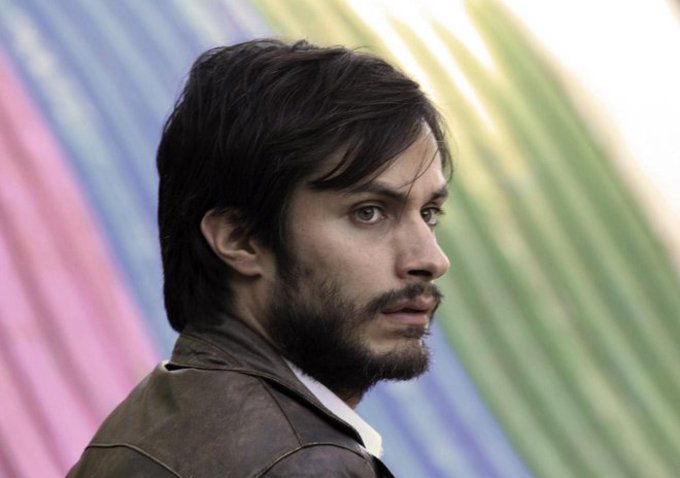
No
ADAM ROBERTS
FILMMAKER LIVING IN LONDON, AND CO-FOUNDER, WITH JOANNA HOGG, OF A NOS AMOURS, WHICH DEDICATES ITSELF TO SHOWING HARD TO SEE OVERLOOKED OR ESPECIALLY GOOD FILMS, FAVOURING ORIGINAL FORMATS WHERE POSSIBLE.
For me, new films have made up a small part of 2013 – committed as I am at present to the screening of work from the past (currently a complete Chantal Akerman retrospective, whose work has excited me like nothing else, both redefining what film is and reminding me anew of the primal energy of cinema). I should also like to give honourable mention to the extraordinarily refinement and pleasure I found in André Delvaux’s Rendez-vous à Bray (1971, reissued on DVD after restoration), and to Jacques Rozier’s famously overlooked Adieu Philippine (1962). To make an impossible selection of new films here are just a few – all of them remarkable, all of them rewarding repeat viewing, all of them serving to demonstrate that cinema is a wonderfully subtle and infinitely varied field:Trudno byt’ bogom (Hard to Be a God, Alexei German, 2013)
Leviathan (Lucien Castaing-Taylor & Véréna Paravel, 2012)
Blue Jasmine (Woody Allen, 2013)
Vous n’avez encore rien vu (You Ain’t Seen Nothin’ Yet, Alain Resnais, 2012)
Exhibition (Joanna Hogg, 2013)
La grande bellezza (The Great Beauty, Paulo Sorrentino, 2013)
JULIAN ROSS
RESEARCHER, CURATOR OF FILM PROGRAMS, EDITOR OF VERTIGO.
Artefacts (Cyprien Gaillard, 2011)Leviathan (Lucien Castaing-Taylor & Véréna Paravel, 2012)
I Remember: A Film About Joe Brainer (Matt Wolf, 2012)
At Berkeley (Frederick Wiseman, 2013)
All the Lines Flow Out (Charles Lim, 2011)
The Act of Killing (Joshua Oppenheimer, Christine Cynn & Anonymous, 2012)
Article Left by the Departed (Takashi Makino, 2013)
Dereviled (David Haines, 2013)
Dad’s Stick (John Smith, 2012)
Sakuhin (Work, Shozo Shimamoto, 1958)
MIRIAM ROSS
LECTURER IN FILM AT VICTORIA UNIVERSITY OF WELLINGTON.
According to past trends of boom and bust, 3D should very much be dead by now. However, 2013 saw a steady number of 3D cinema releases and the expansion of 3D technology into new markets, particularly in Russia and Asia. The success of films such as Life of Pi and Brave at the Academy Awards in February signalled favourable recognition whereas the decision by the BBC in Britain to end its 3D trials was less positive for the format. I would argue that the films on offer this year were a mixed bag; some showcased extraordinary visual fields while others seemed unconcerned with the added depth cues. My list of the top ten best 3D films of the year does not reflect on the overall quality of the films (particularly narrative, character development and/or performance) but signals the best use of 3D techniques in the films that were on offer.Pacific Rim (Guillermo del Toro, 2013)
Oz the Great and Powerful (Sam Raimi, 2013)
Gravity (Alfonso Cuarón, 2013)
Beyond the Edge (Leanne Pooley, 2013)
G.I. Joe: Retaliation (Jon M. Chu, 2013)
The Day of the Doctor (Nick Hurran, 2013)
Iron Man 3 (Shane Black, 2013)
The Great Gatsby (Baz Luhrmann, 2013)
Hansel and Gretel: Witch Hunters (Tommy Wirkola, 2013)
Star Trek Into Darkness (J. J. Abrams, 2013)

Beyond the Edge
ANDRÉ ROY
FILM CRITIC FOR 24IMAGES MAGAZINE.
Tian zhu ding (A Touch of Sin, Jia Zhang-ke, 2013)E Agora ? Lembra-me (What Now? Remind Me, Joaquim Pinto, 2013)
L’Inconnu du lac (Stranger by the Lake, Alain Guiraudie, 2013)
La Jalousie (Jealousy, Philippe Garrel, 2013)
Soshite chichi ni naru (Like Father Like Son, Hirokazu Koreeda, 2013)
Michael Kohlhaas (Arnaud des Pallières, 2013)
Mud (Jeff Nichols, 2012)
Spring Breakers (Harmony Korine, 2012)
Jiao you (Stray Dogs, Tsai Ming-liang, 2013)
Vic+Flo ont vu un ours (Vic+Flo Saw a Bear, Denis Côté, 2013)
BEN RUSSELL
ARTIST AND CURATOR WHOSE RECENT WORK ARGUES FOR CINEMA AS UTOPIA.
Top ten projections of 2013My experience of cinema is increasingly tethered to both the physical space and the material transmission of the medium. Which is to say: bad cinemas can ruin good cinema, but good cinema becomes totally remarkable when given the proper ray of light to inhabit and the right crematorium / body of water / or porn-theatre to light up. Timing is everything, space is the place! What follows is an alphabetical list of (mostly*) great cinema made exceptional by projection:
Alberi (Trees, Michelangelo Frammartino, 2013) – projected on DCP w/7.1 audio in an abandoned cinema with a centaur mural in the lobby (Milan, Italy)
Annie Hall (Woody Allen, 1977) – projected on 35mm on a rooftop cinema with an intermission, a working fountain and coloured lights (Athens, Greece)
Dusty Stacks of Mom (Jodie Mack, 2013) – projected on video w/ live vocal performance in the rainy afterhours courtyard of MOMA PS1 (New York, USA)
Gravity* (Alfonso Cuarón, 2013) – projected on DCP 3D in a strip-mall cinema with all but three rows of chairs removed and a pile of boxes assembled beneath the screen, stoned (Brattleboro, USA)
Ja Ne Vem (Yes, I Do Not Know, Davorin Marc, 1980) – projected on S8mm on a screen erected in the Aegean Sea (Tinos, Greece)
Korotkie vstrechi (Brief Encounters, Kira Muratova, 1967) – projected on 35mm in a cinémathèque (Rotterdam, Netherlands)
The Last Judgement (Lucien Castaing-Taylor & Véréna Paravel, 2013) – projected on video on the ceiling of a former crematorium (Berlin, Germany)
Only God Forgives (Nicolas Winding Refn, 2013) – projected on DVD for 3 viewers in a “men’s cinema” (Amman, Jordan)
Spring Breakers (Harmony Korine, 2012) – projected on DCP at the avant-premiere to a 1,000-strong audience of screaming Selena Gomez fans (Paris, France)
Stemple Pass, James Benning, 2013 – projected on DCP in a multiplex at 8am, alone (Wroclaw, Poland)
DAN SALLITT
FILMMAKER AND FILM WRITER LIVING IN NEW YORK.
1. Il futuro (The Future, Alicia Scherson, 2013)
2. Nugu-ui ttal-do anin Haewon (Nobody’s Daughter Haewon, Hong Sang-soo, 2013)
3. Travel Plans (Ted Fendt, 2013)
4. I Hate Myself :) (Joanna Arnow, 2013)
5. Redemption (Miguel Gomes, 2013)
6. Before Midnight (Richard Linklater, 2013)
7. La grande bellezza (The Great Beauty, Paolo Sorrentino, 2013)
8. Care (Brett Wagner, 2013)
9. The Girls on Liberty Street (John Rangel, 2013)
10. L’Inconnu du lac (Stranger by the Lake, Alain Guiraudie, 2013)
All the above films received their world premieres in 2013. This list will certainly change quite a lot as 2013 films make their way to New York over the course of the next few years.2. Nugu-ui ttal-do anin Haewon (Nobody’s Daughter Haewon, Hong Sang-soo, 2013)
3. Travel Plans (Ted Fendt, 2013)
4. I Hate Myself :) (Joanna Arnow, 2013)
5. Redemption (Miguel Gomes, 2013)
6. Before Midnight (Richard Linklater, 2013)
7. La grande bellezza (The Great Beauty, Paolo Sorrentino, 2013)
8. Care (Brett Wagner, 2013)
9. The Girls on Liberty Street (John Rangel, 2013)
10. L’Inconnu du lac (Stranger by the Lake, Alain Guiraudie, 2013)
A few good films of recent years that crossed my path in 2013 and that haven’t received enough attention: O luna in Thailanda (A Month in Thailand, Paul Negoescu, 2012); Sur la planche (On the Edge, Leila Kilani, 2011); Al-khoroug lel-nahar (Coming Forth by Day, Hala Lotfy, 2012); El lenguaje de los machetes (Machete Language, Kyzza Terrazas, 2011); Shyamal Kaku, Korpreshaner Baati, Ebong (Shyamal Uncle Turns Off the Lights, Suman Ghosh, 2012); Vakansi yang janggal dan penyakit lainnya (Peculiar Vacation and Other Illnesses, Yosep Anggi Noen, 2002); Kolka Cool (Juris Poskus, 2011); Nina (Elisa Fuksas, 2012); Ini Avan (Him, Here After, Asoka Handagawa, 2012).

Il Futuro
JOSÉ SARMIENTO
CO-FOUNDER AND CO-DIRECTOR OF DESISTFILM.COM.
Exceptional
1. Redemption (Miguel Gomes, 2013)\
2. Trois exercices d’interpretation (Three Exercises of Interpretation, Cristi Puiu, 2013)
3. Los ilusos (The Wishful Thinkers, Jonás Trueba, 2013)
4. Les Trois Désastres (The Three Disasters, Jean-Luc Godard, 2013)
5. Shirley: Visions of Reality (Gustav Deutsch, 2013)
6. P3nd3jo5 (Raúl Perrone, 2013)
Outstanding2. Trois exercices d’interpretation (Three Exercises of Interpretation, Cristi Puiu, 2013)
3. Los ilusos (The Wishful Thinkers, Jonás Trueba, 2013)
4. Les Trois Désastres (The Three Disasters, Jean-Luc Godard, 2013)
5. Shirley: Visions of Reality (Gustav Deutsch, 2013)
6. P3nd3jo5 (Raúl Perrone, 2013)
7. Soft in the Head (Nathan Silver, 2013)
8. Feng ai (‘Til Madness Do Us Part, Wang Bing, 2013)
9. Tian zhu ding (A Touch of Sin, Jia Zhang-ke, 2013)
10. Nugu-ui ttal-do anin Haewon (Nobody’s Daughter Haewon, Hong Sang-soo, 2013)
11. Les Salauds (Bastards, Claire Denis, 2013)
12. El quinto evangelio de Gaspar Hauser (The Fifth Gospel of Kaspar Hauser, Alberto Gracia, 2013)
Quite good8. Feng ai (‘Til Madness Do Us Part, Wang Bing, 2013)
9. Tian zhu ding (A Touch of Sin, Jia Zhang-ke, 2013)
10. Nugu-ui ttal-do anin Haewon (Nobody’s Daughter Haewon, Hong Sang-soo, 2013)
11. Les Salauds (Bastards, Claire Denis, 2013)
12. El quinto evangelio de Gaspar Hauser (The Fifth Gospel of Kaspar Hauser, Alberto Gracia, 2013)
13. Vers Madrid (The Burning Bright!) (Sylvain George, 2012)
14. Before Midnight (Richard Linklater, 2013)
15. Pardé (Closed Curtain, Jafar Panahi, 2013)
16. La Bataille de Solférino (Age of Panic, Justine Tiet, 2013)
17. La grande bellezza (The Great Beauty, Paolo Sorrentino, 2013)
18. Falling Notes Unleaving (Saul Levine, 2013)
Have a redeeming feature14. Before Midnight (Richard Linklater, 2013)
15. Pardé (Closed Curtain, Jafar Panahi, 2013)
16. La Bataille de Solférino (Age of Panic, Justine Tiet, 2013)
17. La grande bellezza (The Great Beauty, Paolo Sorrentino, 2013)
18. Falling Notes Unleaving (Saul Levine, 2013)
19. Camille Claudel 1915 (Bruno Dumont, 2013)
20. Behind the Candelabra (Steven Soderbergh, 2013)
The what-the-f!? list20. Behind the Candelabra (Steven Soderbergh, 2013)
Upstream Color (Shane Carruth, 2013)
Frances Ha (Noah Baumbach, 2012)
L’Inconnu du lac (Stranger by the Lake, Alain Guiraudie, 2013)
Spring Breakers (Harmony Korine, 2012)
And a ‘couldn’t watch in 2012’ best films list
Exceptional
1. San zimei (Three Sisters, Wang Bing, 2012)
2. Passion (Brian De Palma, 2012)
3. A última vez que vi Macau (The Last Time I Saw Macao, João Pedro Rodrigues & João Rui Geurra da Mata, 2012)
4. Leviathan (Lucian Castaing-Taylor & Véréna Paravel, 2012)
5. The Extravagant Shadows (David Gatten, 2012)
6. A Low Life Mythology (Lior Shamriz, 2012)
7. White Epilepsy (Philippe Grandrieux, 2012)
8. Like Someone in Love (Abbas Kiarostami, 2012)
Outstanding2. Passion (Brian De Palma, 2012)
3. A última vez que vi Macau (The Last Time I Saw Macao, João Pedro Rodrigues & João Rui Geurra da Mata, 2012)
4. Leviathan (Lucian Castaing-Taylor & Véréna Paravel, 2012)
5. The Extravagant Shadows (David Gatten, 2012)
6. A Low Life Mythology (Lior Shamriz, 2012)
7. White Epilepsy (Philippe Grandrieux, 2012)
8. Like Someone in Love (Abbas Kiarostami, 2012)
9. The Master (Paul Thomas Anderson, 2012)
10. Arraianos (Eloy Enciso, 2012)
11. Odayaka na nichijô (Nobutero Uchida, 2012)
12. Paradies: Liebe (Paradise: Love, Ulrich Seidel, 2012)
13. Stories We Tell (Sarah Polley, 2012)
14. După dealuri (Beyond the Hills, Cristian Mingiu, 2012)
15. La noche de enfrente (Night Across the Street, Raúl Ruiz, 2012)
16. The Capsule (Athina Rachel Tsangari, 2012)
17. No (Pablo Larraín, 2012)
18. Berberian Sound Studio (Peter Strickland, 2012)
19. Mommy is Coming (Cheryl Dunye, 2012)
20. La Casa Emak Bakía (The Search for Emak Bakia, Oskar Algeria, 2012)
21. The Act of Killing (Joshua Oppenheimer, Christine Cynn & Anonymous, 2012)
22. Age Is… (Stephen Dwoskin, 2012)
23. O Gebo e a sombra (Gebo and the Shadow, Manoel de Oliveira, 2012)
24. Ai Weiwei: Never Sorry (Alison Klayman, 2012)
25. Linhas de Wellington (Lines of Wellington, Valeria Sarmiento, 2012)
10. Arraianos (Eloy Enciso, 2012)
11. Odayaka na nichijô (Nobutero Uchida, 2012)
12. Paradies: Liebe (Paradise: Love, Ulrich Seidel, 2012)
13. Stories We Tell (Sarah Polley, 2012)
14. După dealuri (Beyond the Hills, Cristian Mingiu, 2012)
15. La noche de enfrente (Night Across the Street, Raúl Ruiz, 2012)
16. The Capsule (Athina Rachel Tsangari, 2012)
17. No (Pablo Larraín, 2012)
18. Berberian Sound Studio (Peter Strickland, 2012)
19. Mommy is Coming (Cheryl Dunye, 2012)
20. La Casa Emak Bakía (The Search for Emak Bakia, Oskar Algeria, 2012)
21. The Act of Killing (Joshua Oppenheimer, Christine Cynn & Anonymous, 2012)
22. Age Is… (Stephen Dwoskin, 2012)
23. O Gebo e a sombra (Gebo and the Shadow, Manoel de Oliveira, 2012)
24. Ai Weiwei: Never Sorry (Alison Klayman, 2012)
25. Linhas de Wellington (Lines of Wellington, Valeria Sarmiento, 2012)
HOWARD SCHUMANN
FREELANCE WRITER.
- Short Term 12 (Destin Cretton, 2013)
Coming from the director’s own experience, the film is permeated with an air of authenticity and contains natural performances from an ensemble cast that includes Brie Larson as Staff Supervisor in an Oscar-worthy performance. - Mud (Jeff Nichols, 2012)
Remarkable for its combination of reality and lyricism and is marked by outstanding performances from McConaughey and Sheridan. - The Way, Way Back (Nat Faxon and Jim Rash, 2013)
A warmhearted and beautifully realized teen comedy that is as poignant as it is funny. - Wadjda (Haifaa Al-Mansour, 2012)
The first film to be directed by a Saudi woman, Haifaa Al-Mansour, and the first to be shot inside Saudi Arabia, is a powerful indictment of the gender inequality that Saudi women face all of their lives. Though girls riding bikes are frowned upon, Waad Mohammed’s performance as the plucky ten-year-old Wadjda who saves money to buy a bike demonstrates the strength and quiet determination of her character. - 12 Years a Slave (Steve McQueen, 2013)
Chiwetel Ejiofor as Northrup does not simply relate his story but makes us party to his experience and brilliantly conveys the agony of what it is like to endure the debasement of one’s humanity. - The Place Beyond the Pines (Derek Cianfrance, 2012)
A suspenseful, multi-layered drama that covers 15 years in the lives of its protagonists. It is a sprawling epic of 140-minutes whose perfect design can only be seen in its totality. With many hairpin twists and turns, the film shows how one moment of poor judgment can affect the rest of a person’s life and carry over to the next generation. - Stand Clear of the Closing Doors (Sam Fleischner, 2013)
The centrepiece of the film is the boy’s eleven-day odyssey riding the A-train to Manhattan and back as he encounters all that New York has to offer. As his mother looks for Ricky, the threat of Hurricane Sandy adds a new desperation to the search and the film builds an extraordinary level of tension. - Fruitvale Station (Ryan Coogler, 2013)
A disturbing account of the last day of the life of Oscar Grant (Michael B. Jordan), a 22 year-old African American, shot and killed by an officer of the Bay Area Rapid Transit (BART) at the Fruitvale subway station in Oakland, California in 2009. While the film will not end racial tension, it may go a long way towards opening people’s eyes about the reality of police misconduct. - The Spectacular Now (James Ponsoldt, 2013)
It is a smart, restrained and honest film that handles the subject of teen alcoholism, relationships, and sex in a sensitive and realistic way. It is not a film about alcoholism but about self-awareness that portrays teenagers like real people and treats them with dignity and respect. - Inside Llewyn Davis (Ethan and Joel Coen, 2013)
The Coen Brothers’ message – that it’s difficult for any new artist to be successful in a highly competitive arena, especially when their actions are toxic and self defeating, is not a startling piece of information, yet the film has so much soul and the performances are so touching that it’s hard to tell the difference between the winners and losers anyway. - Frances Ha (Noah Baumbach, 2012)
A film that has genuine affection for its characters. They have their flaws and are not always self-aware, but the film recognises that the process of growth does not happen suddenly. - To the Wonder (Terrence Malick, 2012)
Terence Malick’s stamp is written all over it: philosophical voice-overs uttered in hushed tones, panoramic displays of the physical beauty of nature, a story that features little dialogue, and an untranslatable feeling for the spiritual. It is a work that suggests, implies and evokes rather than commands, forcing us to confront how we connect to ourselves and the world around us. - Upstream Color (Shane Carruth, 2013)
Though it is enigmatic and mandates repeated viewing, it does not reach us on the level of rational understanding, but on that of being. Dreamlike and haunting, with its exquisite cinematography and poetic musical score, it is a film of mood and silences that, regardless of your interpretation, will challenge you to engage both your mind and your emotions. - Blackfish (Gabriela Cowperthwaite, 2013)
This hard-hitting and disturbing documentary shows the deplorable conditions of killer whales confined to an area the size of a swimming pool for up to twenty or thirty years at marine theme parks such as SeaWorld. In making the film that depicts the death of three trainers by attacking orcas, the director said her purpose was to provide a context for humane treatment for the whales and prevent additional deaths. - Barbara (Christian Petzold, 2012)
Both a superb character study and an illumination of the effects of oppression on the human psyche. It is a film that transcends the limitations of its setting to become a universal experience. - L’Enfant d’en haut (Sister, Ursula Meier, 2012)
Based on Meier’s memories, Sister is a devastating look at the result when an unwanted child is brought into the world. - La Vie d’Adèle: chapitres 1 et 2 (Blue Is the Warmest Colour, Abdellatif Kechiche, 2013)
A complex, deeply intense film that elevates one young woman’s personal struggle into a drama of universal relevance. It is unique in its openness and honesty about same-sex relationships and the performances are so perfect that we are never conscious of anything except the beauty of two human beings discovering the joys of authentic intimacy. - American Hustle (David O. Russell, 2013)
It may not be the most profound statement ever made about the corruption that lies below the surface of the American dream, but it is certainly one of the most entertaining. Loosely based on the Abscam case of the late seventies where an FBI sting operation used fake Arab sheiks to convict prominent politicians, it is filled with a relentless energy and some of the finest acting performances of the year. - Uroki Garmonii (Harmony Lessons, Emir Baigazin, 2013)
Set in a remote village, Harmony Lessons is a poetic but deeply disturbing and often brutal look at power relationships at a Kazakh high school. From the brutality of the police to the bullying at school to the way animals and even insects are treated, the film mirrors an increasing cycle of violence in a society governed by the false notion of survival of the fittest. It is a stunning first feature. - The Attack (Ziad Douiere, 2012)
In the gripping suspense thriller The Attack, the life of Dr Amin Jafaari, a respected Israeli Arab doctor, is turned upside down when his wife is accused of being a suicide bomber. Although the film is about the seemingly impassable political divide that separates the Israeli and Arab worlds, it is basically a look at the human cost of the conflict. - Museum Hours (Jem Cohen, 2012)
Moves art beyond the confines of a stuffy museum and takes it out into the streets of Vienna. A riveting experience that bonds us to a world beyond the limits of our sense perception, the film widens our view of what is “inside” the museum to include what is “outside,” not as a separate part of the experience but as an integrated whole. - All Is Lost (J.C. Chandor, 2013)
Known only as “Our Man,” he is a man adrift at sea without any of the identifiers that we normally use to know someone. He just is and we are with him in his fierce struggle for survival. - Camille Claudel 1915 (Bruno Dumont, 2013)
Austere and unforgiving, Camille Claudel, 1915 can be compared to the films of Robert Bresson in its long silences, spiritual depth, and uncompromising integrity. - The Book Thief (Brian Percival, 2013)
Told with power and conviction, it is the perfect film for young people to learn about the dangers of totalitarianism and to appreciate the importance of culture and knowledge in a humane society. - L’Image manquante (The Missing Picture, Rithy Panh, 2013)
It paints an overwhelming picture of man’s inhumanity to man.
Tracks (John Curran, 2013)
The Lunchbox (Ritesh Batra, 2013)
The Rocket (Kim Morduant, 2013)
The Gatekeepers (Dror Moreh, 2012)
Atmen (Breathing, Karl Markovics, 2011)
Gravity (Alfonso Cuarón, 2013)
Dallas Buyers Club (Jean-Marc Vallée, 2013)
Stories We Tell (Sarah Polley, 2012)
Lemale et ha’halal (Fill the Void, Rama Burshtein, 2012)
După dealuri (Beyond the Hills, Cristian Mingiu, 2012)
Disappointing
Ginger & Rosa (Sally Potter, 2012)
Before Midnight (Richard Linklater, 2013)
Den skaldede frisør (Love is All You Need, Susanne Bier, 2012)
Much Ado About Nothing (Joss Whedon, 2012)
Nebraska (Alexander Payne, 2013)
Philomena (Stephen Frears, 2013)

Short Term 12
RAVI SHANKAR
A FILM BLOGGER – FILMBULB. INTERESTED IN SEEING UNKNOWN WORLD CINEMA.
I’m going to list my best of 2013 Tamil language movies. The list will have a few films released at the end of 2012.Tamil Language Cinema is just 2-3 years older than Bollywood; it releases close to 100 films but doesn’t enjoy a big market share compared to Bollywood. Most of the films are song-musicals, like Bollywood, but the advent of New Age Tamil Filmmakers are changing the trend by introducing innovative visual story telling.
My Top 10 Tamil films released commercially in Chennai, India during 2012-13 arranged by date of release.
Naduvula Konjam Pakkatha Kaanom (A Few Pages are Missing in Between, Balaji Tharaneetharan, 2012)
A black comedy revolving around four friends, when one of them suddenly suffers from short-term memory loss. With just two days for his wedding, the rest of the friends struggle to make the wedding happen.
Kumki (Prabu Solomon, 2012)
A Seven Samurais kind of film, but without the samurais and bandit. Instead we have elephants in their places. It also interludes a love story, which uses great locals and music.
Neer Paravai (Seabird, Seenu Ramasamy, 2012)
A simple love story portraying the lives of the people living in the coastal regions of South India, especially Tamil Nadu.
Soodhu Kavvum (Evil Engulfs, Nalan Kumarasamy, 2013)
Another black comedy. A story when a kidnapping goes wrong, where the kidnapped starts to dictate the terms. A funny and down to earth dark comedy.
Neram (Time, Alponse Puthren, 2013)
What happens if something doesn’t fall into place? This is what the film’s protagonist suffers from. Nothing new, ah! The director takes the cue from Tarantino’s style of non-linear filmmaking into Tamil Cinema.
Vishwaroopam (Kamal Haasan, 2013)
This film made waves when it was banned by the State government, citing religious sentiments, but it turned out to be a good spy thriller, which had me on the edge of my seat.
Paradesi (Vagabond, Bala, 2013)
A story set in pre-independence India. Portraying the struggle of tea plantation workers in the hands of British. Never before has exploitation been pictured so authentic and raw.
Chennaiyil Oru Naal (A Day in Chennai, Shahid Kader, 2013)
A non-linear and multi-narrative thriller. Very rare to see an ensemble cast. It is a story which happens in a day, when a heart is transported for organ transplantation.
Aadhalal Kadhal Seiveer (Therefore, Go Ahead and Love, Susindran, 2013)
A film featuring how the present generation of young Indians differentiate love/romance and the age old tradition of chastity. A very simple story with a powerful ending.
Irandam Ulagam (The Second World, K. Selvaragavan, 2013)
A list without a fantasy film is incomplete. A unique and brave attempt by the maker. This genre is new to new-age Tamil cinema. A story set in two planets.
Explore the unknown. Go beyond Bollywood to explore the colours and flavours of Indian Cinema.
NICK SHIMMIN
VETERAN SUBTITLER, EDITOR AND PROMOTER, SYDNEY.
Enduring works of art seen this year:Here Be Dragons (Mark Cousins, 2013)
Post Tenebras Lux (Carlos Reygadas, 2012)
Upstream Color (Shane Carruth, 2013)
Fine films seen this year:
Spirit of ‘45 (Ken Loach, 2013)
Camille Claudel 1915 (Bruno Dumont, 2013)
Stories We Tell (Sarah Polley, 2012)
Worst film seen in maybe ten years:
The Dead Speak Back (Jason Sweeney, 2013)

Here Be Dragons
NICK SHIMMIN
TEACHER, PHOTOGRAPHER AND CINEPHILE, PHILADELPHIA.
Freedom and discovery are the unifying threads throughout my choices for the greatest films of 2013. There was the destruction of self and reconnections to others in Upstream Color and 12 Years a Slave and a loosening of the hold on narrative and contextual boundaries in the likes of Leviathan and Gravity. And if my list could go beyond film and include television, the brilliant Jane Campion and Garth Davis directed mini-series Top of the Lake would fit perfectly within the highlights of the year.Upstream Color (Shane Carruth, 2013)
Like Someone in Love (Abbas Kiarostami, 2012)
To the Wonder (Terrence Malick, 2012)
12 Years a Slave (Steve McQueen, 2013)
Let the Fire Burn (Jason Osder, 2013)
Leviathan (Lucien Castaing-Taylor & Véréna Paravel, 2012)
Gravity (Alfonso Cuarón, 2013)
Room 237 (Rodney Ascher, 2012)
Stories We Tell (Sarah Polley, 2012)
A Band Called Death (Mark Christopher Covino & Jeff Howlett, 2012)
MARK SPRATT
MELBOURNE-BASED INDEPENDENT FILM DISTRIBUTOR.
A top ten (chronological order of viewing)Poziția copilului (Child’s Pose, Călin Peter Netzer, 2013)
Nugu-ui ttal-do anin Haewon (Nobody’s Daughter Haewon, Hong Sang-soo, 2013)
Le Passé (The Past, Asghar Farhadi, 2013)
A última vez que vi Macau (The Last Time I Saw Macao, João Rui Guerra da Mata & João Pedro Rodrigues, 2013)
Tian zhu ding (A Touch of Sin, Jia Zhang-ke, 2013)
La Vénus à la fourrure (Venus in Fur, Roman Polanski, 2013)
La Vie d’Adèle: chapitre 1 et 2 (Blue is the Warmest Colour, Abdellatif Kechiche, 2013)
Museum Hours (Jem Cohen, 2012)
To the Wonder (Terrence Malick, 2012)
Gravity(Alfonso Cuarón, 2013)
Some very close runners up
Stemple Pass (James Benning, 2012)
Camille Claudel 1915 (Bruno Dumont, 2013)
Du zhan (Drug War, Johnnie To, 2013)
Soshite chichi ni Naru (Like Father Like Son, Kore-Eda Hirokazu, 2013)
Wakolda (The German Doctor, Lucía Puenzo, 2013)
Blancanieves (Pablo Berger, 2012)
Stories We Tell (Sarah Polley, 2012)
The East (Zal Batmanglij, 2013)
Leviathan (Lucien Castaing-Taylor & Véréna Paravel, 2012)
Behind the Candelabra (Steven Soderbergh, 2013)
La grande bellezza (The Great Beauty, Paolo Sorrentino, 2013)
Jîn (Reha Erdem, 2013)
And special mention to a quintet of American films, maligned and underrated in some quarters which all in a sometimes cartoonish manner, held up a penetrating mirror to a cartoonish society
Spring Breakers (Harmony Korine, 2012)
The Canyons (Paul Schrader, 2013)
Pain & Gain (Michael Bay, 2013)
The Counselor (Ridley Scott, 2013)
Starlet (Sean Baker, 2012)
Greatest restoration/discovery
La Pointe Courte (Agnès Varda, 1955)

The Past
BRAD STEVENS
AUTHOR OF MONTE HELLMAN: HIS LIFE AND FILMS (MCFARLAND, 2003), ABEL FERRARA: THE MORAL VISION (FAB PRESS, 2004), AND THE FORTHCOMING NOVEL THE HUNT (VAMPTASY PUBLISHING).
Films of the year- Like Someone in Love (Abbas Kiarostami, 2012)
- Io e te (Me and You, Bernardo Bertolucci, 2012)
- Chantrapas (Otar Iosseliani, 2010)
- The Master (Paul Thomas Anderson, 2012)
- To the Wonder (Terrence Malick, 2012)
- La Vie d’Adèle: chapitre 1 et 2 (Blue is the Warmest Colour, Abdellatif Kechiche, 2013)
- Paula-Paula (Jess Franco, 2010)
- Holy Motors (Leos Carax, 2012)
- Stoker (Park Chan-wook, 2013)
- L’intervallo (The Interval, Leonardo Di Costanzo, 2012)
- Yuki & Nina (Hippolyte Girardot and Nobuhiro Suwa, 2009)
- Eggshells (Tobe Hooper, 1969)
- Ôsaka no yado (An Inn at Osaka, Gosho Heinosuke, 1954)
- Ruggles of Red Gap (Leo McCarey, 1935)
- Subida al cielo (Mexican Bus Ride, Luis Buñuel, 1952)
- The Sun Also Rises (Henry King, 1957)
- Upstream (John Ford, 1927)
- The Blot (Lois Weber, 1921)
- The Eddy Duchin Story (George Sidney, 1956)
- The Dead Girl (Karen Moncrieff, 2006)
GRAHAM SWINDOLL
DISTRIBUTOR, WRITER, EDITOR FROM BROOKLYN, NY.
2013 theatrical releases (U.S.)(In a few occasions, NYC single screening of a film that may not have conventional a theatrical release). Alphabetical order, no preference given.
The Act of Killing (Joshua Oppenheimer, Christine Cynn & Anonymous, 2012)
Costa da Morte (Lois Patiño, 2013)
Feng Ai (‘Til Madness Do Us Part, Wang Bing, 2013) and San zimei (Three Sisters, Wang Bing, 2012)
O Gebo e a sombra (Gebo and the Shadow, Manoel de Oliveira, 2012)
Like Someone in Love (Abbas Kiarostami, 2012)
Le Pont du Nord (Jacques Rivette, 1983)
Spring Breakers (Harmony Korine, 2012)
Stemple Pass (James Benning, 2012)
Vous n’avez encore rien vu (You Ain’t Seen Nothin’ Yet, Alain Resnais, 2012)
I will refrain from passing judgment on most of 2013′s many festival releases that will appear in theatres next year; there are many I look forward to seeing and re-seeing, and it is better to let these things settle in your mind and in your stomach. I have chosen not to list any films that I worked on in any capacity; had I included such films, the list would look different. I will say that it has been a pleasure and an honour to work on films by Jem Cohen, Matías Piñeiro, Lucien Castaing-Taylor & Véréna Paravel, Dan Sallitt, João Pedro Rodrigues & João Rui Guerra da Mata and, in absentia but never truly gone, Dominique Benicheti and Raúl Ruiz.
2013 repertory screenings
(All NYC screenings, projected in original format, seen for the first time in 2013)
I’ve selected a few highlights from my favourite series across the NYC repertory map. As always, I am equally joyful for this embarrassment of riches and ashamed for any beautiful prints that I couldn’t see projected which now may never return.
Dekigokoro (Passing Fancy, Yasujirô Ozu, 1933) / Tokyo No Yado (An Inn in Tokyo, Yasujirō Ozu, 1935) [Ozu at Film Forum]
Dark Waters (André De Toth, 1944) / My Name Is Julia Ross (Joseph H. Lewis, 1945) [Andrew Sarris: Expressive Esoterica at Anthology Film Archives]
France/tour/detour/deux/enfants (Jean-Luc Godard and Anne-Marie Miéville, 1977) / JLG/JLG – autoportrait de décembre (JLG/JLG: Self-Portrait in December, Jean-Luc Godard, 1994) [Godard at Film Society of Lincoln Center]
Betty (Claude Chabrol, 1992) / A Life in the Balance (Harry Horner and Rafael Portillo, 1955) [Cine-Simenon at Anthology Film Archives]
Stark Love (Karl Brown, 1927) / Mise à sac (Pillaged, Alain Cavalier, 1967) [To Save and Project at MoMA]
Middle Ages on Film, Parts I, II & III [Anthology Film Archives]
A Girl in Every Port (Howard Hawks, 1928) / Air Force (Howard Hawks, 1943) [Hawks at Museum of the Moving Image]
Zaza (Allan Dwan, 1923) / Man to Man (Allan Dwan, 1930) [Alan Dwan at MoMA]
GERWIN TAMSMA
PROGRAMMER, INTERNATIONAL FILM FESTIVAL ROTTERDAM.
In alphabetical order.Die andere Heimat – Chronik einer Sehnsucht (Home from Home: Chronicle of a Vision, Edgar Reitz, 2013)
E Agora? Lembra-me (What Now? Remind Me, Joaquim Pinto, 2013)
Feng Ai (‘Till Madness Do Us Part, Wang Bing, 2013)
Heli (Amat Escalante, 2013)
Història de la meva mort (Story of My Death, Albert Serra, 2013)
L’image manquante (The Missing Picture. Rithy Pan, 2013)
L’Inconnu du lac (Stranger by the Lake, Alain Guiraudie, 2013)
La Jalousie (Jealousy, Philippe Garrel, 2013)
Redemption (Miguel Gomes, 2013)
Tian zhu ding (A Touch of Sin, Jia Zhang-ke, 2013)
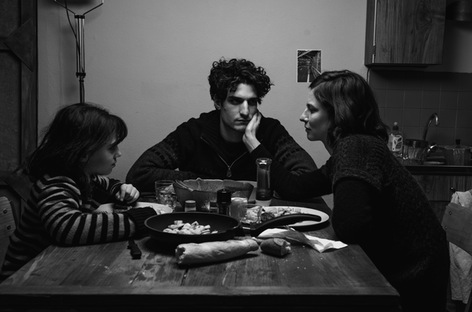
La Jalousie
TAN BEE THIAM
EDITOR OF CINEMAS OF ASIA AND FILMMAKER WITH 13 LITTLE PICTURES COLLECTIVE.
Animal Spirits (Daniel Hui, 2013) (short)Avanti Popolo (Michael Wahrmann, 2012)
Big Boy (Shireen Seno, 2013) and Lukas the Stranger (John Torres, 2013)
Jagten (The Hunt, Thomas Vinterberg, 2012)
Ilo Ilo (Anthony Chen, 2013)
L’Inconnu du lac (Strangers by the Lake, Alain Guiraudie, 2013)
Mater Dolorosa (Adolfo Alix Jr, 2013)
Noche (Leonardo Brzezicki, 2013)
On Such and Such a Day, At Such and Such a Time (Natalie Khoo, 2013) (short)
Prologue to The Great Desaparecido (Lav Diaz, 2013) (short)
Tadpoles (Ivan Tan, 2013) (short)
Vikingland (Xurxo Chirro, 2011)
Retrospective screenings of Sylvain George at the Festival de Cine Lima Independiente in 2013, especially of Qu’ils reposent en révolte (Des figures de guerre).
ANTOINE THIRION
FILM CRITIC, CAHIERS DU CINÉMA 2001-09 AND CO-FOUNDER AND CO-EDITOR IN CHIEF INDEPENDENCIA, 2009-13.
- L’Inconnu du lac (Stranger by the Lake, Alain Guiraudie, 2013)
- Norte, hangganan ng kasaysayan (Norte, the End of History, Lav Diaz, 2013)
- Tian zhu ding (A Touch of Sin, Jia Zhang-ke, 2013)
- Jiao you (Stray Dogs, Tsai Ming-liang, 2013)
- Manakamana (Stephanie Spray and Pacho Velez, 2013)
- Loubia Hamra (Bloody Beans, Narimane Mari, 2013)
- La Bataille de Solférino (Age of Panic, Justine Triet, 2013)
- La última película (Raya Martin and Mark Peranson, 2013)
- Gravity (Alfonso Cuarón, 2013)
- Before Midnight (Richard Linklater, 2013)

Stray Dogs
GORAZD TRUŠNOVEC
EDITOR-IN-CHIEF OF EKRAN, THE LEADING SLOVENIAN CINEMA & TV MAGAZINE.
Borgman (Alex van Warmerdam, 2013)Gravity (Alfonso Cuarón, 2013)
L’Inconnu du lac (Stranger by the Lake, Alain Guiraudie, 2013)
The Act of Killing (Joshua Oppenheimer, Christine Cynn & Anonymous, 2012)
Class Enemy (Razredni sovražnik, Rok Biček, 2013)
Stories We Tell (Sarah Polley, 2012)
Leviathan (Lucien Castaing-Taylor & Véréna Paravel, 2012)
După dealuri (Beyond the Hills, Cristian Mungiu, 2012)
Side Effects (Steven Soderbergh, 2013)
No (Pablo Larraín, 2012)
ROBERT VON DASSANOWSKY
PROFESSOR OF FILM STUDIES AT THE UNIVERSITY OF COLORADO, COLORADO SPRINGS, INDEPENDENT PRODUCER, EDITOR OF NEW AUSTRIAN FILM (WITH OLIVER SPECK, 2011), TARANTINO’S INGLOURIOUS BASTERDS: A MANIPULATION OF METACINEMA (2012), WORLD FILM LOCATIONS: VIENNA (2012), AND AUTHOR OF SCREENING TRANSCENDENCE: FILM UNDER AUSTROFASCISM AND THE HOLLYWOOD HOPE 1933-38 (2014).
Die Wand (The Wall, Julian Pölsler, 2012)La grande bellezza (The Great Beauty, Paolo Sorrentino, 2013)
Blue Jasmine (Woody Allen, 2013)
The Fifth Estate (Bill Condon, 2013)
L’Image manquante (The Missing Picture, Rithy Panh, 2013)
Stories We Tell (Sarah Polley, 2013)
La migliore offerta (The Best Offer, Guiseppe Tornatore, 2013)
Before Midnight (Richard Linklater, 2013)
Der Glanz des Tages (The Shine of Day, Tizza Covi, Rainer Frimmel, 2012)
American Hustle (David O. Russell, 2013)
Very honourable mentions
Stoker (Park Chan-wook, 2013), Gravity (Alfonso Cuarón, 2013), Behind the Candelabra (TV) (Steven Soderbergh, 2013), Elysium (Neill Blomkamp, 2013), Oh Boy (Jan Ole Gerster, 2012), Rush (Ron Howard, 2013), Dallas Buyers Club (Jean-Marc Vallée, 2013), The Act of Killing (Joshua Oppenheimer, Christine Cynn & Anonymous, 2013), Fragments of Kubelka (Martina Kudlácek, 2013), No (Pablo Larraín, 2012), Side Effects (Steven Soderbergh, 2013)
Most overrated film of 2013
World War Z (Marc Forster, 2013)
NICHOLAS VROMAN
LIVES IN TOKYO AND WRITES ON CONTEMPORARY JAPANESE CINEMA.
Living in Tokyo, I’m on the tail end of the international release cycle – particularly in regard to US films. Thus I haven’t seen the likes of Nebraska, Computer Chess or 12 Years a Slave. Films from other parts of the world, I’m largely dependent upon festival screenings. And thank my lucky kamis for the Yamagata International Documentary Film Festival, with its amazing programming, for the several docs that made it onto my list this year. Apart from After Lucia – a devastatingly hard and beautiful film – the other non-Japanese titles were seen at festivals. I added a couple of Japanese films that are perhaps more than obscure. Apart from my desire to promote some underdogs, I genuinely think these are the best Japanese films released this year. Among my usual favourites, Matsumoto Hitoshi’s R100 had a few great moments, but really was a mess. Kore-eda’s Like Father, Like Son was touching, but didn’t affect me as much as, say, I Wish. As for my favourites, Kenji Murakami’s 38 minute super-8 Sound Hunting was a smart, avant-garde celebration (perhaps wake) of the end of making movies on film. And Haruhi Oguri’s second feature, Bad Communication, shows what I’ve always known – that she’s one of the best young filmmakers working in Japan right now. And that she’s growing as a filmmaker. Too bad the rest of the world (and most of Japan) doesn’t know it. Herewith are my 10 best films of 2013.Después de Lucia (After Lucia, Michel Franco, 2012)
Stories We Tell (Sarah Polley, 2012)
A World Not Ours (Mahdi Fleifel, 2012)
Sound Hunting (Kenji Murakami, 2013)
Nichnasti pa’am lagan (Once I Entered a Garden, Avi Mograbi, 2012)
Bad Communication (Haruhi Oguri, 2013)
Anni Felici (Those Happy Years, Daniele Luchetti, 2013)
Drinking Buddies (Joe Swanberg, 2013)
Norte, hangganan ng kasaysayan (Norte, the End of History, Lav Diaz, 2013)
Brma Paemnebi (Blind Dates, Levan Koguashvili, 2013)

Drinking Buddies
TOMASZ WARCHOL
TEACHES FILM STUDIES AT GEORGIA SOUTHERN UNIVERSITY AND RUNS A FILM PROGRAM IN SAVANNHA, GEORGIA.
Django Unchained (Quentin Tarantino, 2012)Jagten (The Hunt, Thomas Vinterberg, 2012)
American Hustle (David O. Russell, 2013)
Dallas Buyers’ Club (Jean Marc Vallée, 2013)
Blue Jasmine (Woody Allen, 2013)
Le Passé (The Past, Ashgar Farhadi, 2013)
Philomena (Stephen Frears, 2013)
12 Years a Slave (Steve McQueen, 2013)
Kapringen (A Hijacking, Tobias Lindholm, 2012)
Before Midnight (Richard Linklater, 2013)
World War Z (Marc Forster, 2013)
L’ Enfant d’en haut (Sister, Ursula Meier, 2012)
The Broken Circle Breakdown (Felix Van Groeningen, 2012)
Byzantium (Neil Jordan, 2012)
Die Wand (The Wall, Julian Pölsler, 2012)
Gravity (Alfonso Cuarón, 2013)
Lore (Cate Shortland, 2012)
Mud (Jeff Nichols, 2012)
The Hunger Games: Catching Fire (Francis Lawrence, 2013)
CHRISTIAN WERE
PRODUCT MANAGER AT MADMAN ENTERTAINMENT.
Du zhan (Drug War, Johnnie To, 2013)Neukdae sonyeon (A Werewolf Boy, Jo Sung-hee, 2012)
A Field in England (Ben Wheatley, 2013)
Ilo Ilo (Anthony Chen, 2013)
Before Midnight (Richard Linklater, 2013)
The Act of Killing (Joshua Oppenheimer, Christine Cynn & Anonymous, 2012)
Le Passé (The Past, Asghar Farhadi, 2013)
Gamshijadeul (Cold Eyes, Jo Ui-seok & Kim Byung-seo, 2013)
Ji zhan (Unbeatable, Dante Lam, 2013)
Deo tereo raibeu (The Terror Live, Kim Byung-woo, 2013)
Manatsu no Houteishiki (Midsummer Formula, Hiroshi Nishitani, 2013)
Saibi (The Fake, Yeon Sang-ho, 2013)
VIRGINIA WRIGHT WEXMAN
PROFESSOR EMERITA OF ENGLISH AND ART HISTORY AT THE UNIVERSITY OF ILLINOIS, CHICAGO AND AUTHOR OF A HISTORY OF FILM (SEVENTH EDITION) AND OTHER BOOKS ON CINEMA.
In 2013 I attended the following festivals: Palm Springs, Todos Santos, Los Angeles, Bologna, Wood’s Hole, CineCon, Vancouver, Baja, and AFIFest. Here are some of the highlights:Best new international cinema
- Le Passé (The Past, Asghar Farhadi, 2013) (AFIFest)
- Tian zhu ding (A Touch of Sin, Jia Zhang-ke, 2013) (Vancouver)
- Bethlehem (Yuval Adler, 2013) (AFIFest)
- V Tumane (In the Fog, Sergei Loznitsa, 2012) (Palm Springs)
- Barbara (Christian Petzold, 2012) (Palm Springs)
- Elefante blanco (White Elephant, Pablo Trapero, 2012) (Palm Springs)
- The Angels’ Share (Ken Loach, 2012) (Palm Springs)
- 7 Cajas (7 Boxes, Juan Carlos Maneglia and Tana Schembori, 2012) (Palm Springs)
- In A World… (Lake Bell, 2013) (Los Angeles)
- Las Buenas Hierbas (The Good Herbs, María Novaro, 2010) (Todos Santos)
Vittorio De Sica (Bologna)
Best revivals
- Amarcord (Federico Fellini, 1973) (Los Angeles)
- La Pointe Courte (Agnès Varda, 1955) (Bologna)
- La grande guerra (The Great War, Mario Monicelli, 1959) (Bologna)
- Futarizuma: tsuma yo bara no yo ni (Wife, Be Like a Rose, Mikio Narusa, 1935) (Bologna)
- Suddenly it’s Spring (Mitchell Leisen, 1947) (CineCon)
Best filmmaker turnout (at screenings I attended): AFIFest
Best fest venues: Chinese 6 (AFIFest), Cinemax (Baja), Regal LA Live (Los Angeles), Egyptian (CineCon, AFIFest), International Village Multiplex (Baja)
Best program notes: Bologna
Most beautiful surroundings: Vancouver
Most enthusiastic audiences: Todos Santos
Best festival volunteers: AFI Fest, CineCon
Longest lines: AFIFest

In A World…
EDDIE WHITE
AUSTRALIAN FILMMAKER WHO HAS WRITTEN AMD DIRECTED SHORT ANIMATION FILMS, THE CAT PIANO (2009), SWEET AND SOUR (2007) AND CARNIVORE REFLUX (2006). CURRENTLY DEVELOPING AN ANIMATED FEATURE FILM.
Spring Breakers (Harmony Korine, 2012)La Vie d’Adèle: chapitres 1 e 2 (Blue Is The Warmest Colour, Abdellatif Kechiche, 2013)
Before Midnight (Richard Linklater, 2013)
Gravity (Alfonso Cuarón, 2013)
A Band Called Death (Mark Christopher Covino & Jeff Howlett, 2012)
Django Unchained (Quentin Tarantino, 2012)
The Act Of Killing (Joshua Oppenheimer, Christine Cynn & Anonymous, 2012)
Stories We Tell (Sarah Polley, 2012)
Blue Jasmine (Woody Allen, 2013)
Ernest et Célestine (Stéphane Aubier, Vincent Patar & Benjamin Renner, 2012)
ELEANOR WILKIN
12. Only God Forgives (Nicolas Winding Refn, 2013)An interesting, Kubrickian story which breaks down barriers and challenges the viewer.
11. Captain Phillips (Paul Greengrass, 2013)
A slow starter but suspenseful and brilliant depiction of human struggle.
10. Monsters University (Dan Scanlon, 2013)
Made even greater with a helping hand from The Blue Umbrella. A perfect Pixar, albeit incredibly predictable
9. The Way Way Back (Nat Faxon & Jim Rash, 2013)
A beautiful written and magnificently acted coming of age comedy drama. I enjoyed Steve Carrel playing an asshole and I love Sam Rockwell.
8. Pacific Rim (Guillermo del Toro, 2013)
A brilliant, action-packed film that manages to hark back to the classic Monster Movie while bringing something fresh and new to the genre – giant killer robots controlled by humans. Bliss.
7. Saving Mr. Banks (John Lee Hancock, 2013)
Emma Thompson, Tom Hanks, Jason Schwartzman, BJ Novak and Paul Giamatti in a heart breaking, lovely story about the origins of Mary Poppins. A true delight, unlike P.L Travers.
6. This is the End (Evan Goldberg & Seth Rogen, 2013)
Hilarious, laugh out loud comedy with incredible quotability and world-class one liners. Rogan, Franco, McBride and Hill at their finest.
5. Elysium (Neill Blomkamp, 2013)
Sharlto Copley is a fantastic, terrifying villain. Not quite as disgusting as District 9, but equally brilliant and refreshing. Jodie Foster was a waste of space though. Nonsense.
4. Stoker (Chan-wook Park, 2013)
Surprisingly brilliant, Stoker ticked many boxes for me. Interestingly explores the complicated intricacies of female adolescence while massively creeping you out at the same time.
3. Gravity (Alfonso Cuarón, 2013)
Visual perfection with a gasp-inducing story to boot. The finale brings tears to my eyes every time as every single one of my senses is bombarded by visual splendour and gigantic, sprawling space.
2. Prisoners (Denis Villeneuve, 2013)
A nail-biting thriller which investigates the theme of loss and betrayal as a father desperately tries to find his missing daughter. A never shredding thriller that leaves your guts wrenching and your lungs gasping for air until the final breathless moments.
1. The Hunger Games: Catching Fire (Francis Lawrence, 2013)
A perfect movie for me. Action, drama, suspense, romance, mystery, fantasy, horror, comedy – everything! I literally didn’t want it to end, every second of it had my eyes glued to the screen and my attention entwined in its marvellous story.
My absolute worst and the most overrated film:
The Great Gatsby (Baz Luhrmann, 2013)
Nonsense, boring, over the top.

Stoker
BARBARA WURM
TEACHES SLAVIC STUDIES AT HUMBOLDT UNIVERSITY, BERLIN; WORKS AS FREELANCE FILM CRITIC AND PROGRAMMER.
All Star TeamMes Séances de lutte (Love Battles, Jacques Doillon, 2013)
Förseglade läppar (Sealed Lips, Gustaf Molander, 1927)
Le Dernier des injustes (The Last of the Unjust, Claude Lanzmann, 2013)
Yūyakegumo (Farewell to Dream, Kinoshita Keisuke, 1956)
L’Image manquante (The Missing Picture, Rithy Panh, 2013)
Rdeče klasje (Živojin Pavlović, 1970)
Die andere Heimat – Chronik einer Sehnsucht (Home from Home – Chronicle of a Vision, Edgar Reitz, 2013)
Így jöttem (My Way Home, Jancsó Miklós, 1964)
The Company You Keep (Robert Redford, 2012)
Italiani brava gente (Attack and Retreat, Giuseppe De Santis, 1964)
Yīdài zōngshī (The Grandmaster; Wong Kar-Wai, 2013)
Current Team (the future, too, will be theirs)
Rol‘ (The Role, Konstantin Lopušanskij, 2013)
Tiān zhù dìng (A Touch of Sin, Jia Zhang-ke, 2013)
Shirley – Visions of Reality (Gustav Deutsch, 2013)
Boven is het stil (It’s All So Quiet, Nanouk Leopold, 2013)
Obrana i zaštita (A Stranger, Bobo Jelčić, 2013)
Pardé (Closed Curtain, Jafar Panahi & Kambuzia Partovi, 2013)
Môj pes Killer (My Dog Killer, Mira Fornay, 2013)
Finsterworld (Frauke Finsterwalder, 2013)
Paradies: Hoffnung (Paradise: Hope, Ulrich Seidl, 2013)
Frances Ha (Noah Baumbach, 2012)
Rocker (Marian Crişan, 2012)
Dream Team (the future should have been theirs)
Die Unehelichen (Illegitime Children, Gerhard Lamprecht, 1926)
Ničnyj viznyk (The Night Coachman, Heorgij Tasin, 1928)
Serdce Azii (Afganistan) (Afghanistan, Vladimir Erofeev, 1929)
Sunagawa no hitobito: Mugi shinazu (People of Sunagawa: The Wheat will Never Fall, Kamei Fumio, 1955)
Verwirrung der Liebe (Love’s Confusion, Slatan Dudow, 1959)
Tri (Three, Aleksandar Petrović, 1965)
Jutro (The Morning, Puriša Đorđević, 1967)
Daichi no toride (Fortress of the Land, Hoshi Kiichi, 1977)
Mike’s Murder (James Bridges, 1984)
Gestos & Fragmentos. Os militares e o poder (Gestures and Fragments, Alberto Seixas Santos, 1982)
Muisto – itsenäisen Suomen ensimmäisten vuosien kertomus (Memory – The Story of the First Years of Finland’s Independence, Peter von Bagh, 1987)
NEIL YOUNG
FILM CRITIC AND CO-DIRECTOR OF THE BRADFORD INTERNATIONAL FILM FESTIVAL.
The Act of Killing (Joshua Oppenheimer, Christine Cynn & Anonymous, 2012)Aningaaq (Jonás Cuarón, 2013)
Frances Ha (Noah Baumbach, 2013)
Greenland Unrealized (Dania Reymond, 2012)
Jiao you (Stray Dogs, Tsai Ming-liang, 2013)
Les Trois Désastres (The Three Disasters, Jean-Luc Godard 2013)
My fiver says the decade will end without Stray Dogs being surpassed, unless Tsai returns from the cine-purdah into which he has now reportedly retreated. As Bukowski wrote in 1972′s The Golfers:
I stop at a stop sign and
as fire burns the trees and the people and the city
I know that there will be a place to go
and a way to go
and nothing need ever be
lost.

The Three Disasters
ALEXANDRA ZAWIA
FILM CRITIC FOR FILM & FEUILLETON, WIENER ZEITUNG, FURCHE, RAY AND FREELANCE.
2013 top 15 premieres (from: features, documentaries, shorts)The Buried Alive Videos (Roee Rosen, 2013)
Història de la meva mort (Story of My Death, Albert Serra, 2013)
Du zhan (Drug War, Johnnie To, 2012)
Feng ai (‘Til Madness Do Us Part, Wang Bong, 2013)
Jiao you (Stray Dogs, Tsai Ming-liang, 2013)
E Agora? Lembra-me (What Now? Remind Me, Joaquim Pinto, 2013)
Nepal Forever (Aliona Polunina, 2013)
Vic+Flo ont vu un ours (Vic+Flo Saw a Bear, Denis Côté, 2013)
At Berkeley (Frederick Wiseman, 2013)
Die andere Heimat – Chronik einer Sehnsucht (Home from Home: Chronicle of a Vision, Edgar Reitz, 2013)
Camille Claudel 1915 (Bruno Dumont, 2013)
Tian zhu ding (A Touch of Sin, Jia Zhang-ke, 2013)
All is Lost (J. C. Chandor, 2013)
Les Salauds (Bastards, Claire Denis, 2013)
The Act of Killing (Joshua Oppenheimer, Christine Cynn & Anonymous, 2012)
2013 top 5 most overrated:
Gravity (Alfonso Cuarón, 2013)
12 Years a Slave (Steve McQueen, 2013)
American Hustle (David O. Russell, 2013)
The Broken Circle Breakdown (Felix van Groeningen, 2013)
Manakamana (Stephanie Spray, Pacho Velez, 2013)
2013 top 5 most underrated:
Jigoku de naze warui (Why Don’t You Play in Hell, Sion Sono, 2013)
Grigris (Mahamat Saleh-Haroun, 2013)
Man tam (Blind Detective, Johnnie To, 2013)
Borgman (Alex van Warmerdam, 2013)
Das merkwürdige Kätzchen (The Strange Little Cat, Ramon Zurcher, 2013)




 Hugo (Photo by