Popularno je misliti da je popkultura dimenzija ispunjena demonima. Što onda može učiniti egzorcizam jednoga od njih?
http://www.poisonberries.net
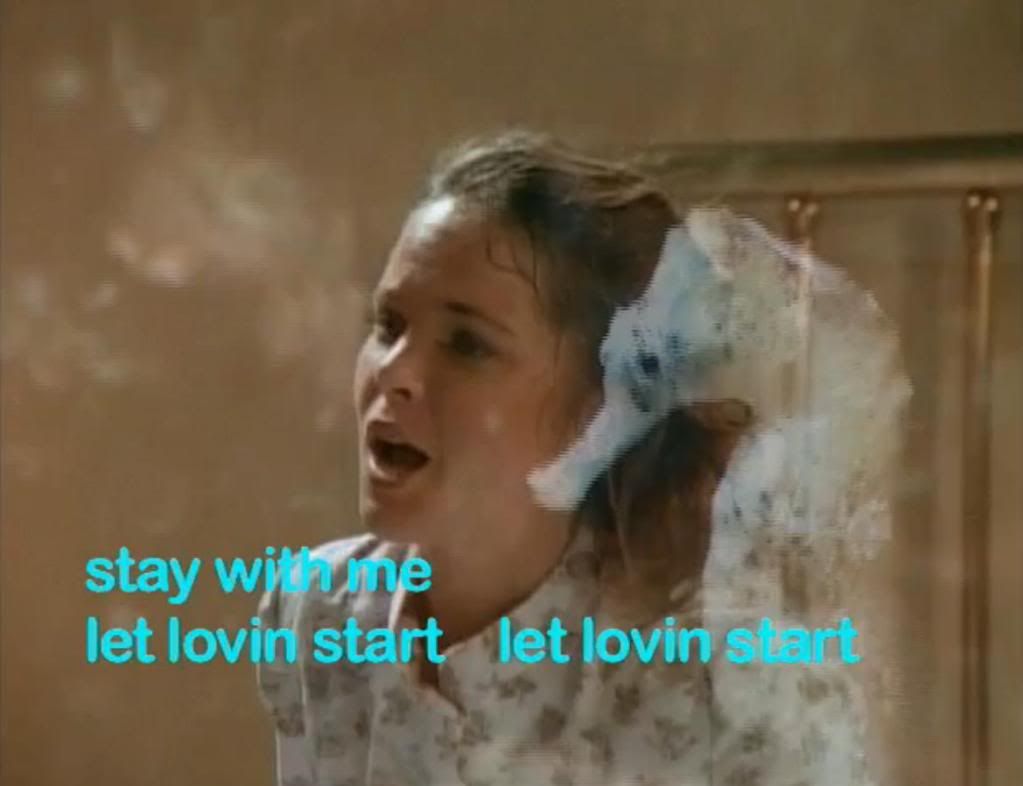
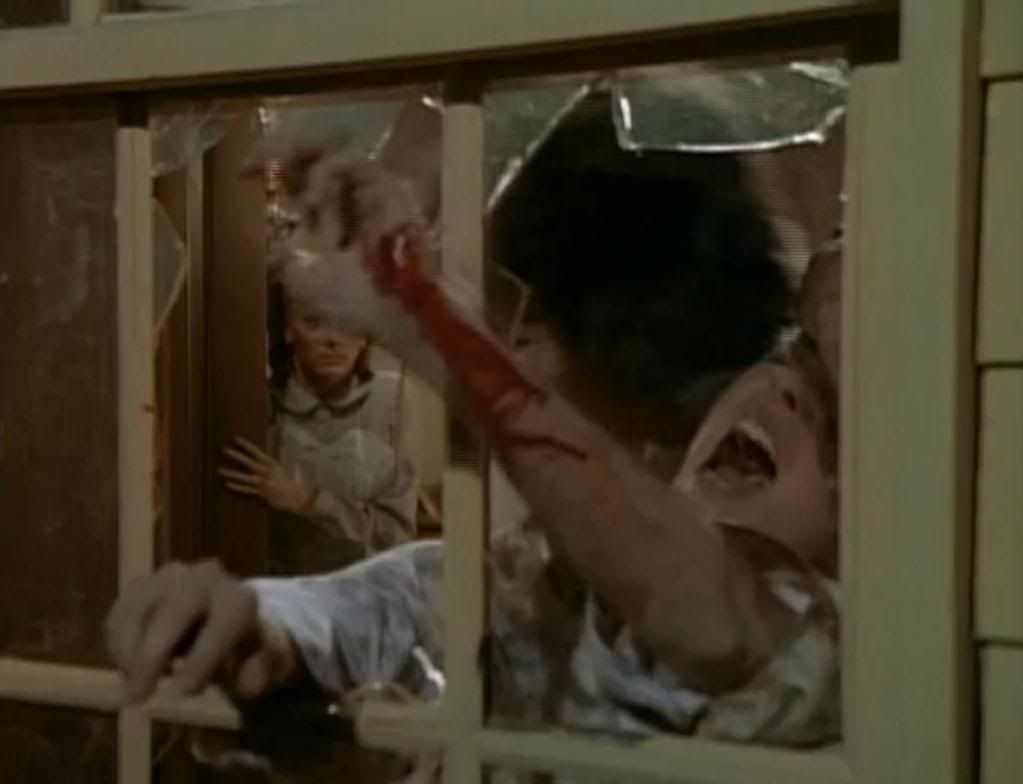
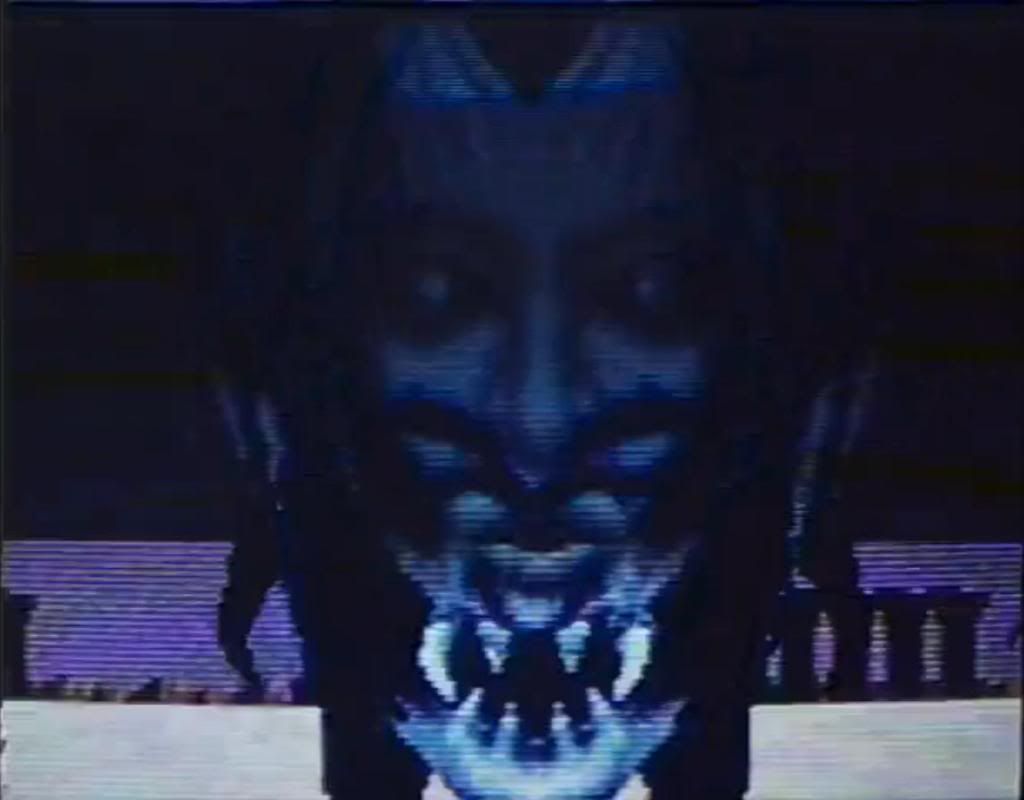
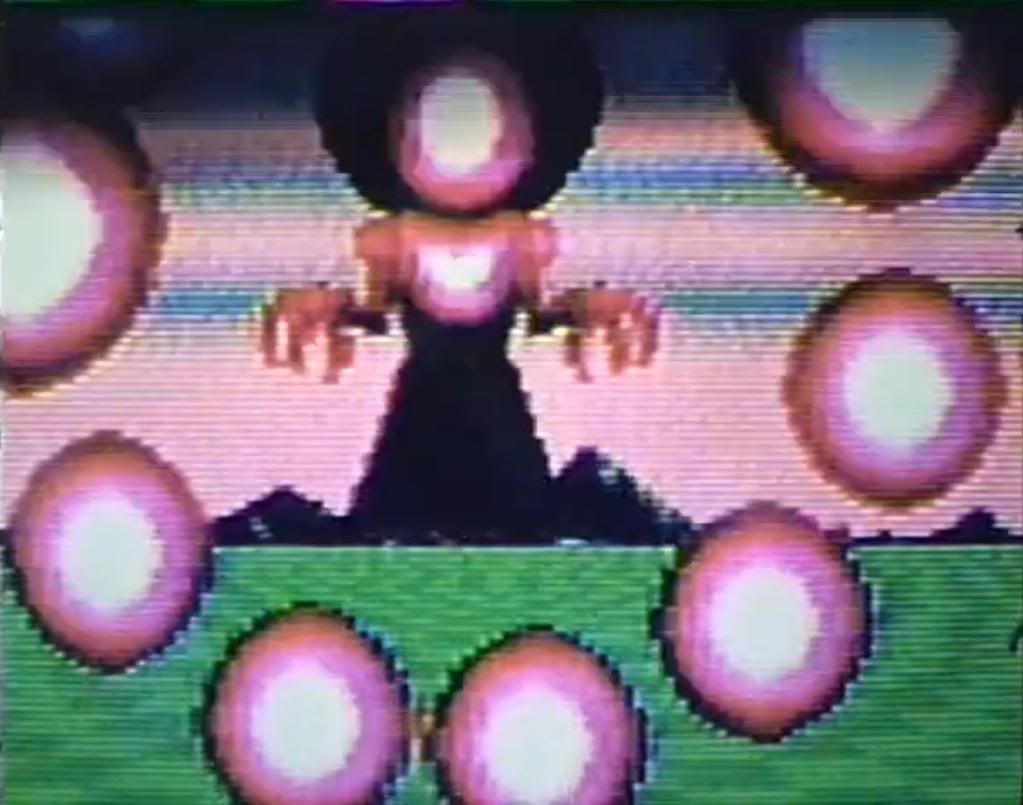
A very special episode of television's Full House devours itself from the inside out, excavating a hypnotic nightmare of a culture lost at sea. Tropes of video art and family entertainment face off in a luminous orgy neither can survive.- Michael Robinson
“If you see one 11-minute video this year, make it Michael Robinson's magnificent, hilarious, and terrifying Light Is Waiting (2007). The primordial, extreme slo-mo soundtrack is like a glitch mix from beyond the grave by DJ Screw. Robinson's seizure-inducing blasts of stroboscopic light rival those of the Austrian film experimentalist Peter Tscherkassky. And I haven't even mentioned the Olsen twins … Light Is Waiting exorcises American pop cultural demons via video the way Kenneth Anger did with film in 1964's Scorpio Rising.”-- Johnny Ray Huston, San Francisco Bay Guardian, April 2008

| BROOKLYN RAIL INTERVIEW: read here | |
| MUBI NOTEBOOK 'MAD LADDERS' ESSAY: read here | |
| FOUND FOOTAGE MAGAZINE INTERVIEW: order here | |
| ART IN AMERICA REVIEW: read here | |
| 4:3 INTERVIEW: read here | |
| NEWCITY ART REVIEW: read here | |
| ACID RAIN 'ART AND STATEMENT': read here | |
| LITTLE JOE INTERVIEW: order here | |
| DESISTFILM ARTICLE: read here | |
| ARTINFO REVIEW: read here | |
| DIRTY LOOKS NYC ARTICLE: read here | |
| OUT 1 FILM JOURNAL ARTICLE: read here | |
| FRIEZE REVIEW: read here | |
| THE DISSOLVE ARTICLE: read here | |
| BROOKLYN RAIL REVIEW: read here | |
| BOMBLOG INTERVIEW: read here | |
| CINEMA SCOPE BEST 50 UNDER 50 ARTICLE: read here | |
| ARTINFO VIDEO INTERVIEW: read here | |
| WHITNEY BIENNIAL CURATORS' VIDEO COMMENTARY: watch here | |
| BAD AT SPORTS INTERVIEW: read here | |
| ARTFORUM ARTICLE: read here | |
| DIRTY LOOKS 'THESE HAMMERS' ESSAY: read here | |
| DAZED ARTICLE: read here | |
| WHEEL ME OUT INTERVIEW: read here | |
| THE L MAGAZINE ARTICLE: read here | |
| AURORA FESTIVAL 2008 CATALOGUE ESSAY: read here | |
| CINEMA SCOPE ARTICLE/INTERVIEW: read here | |
| FILM COMMENT POLL: read here | |
| IDIOM ARTICLE: read here | |
| INCITE INTERVIEW: read here | |
| TRIPLE CANOPY 'VICTORY OVER THE SUN' ESSAY: read here | |
| CHRIS STULTS 'LIGHT IS WAITING' ESSAY: read here |
Michael Robinson (b.1981) is a film, video and collage artist whose work explores the joys and dangers of mediated experience, riding the fine lines between humor and terror, nostalgia and contempt, ecstasy and hysteria. His work has screened in both solo and group shows at a variety of festivals, museums, and galleries including The 2012 Whitney Biennial, The International Film Festival Rotterdam, The New York Film Festival, The Walker Art Center, Berlinale, MoMA P.S.1, The London Film Festival, REDCAT Los Angeles, The Wexner Center for the Arts, The Sundance Film Festival, Anthology Film Archives, Tate Modern, Media City, The Yerba Buena Center for the Arts, The Images Festival, The Ann Arbor Film Festival, and the Toronto, San Francisco, Melbourne, Leeds, Vienna, Singapore and Hong Kong International Film Festivals. He was the recipient of a 2014 MacDowell Colony Fellowship, a 2012 Creative Capital grant, a 2011-2012 Film/Video Residency Award from The Wexner Center for the Arts, a 2012 Kazuko Trust Award, a 2009 residency from The Headlands Center for the Arts, and his films have received awards from numerous festivals. Michael was featured as one of the "Best 50 Filmmakers Under 50" by Cinema Scope magazine in 2012, and listed as one of the top ten avant-garde filmmakers of the 2000's by Film Comment magazine, and his work has been discussed in publications such as Art In America, Frieze, Artforum, Art Papers, The Village Voice, Time Out New York, Dazed and Confused, The Nation, BOMBlog, and The Brooklyn Rail. He has curated programs for San Francisco Cinematheque, Whitechapel Gallery, The Museum of Contemporary Photography, Cornell Cinema, and The State Contemporary Art Center in Moscow, and served on the awards juries of The Ann Arbor Film Festival, The Aurora Festival, The Big Muddy Film Festival, and Migrating Forms. Michael holds a BFA from Ithaca College, an MFA from the University of Illinois at Chicago (UIC), and has taught at Binghamton University, UIC, and Otis College of Art and Design.
MICHAEL ROBINSON with Z. W. Lewis
 Onward Lossless Follows
W. Lewis (Rail): A few of your films have been gaining awareness outside the usual experimental film crowd. What has the experience of "going viral" been for you?
Michael Robinson: Oh, have I gone viral? I don't know. I feel like the work that I've had online that's gotten significant play hasn't broken through into actual internet fame or anything. I did share a clip from The Dark, Krystle on Instagram that then got turned into a meme briefly. That was maybe getting millions of views, but there was nothing attaching that to me or to the film or anything. It was just like an “Alexis is drinking, TGIF!” kind of thing. That felt pretty weird because I was like, “What the hell, can't I get something out of this?” But the nature of making this kind of work is that it’s not really going to make any profits. I don't want to spend time thinking about how to make the most out of something like that. I feel like it would be great to go viral with videos, but I still feel like the headaches that might come with that are significant.
Rail: Why do you think people gravitate toward Light is Waiting in particular? That’s the one with the most views on your Vimeo page.
Robinson: Yeah. I think maybe the way that the beginning moments of that film are unaltered is pretty easy to get into. I mean, you are essentially just watching TV for two minutes before [an aggressive flicker effect] kicks in, and I think the sort of joke of it is so easy and obvious. You know, just the kind of pulling apart of the dumb sitcom is accessible enough. But I also think people's relationship to that show, whether they know it well or not, is kind of specific. It’s a pretty satisfying thing for people to experience—seeing something that squeaky clean and aggressively banal turned on its head. I mean a lot of people seem to think of that as a pretty psychedelic druggy film or something? The joke of Full House becoming an acid trip is appealing in some way. I don’t think the psychedelia in my films is all that related to drugs at all, but I think just in terms of the pairing of that material with that treatment is a joke that people get. Also, that was on Artforum’s website, and I know it gets a lot of use there still, so it’s just a matter of when I put things online and what stuck and what didn’t.
Rail: You come from the MFA program at the University of Illinois. Was that a big formative experience for you?
Robinson: Yeah, totally. That was great. It’s a really intense two-year program. I wanted to go somewhere where I could mostly work on video, but within the context of a broader arts community. I loved it. I worked with Deborah Stratman as my advisor. She was super influential and taught me a lot about sound. I always gravitated towards the same kind of subtle motifs, and she really opened up my work in that way.
Rail: There’s a very specific way those early videos look—especially All Through the Night (2008) and We All Shine On (2006). There’s a texture like having the camera too close to a CRT television, and so you get those scan lines. Is that a particular texture that you want to come back to?
Robinson: I guess the experience of being close to a TV like that usually would mean you’re obsessing over something or have recorded something off the TV, or are trying to find something in an image that I think can lend a level of urgency or maybe perversion to film. I spent a lot of those years staring at a TV, playing video games, or watching the same movies over and over again on degrading VHS tapes. In some ways the aesthetics of older TVs maybe does feel kind of emotional in some way.
Rail: Your films are also very musical. The films themselves kind of follow the rhythm of a song, and they usually have some sort of crescendo. Do you have this sort of rhythm in mind when you’re starting a project, or does it naturally fall into place with your material?
Robinson: I think that falls into place as I edit. I often start with more of a feeling that I want to encircle than a rhythm. Something like These Hammers Don’t Hurt Us which has lots of little pieces coming out of darkness and a sort of more open moaning on the soundtrack. That came about where I had many chunks and versions and slowly moved things together to see what created a kind of forward momentum. And something like in the new film Onward Lossless Follows, which also has a lot of distinct sections, but they’re longer and allowed to be themselves.
Rail: Can you speak about narration and the wild stories in your most recent work? I’m thinking about Mad Ladders (2015), Line Describing Your Mom (2011), If There Be Thorns (2009), and Onward Lossless Follows.
Robinson: I tend to think of the work as narrative from the get-go. I feel like the emotional build of the film only happens through having enough sense of narrative that there’s something at stake. I get a lot of inspiration and satisfaction from narrative, and that seeps into my work pretty directly. I like the idea of having the semblance of a narrative without actual characters or plot that carves out the feeling and the emotional thrust of storytelling. It comes out of editing and gravitating towards specific moments or specific lines of voice or text. The ghost of a narrative happens in the films through the process of figuring out the image and the sounds, too. I knew I wanted These Hammers Don’t Hurt Us to feel like Liz Taylor taking Michael Jackson into the afterlife, but I didn’t know how that would come about.
Rail: I just revisited your longer non-appropriated film Circle in the Sand (2012). Is that kind of work something you’re interested in returning to? I know you’re currently working on I’ll Be Thunder, which is going to be a feature project, right?
Robinson: It’s coming. I’ll Be Thunder was originally conceived as a second half to Circle in the Sand. Not exactly a sequel but more of a twin film that could maybe be shown alongside it. But, by the time I had finished Circle in the Sand my ideas for I’ll Be Thunder had somewhat shifted. Making [Circle in the Sand] also taught me that if I were to make another longer narrative like that, I want to do it with a real script and less of a spacey improvisational approach. I’ll Be Thunder will be a much more accessible character-based narrative.
Rail: I particularly like the moments in Circle in the Sand when the characters are almost miniature Michael Robinsons piecing together little bits of culture they find and trying to make sense of it.
Robinson: If there was a script for Circle in the Sand, it would be mostly lists and drawings of those moments of the characters dealing with junk and details of culture. I think making a film of that length and with that level of narrative, the editing was actually really challenging to figure out. I love that film. I think I'm going to put that on Vimeo this week. I broke it down into five chapters, so it can look a little better. Somehow it seems like watching a 45-minute film is a drag. People will watch a little and then get up to go do something else. The pieces work well. I feel like showing segments of it, or chapters, along with my other films has actually been pretty satisfying.
Rail: Onward Lossless Follows is a strange title. Would explaining it take away part of the mystery here?
Robinson: I mean, I started with the title, which is often the case. A title will arrive from wherever, and I'll sit on it for a while until a given film kind of feels like it belongs. I guess there's two ways in which you can read it. There's “onward lossless will follow” meaning that I can keep going because the future will be better. There's also “onward lossless follows” where “follows” is more in the social media sense—sort of submitting to the present as a way to get out of it. That's probably the more accurate interpretation.
Rail: What's the source of all the astrology talk in the beginning? Where'd you find that?
Robinson: The preacher? That I found online—I can't remember his name. He was like a radio, a preacher out of a church in LA in the 70s and 80s and his sermons are all archived online, but I had heard that one in particular while I was driving across country. I think I was in Tennessee and was just totally struck by how strange the mix of religious anger and all this talk of Venus and what felt pretty anti-science and anti-astrology. I listened to a couple of hours of various sermons, but none of them had anything that really spoke to me in that way, so I just used this one and edited out most of the religious details.
Rail: I remember that “Stranger Danger” clip that you used very well. The text conversation that comes after makes it both so disturbing and hilarious.
Robinson: Yeah, I mean, it's obviously not funny subject matter but the combination of cheap production value and non-professional actors is so charming and strange and kind of overrides whatever is happening. I can remember watching those types of films as a kid, too, and I mostly gravitated toward how weird the whole thing felt.
Rail: You used the flicker effect to a particularly violent degree here, but not as one of your crescendos, like whenever it's used in Light is Waiting. What's your relationship to the flicker here? Why institute it in this film?
Robinson: Generally, I feel like it's a way to add a level of overwhelmingness and chaos to a part of the film. Often that does occur as more of a crescendo, but it sort of arranges various parts of the storylines in Onward Lossless Follows. I like the way it starts with the flicker and then returns halfway through for a while and shows up a little bit at the end. It felt more like one of the many pieces that pops in and out and slowly forms a relationship with what's around it. I don't have an exact "the flicker means this” kind of definition.
Rail: I like to imagine Onward Lossless Follows as almost a Western. You have a lot of desert traveling shots, the horse at the very end, a couple of guys doing manual labor, and America's “Horse with No Name.”
Robinson: I like that. I've been living in LA for a few years now, so I feel like I have spent a fair amount of time going out to the desert. The spirit of the love story that takes place, that kind of spacey Western feeling, and the preacher talking about drought and outer space also feels like a Western.
Rail: I'm kind of surprised this is your first time using stock video footage in a film. That seems like something you would gravitate towards, and here it's used to a cheesy end, like to show a cartoonish version of celebration. People ecstatically staring at their laptops and clapping.
Robinson: I wasn't aware you could browse so much stock video online. I was instantly amazed at how much there was of this specific thing, particularly women at computers ecstatically celebrating. I mean it is a pretty gendered thing, there are definitely lots of businessmen doing similar, but it's not the same throw-hands-up-in-the-air celebration. With them, it's way more fist pump: “Yo bro, I did it!” It felt like a weirdly dark and commercial ceremonial thing. Usually these are geared towards the idea of business success, or money coming in, or getting the deal in some way. That combination of person-computer financial success felt really dark to me. I imagined them as the choir or the audience of the preacher's sermon.
Rail: Have you seen any good movies recently?
Robinson: I saw a lot at the New York Film Festival. I love Flores, Jorge Jácome's film. I loved Jesse McLean's new film. And I should probably not mention too many because then I won't mention others. I did really enjoy mother! which I know is getting trashed as the worst thing ever. And it really is a horrible movie, but I got a lot out of how horrible it is. I don't think he knows what he's doing, but somehow I really enjoyed the whole thing. I feel like I saw a lot of movies this summer that I expected to enjoy and sort of just snoozed through. This definitely wasn't a snooze; it was something I'll remember